Troubleshooting & Repair

Electrical Troubleshooting & Repair in Mount Pleasant & Charleston

Our electricians find the cause of tripping breakers, dead outlets and flickering lights in Mount Pleasant and Charleston homes, then price the repair up front.

Already have a quote?

SC License M118633
Master Electrical
Licensed & insured
Liability and workers' comp
No trainees, ever
Experienced electricians only
Not on commission
You approve the price first
One-year warranty
Workmanship, in writing

The short answer

How do electrical troubleshooting and repair work?

Troubleshooting is billed by the hour until the electrician finds the cause of the problem; then the repair is priced up front, and nothing is repaired until you approve that price.

Troubleshooting means opening circuits, testing voltage and isolating the fault until the electrician can point to the cause. It's our most-requested service.

The cause matters because the thing you notice is usually a symptom. A breaker that keeps tripping might be overloaded, faulty, the wrong size for its circuit or reacting to a damaged wire. A dead outlet might trace back to a tripped GFCI, a tripped AFCI breaker or a loose connection. A reset brings the power back for now; the repair we price fixes what made it trip.

Symptoms

What causes common electrical problems at home?

Common electrical problems at home come from too much running on one circuit, a loose or damaged connection, a tripped GFCI or AFCI, water in an outlet or fixture, or a surge from a storm. An electrical failure is any part of your wiring or equipment that stops doing its job safely, like a breaker that won't stay on or a connection that heats up.

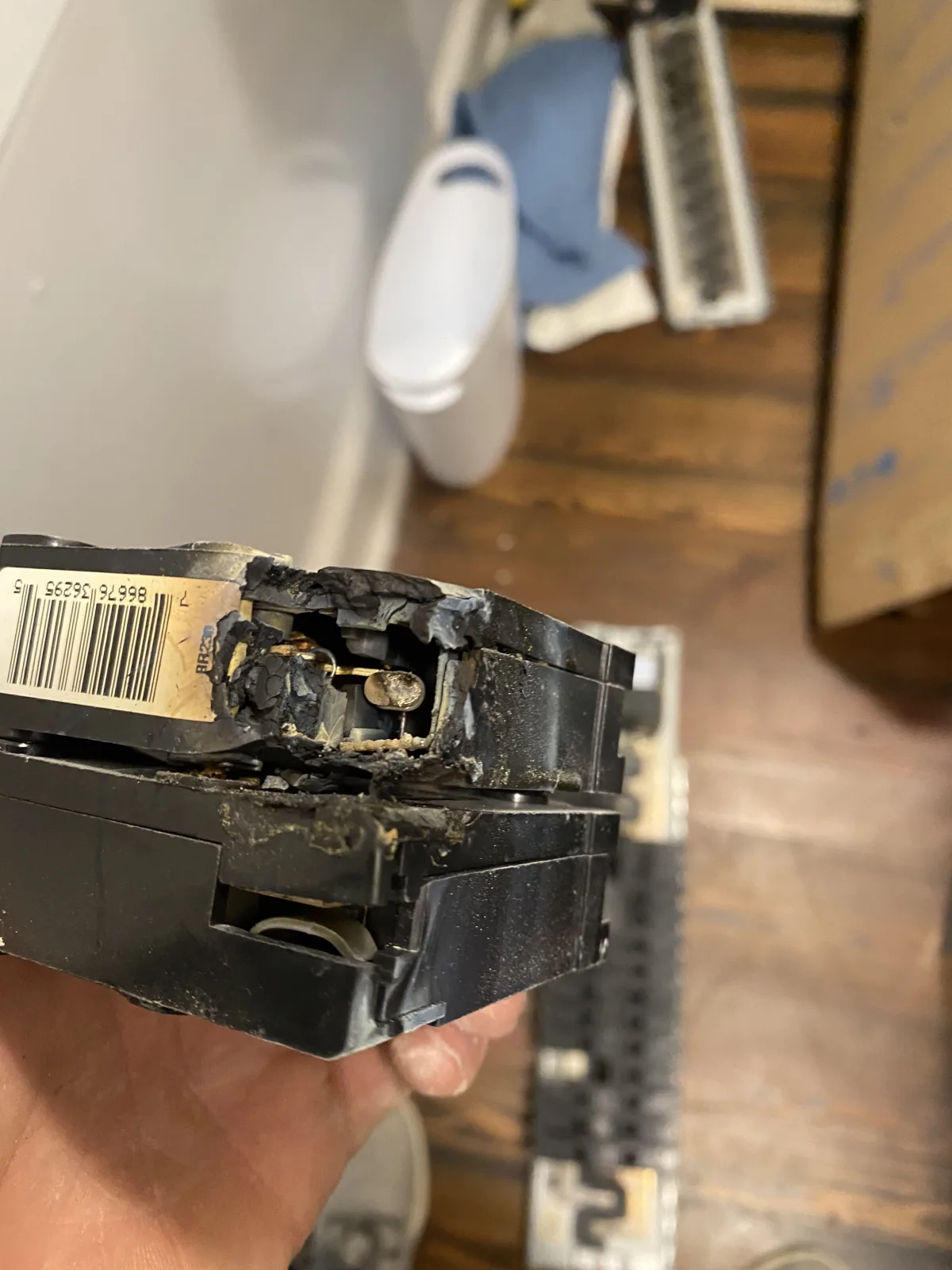
Melted, scorched circuit breaker held in a hand after removal from a Challenger panel

A breaker that keeps tripping

Too many things running on one circuit will trip its breaker. So will a hot wire touching metal, which sends current down the ground path, or water in an outlet or fixture. A breaker that still trips with everything unplugged and switched off points to a problem inside the wiring. The breaker itself can also be faulty or the wrong size for the circuit.
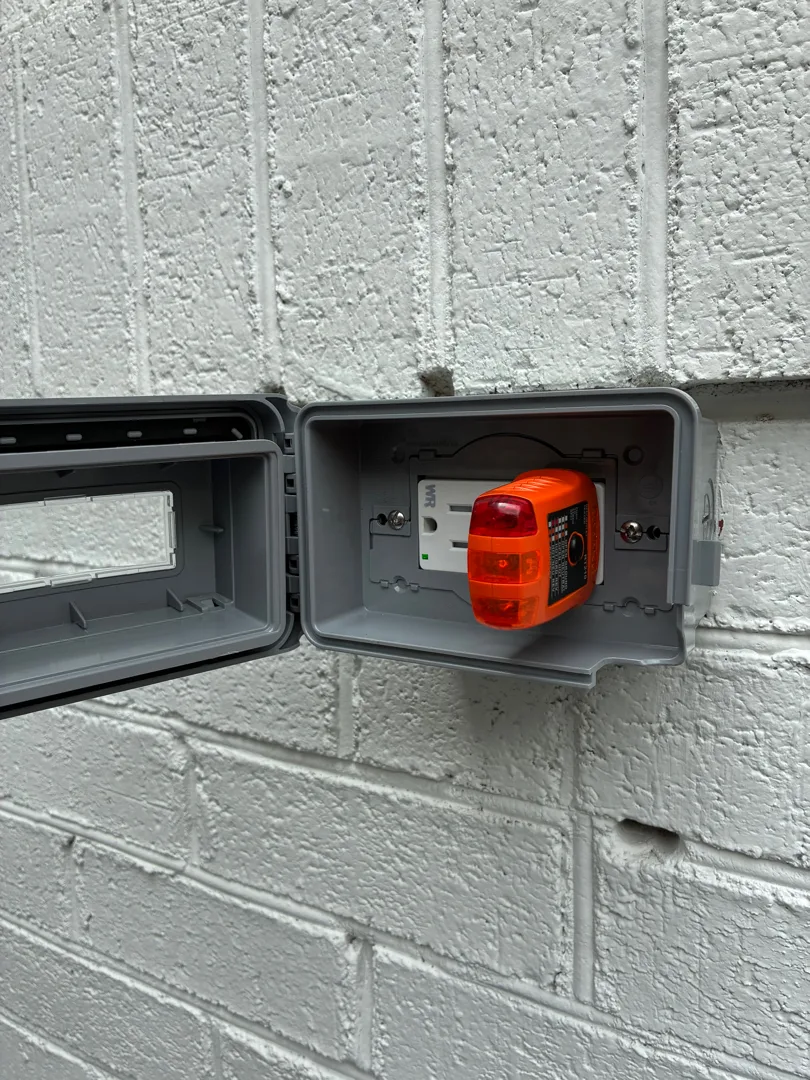
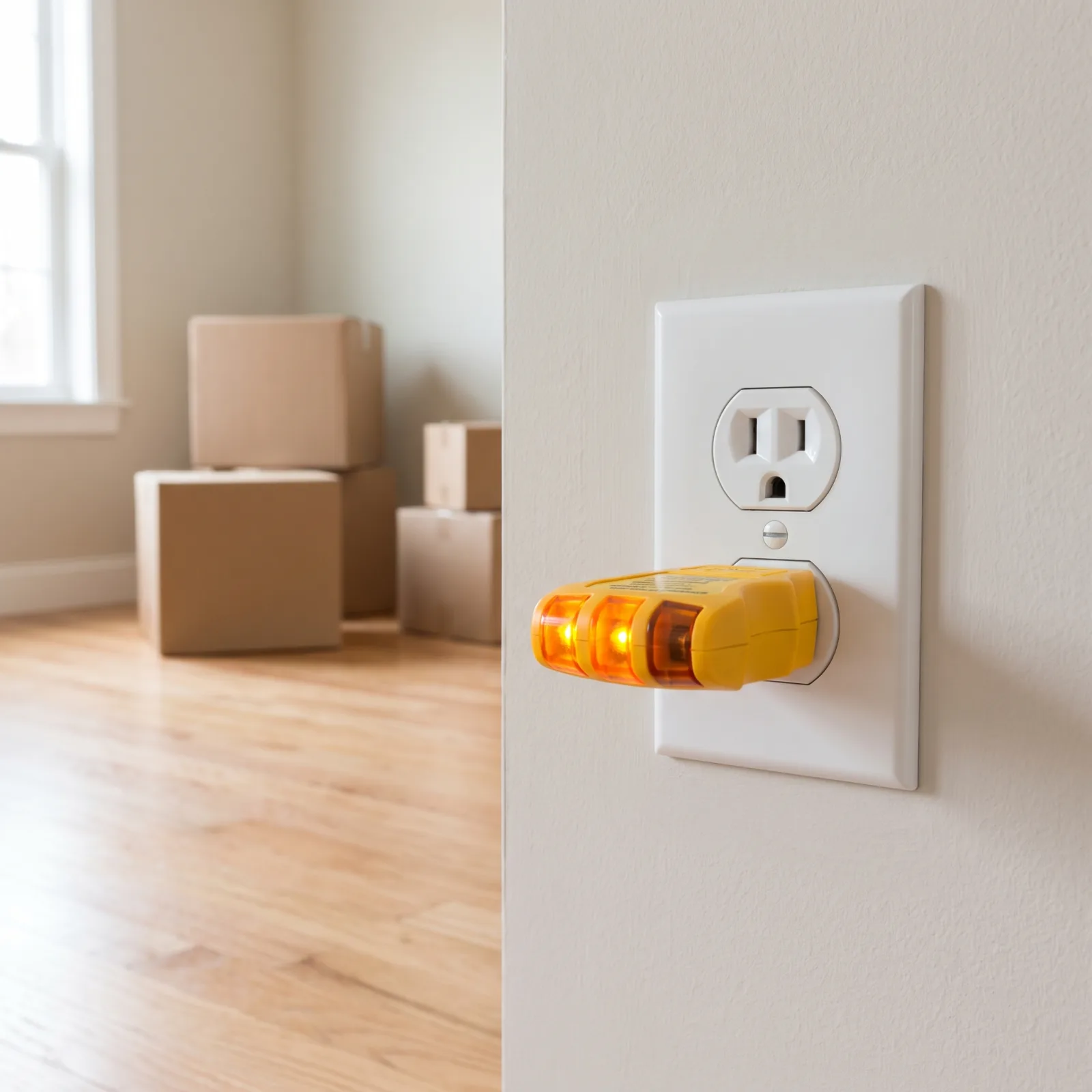
Orange plug-in outlet tester with its red lights on, plugged into a white GFCI outlet inside an open gray in-use cover on a white-painted block wall

Outlets or switches that stopped working

Outlets that go dead outside, in bathrooms or in the garage are often on a GFCI that has tripped, and some GFCIs are breakers in the panel. If a reset doesn't bring the power back, we check for a loose or backstabbed connection behind the outlet or switch, or a tripped AFCI breaker.

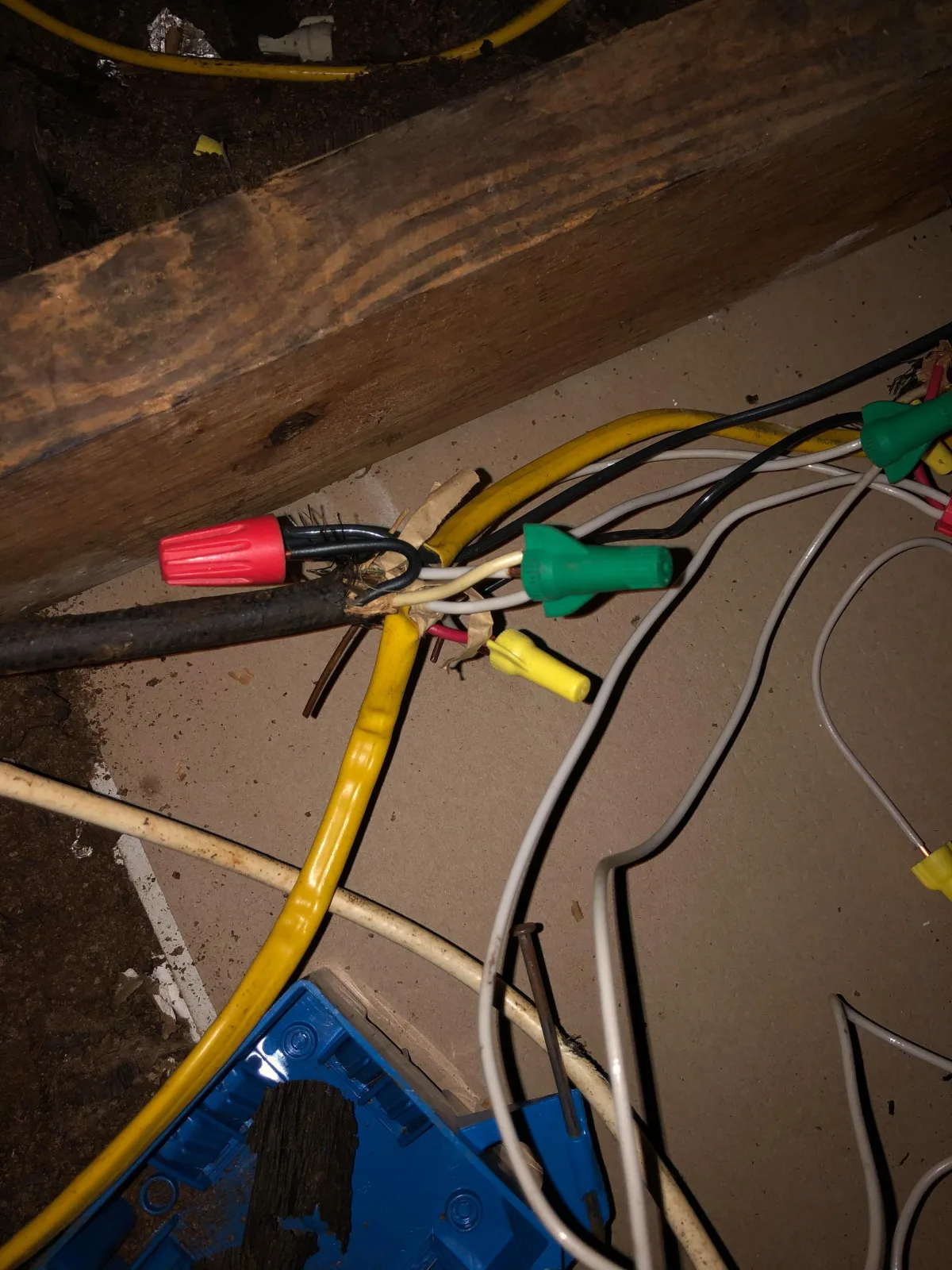
Cloth-covered cable spliced to yellow and white modern cables with red, green and yellow wire nuts, the connections lying loose in an attic outside any box

Lights that flicker or dim

When one light or one room flickers, common causes are a loose bulb, a loose connection, an overloaded circuit or a failing fixture. Splices like these, made outside a junction box, get repaired and moved into a proper box when we find them. If the whole house flickers, have the power company check their connections before anything else.

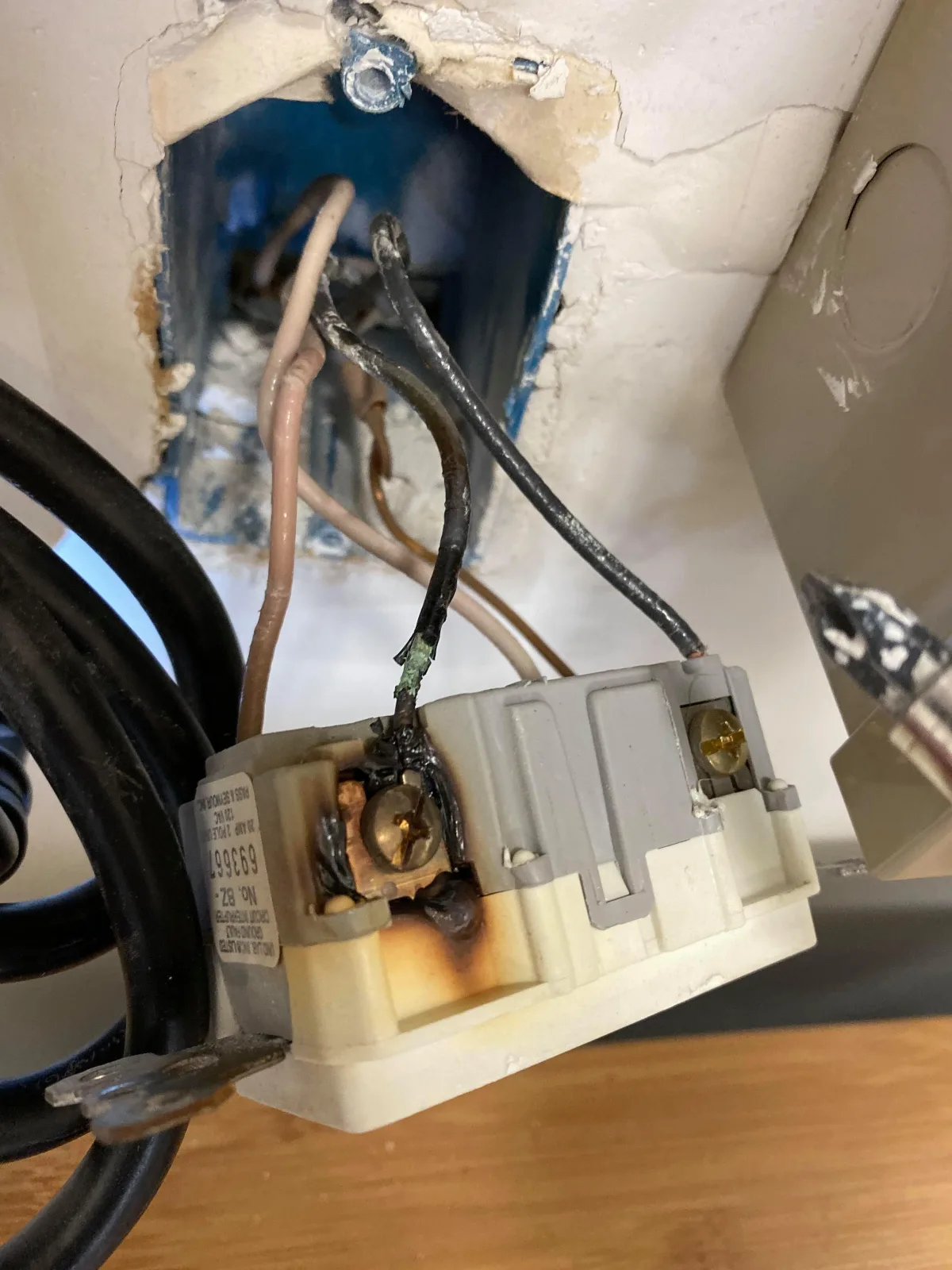
GFCI receptacle pulled out of a blue wall box through a ragged drywall hole, the screw terminal on one side blackened and its wire's insulation melted, with green corrosion on the bare copper above it

A burning smell, or an outlet that's warm

A loose connection heats up, melts the insulation around it and can start a fire. Stop using that outlet or switch, turn off its breaker and keep the breaker off until it has been checked. If you see smoke or flames, get out of the house and call 911.

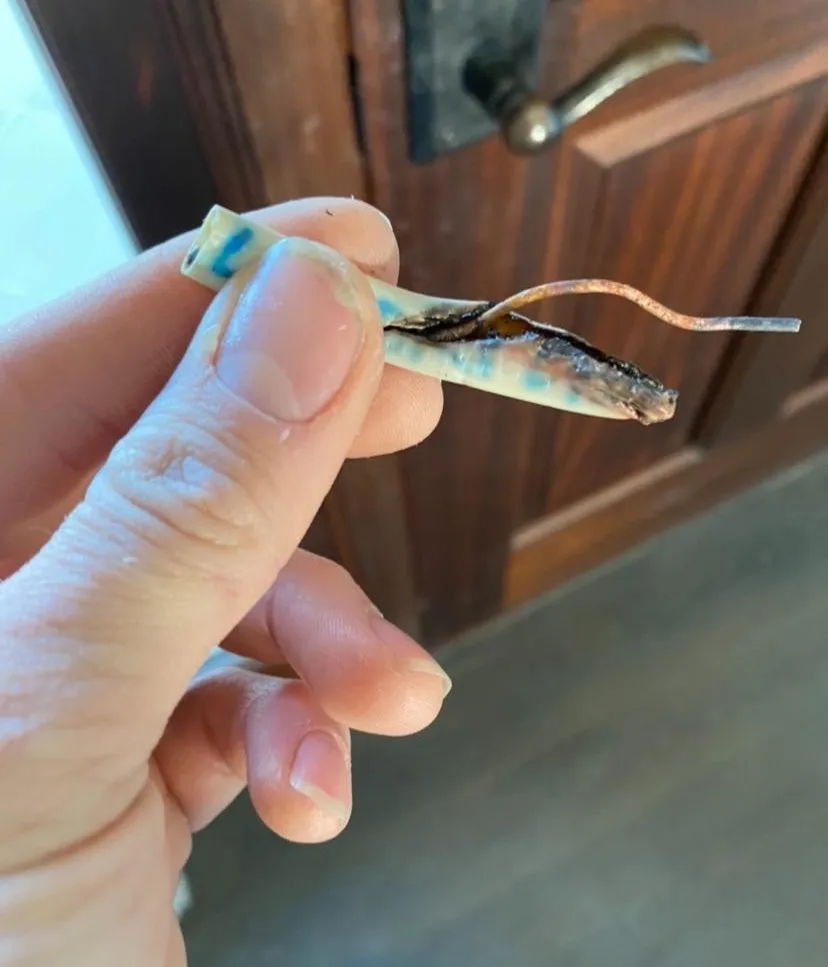
Short length of white cable held between two fingers, its insulation melted and blackened around the bare copper wire

Lights that go out for days, then come back

One homeowner's lights would stay off for a few days, then come back on, and the house had a burning smell. The cause was a loose wire that had heated up and melted while it tried to make contact, and it could have started a house fire. Partial power loss can also come from a tripped breaker or GFCI, so check those first.

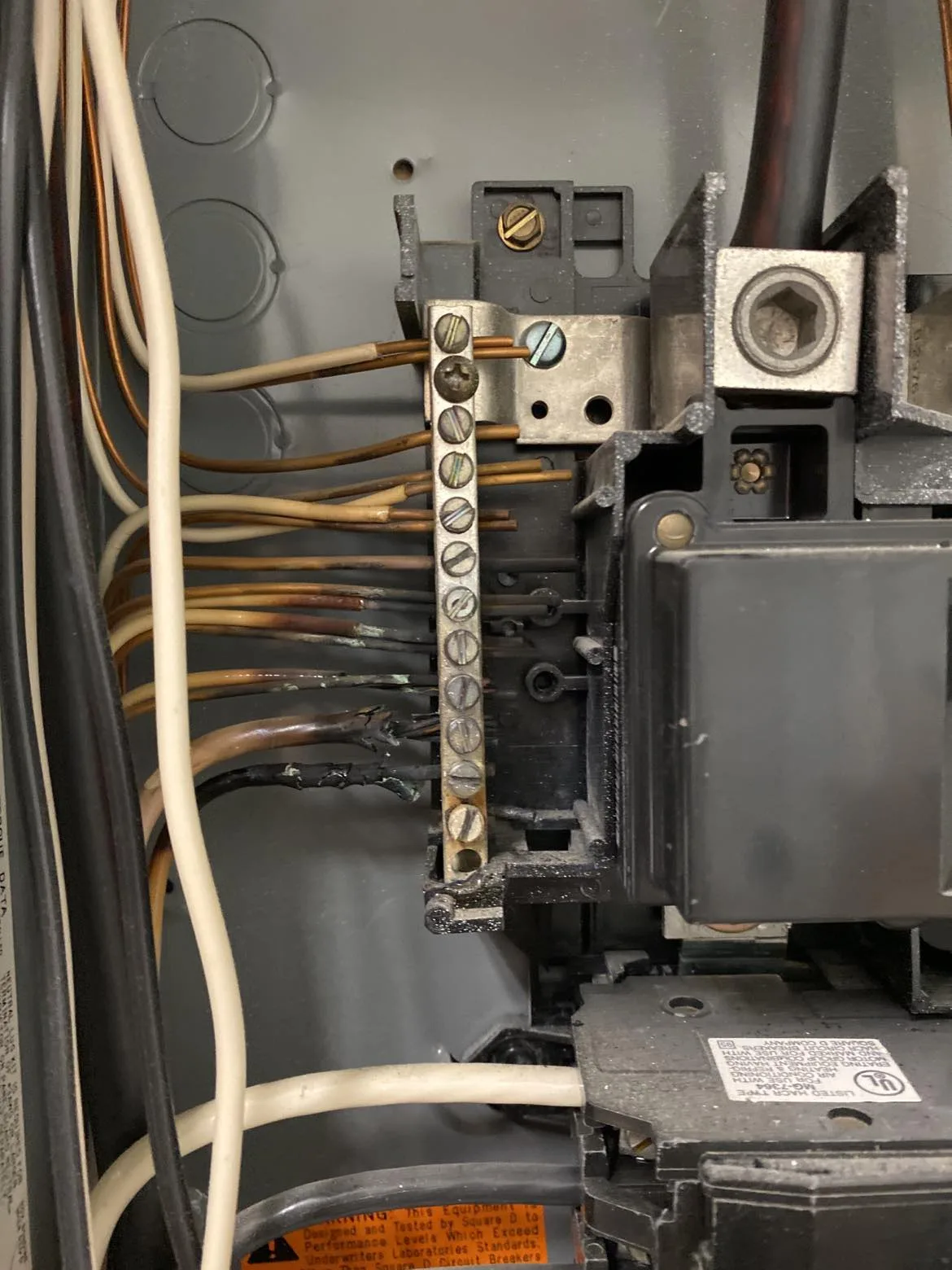
Panel wiring scorched by a storm surge

Storm or surge damage

South Carolina averaged 11.2 cloud-to-ground lightning flashes per square mile per year from 2009 to 2018, 13th among the states. A surge from a strike can burn and melt wiring, as it did in this panel, so have the panel and the affected circuits checked after a strike. Andrew recommends a surge protector in every electrical panel, installed as close to the main breaker as possible.

Before you call

What can you safely check before you call?

You can safely reset a breaker or a GFCI outlet and find out what's tripping a circuit. Stop if the breaker trips again with everything off, or if anything is hot, buzzing or scorched: leave that breaker off and call us.

Switch off and unplug

Turn off the light switches and unplug everything on the circuit that lost power.

Reset the breaker

Reset the tripped breaker in the panel. If it won't stay on with nothing plugged in, stop here and call us.

Add things back one at a time

Plug things back in one at a time, then turn the switches on one at a time. When the breaker trips, leave that item off and use the rest of the circuit until an electrician checks it.

Press RESET on GFCI outlets

GFCIs are the outlets with TEST and RESET buttons, found in bathrooms, the kitchen, the garage, outdoors and on docks or porches. Press RESET on any that tripped, and check the panel, because some breakers are GFCIs.

Try the vacuum on another circuit

A vacuum motor can trip an AFCI breaker as it starts up. Try it on an outlet on another circuit, and if it still trips a regular breaker, the vacuum may be the problem.

Call the utility for whole-house flicker

If lights flicker all over the house, call the power company first and ask them to check their connections. For one flickering light, make sure the bulb is snug in its socket.

Don't take the cover off the panel or remove outlet and switch cover plates. As our post on problems you can safely handle yourself puts it, "if it takes more than flipping a switch, pressing a button, or changing a bulb," it's a job for an electrician.

Still not working after the resets?

Send photos of the outlet, switch or panel and a quick note on what's happening, or call the office. When the repair is clear from your photos, we usually reply with a free quote the same day.

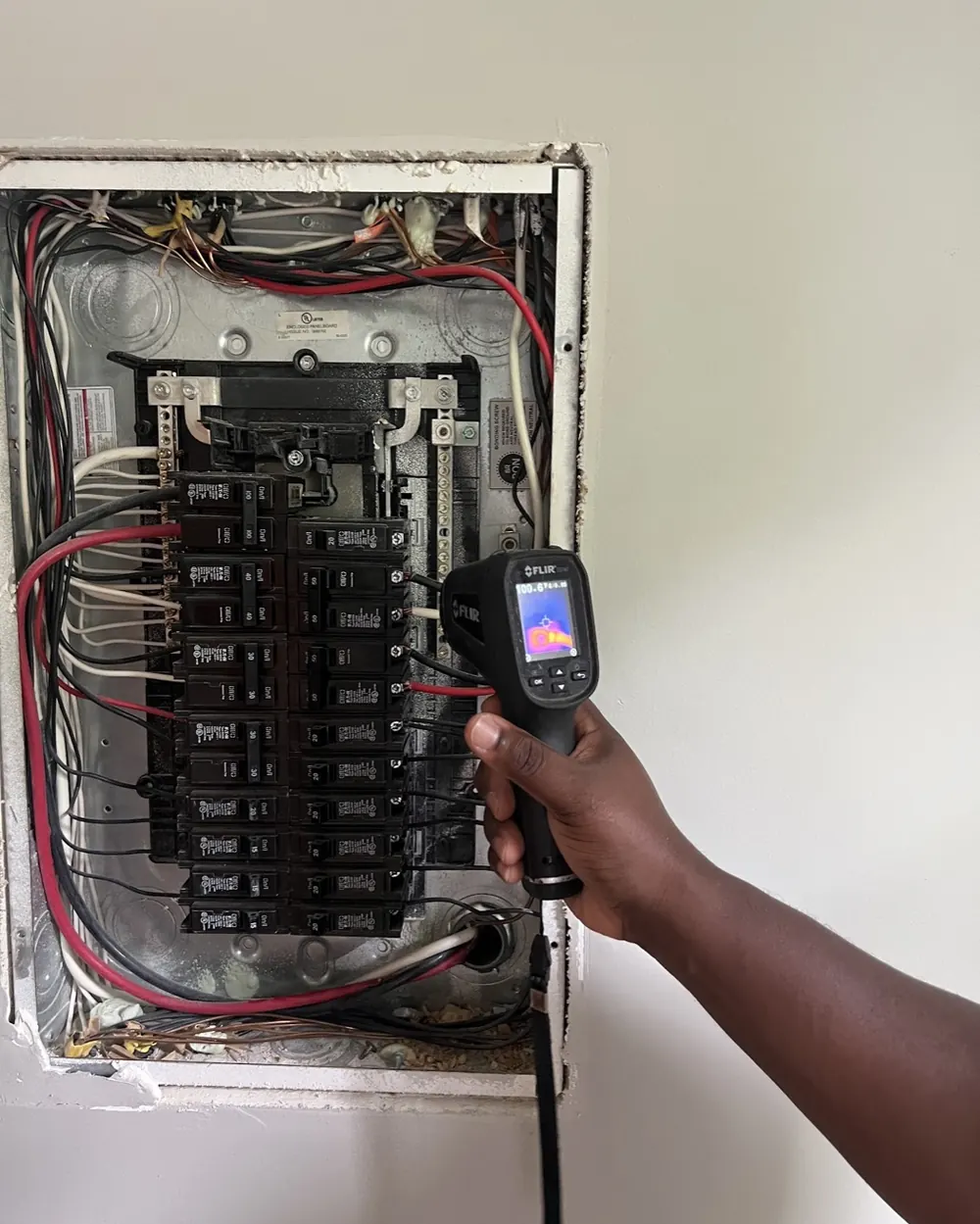
Thermal camera checking an open electrical panel
SC License M118633
Master Electrical

What we repair

What we repair once we find the cause

Once the cause is found, we tell you which repair it calls for and price it before any repair work starts. Sometimes that's one breaker instead of a new panel, or one remade connection instead of new wiring. If the fix calls for a new circuit, that's installation work, and it's priced up front too.

Carlos, our Field Operations Manager, has more than 20 years in the trade, and troubleshooting is one of his strengths. Every repair is made by an experienced electrician, never a trainee.

Diagnosis, billed hourly

You pay for the electrician's time while they track down the fault, and the hourly billing ends once the cause is found.

Then a price for the repair

Next you get an up-front price for the repair, and you decide whether to go ahead. The price includes the parts, so you know the cost before any repair work starts.

The camera in this photo is a thermal imager. It shows heat at loose connections and failing parts that look fine to the eye, and a thermal imaging test of the panel is one of the tests in our preventative maintenance package.

Breakers

Standard breaker, GFCI or AFCI: what's tripping?

A standard breaker trips on an overload or a short circuit, a GFCI trips when current leaks out of its normal path, and an AFCI trips when it senses arcing in damaged wire. Knowing which one tripped tells you, and us, where to start looking.

Standard breakerGFCIAFCI
What it watches forOverloads and short circuitsCurrent leaking out of its normal path, down to an imbalance as small as 4 to 6 milliampsArcing in damaged wire, which distorts the electrical waveform
What it preventsOverheated wiringElectric shockFires started by arcing inside walls
Where South Carolina requires itEvery circuit has overcurrent protection125-volt receptacles in bathrooms, garages, kitchen countertops, laundry areas, crawl spaces, basements (not walk-out basements), boathouses and outdoors, within 6 feet of sinks, tubs and showers, and in indoor damp or wet locationsBedrooms, living and family rooms, dining rooms, dens, sunrooms, closets, hallways and similar rooms; not kitchens or laundry areas
Common reasons it tripsToo much running on one circuit, or a shortMoisture, or a damaged cord or applianceA screw or nail through a wire, such as from mounting a TV, or a motor such as a vacuum starting up

A GFCI can keep supplying power after its protection has failed, so press its TEST button regularly: the power should shut off, and RESET brings it back. More in our posts on arc fault protection and GFCI outlets.

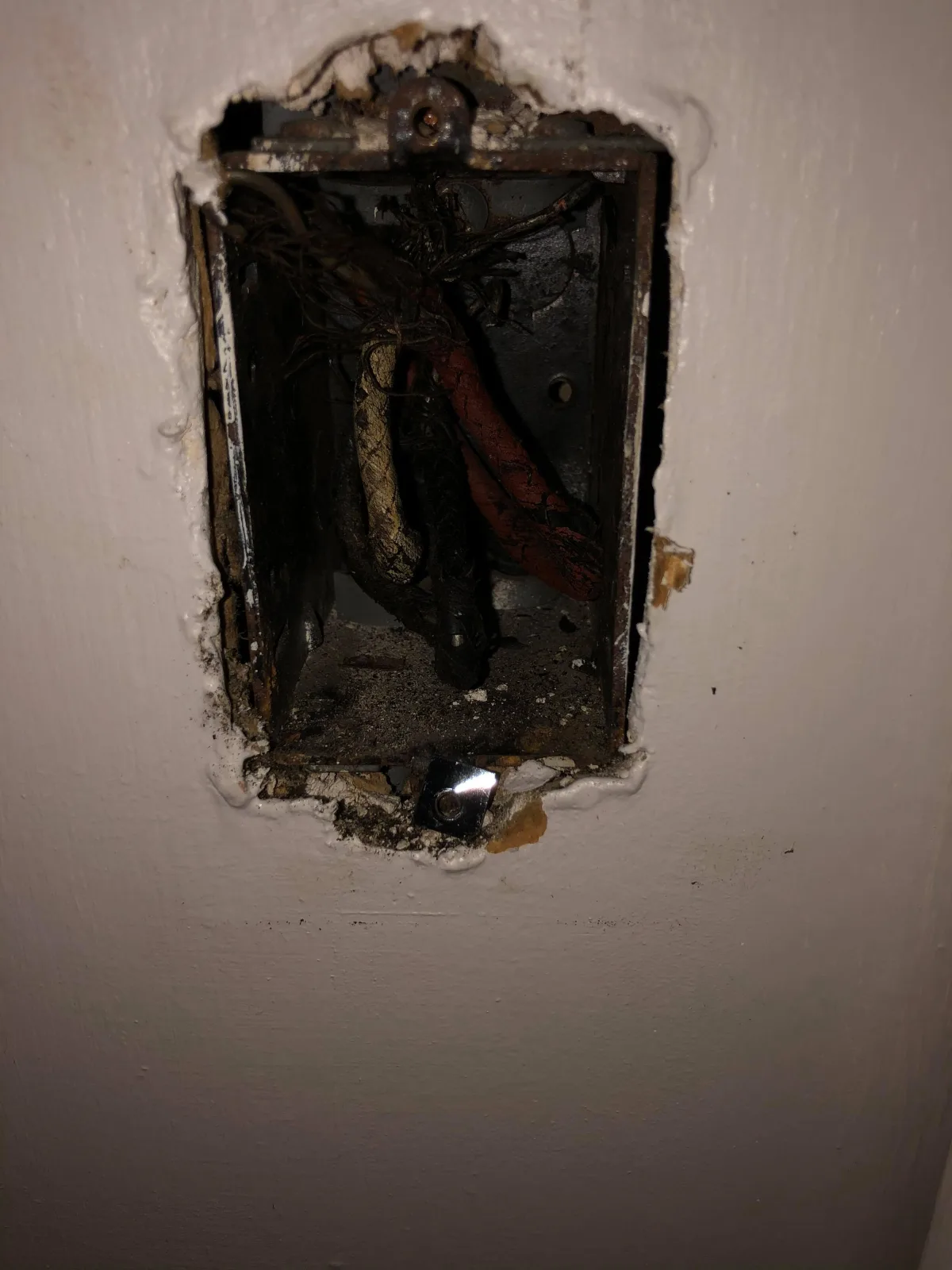
Crumbling cloth-insulated wires inside a rusted metal electrical box in a wall, with the device removed

Crumbling cloth-insulated wiring in a rusted metal box.

Older homes

Older wiring around Charleston

Many homes around Charleston are decades old, and their wiring can be too. More than half the homes on the lower peninsula (ZIP 29401) were built before 1940. Inner West Ashley (ZIP 29407) has a median build year of 1971, and most homes in the Town of James Island went up between 1950 and 1979. In the Olde North Charleston historic district, 78 of 86 developed lots were built before 1956. Most of Mount Pleasant is newer, with a median build year of 2000, but thousands of its homes date from the 1960s and 1970s.

Homes built before the 1960s often have ungrounded two-prong outlets, and some older homes have light fixtures mounted with no electrical box behind them. The U.S. Consumer Product Safety Commission says cables installed in new homes, additions and rewired circuits between 1965 and the mid-1970s may contain aluminum wiring. Near the water, salt air shortens a panel's life. When we troubleshoot an older home, these are the problems we check for:

Pricing

What affects the cost of troubleshooting and repair?

Troubleshooting is billed by the hour until the electrician finds the cause, so its cost depends on how long the fault takes to find. The repair gets its own price, up front, and you see it before any repair work starts.

Time to find the fault

Diagnosis is hourly. A fault that shows up on the first test takes less time to find than one hidden in a wall.

Intermittent faults

A problem that comes and goes, like lights that stay off for days and then come back, can take longer to isolate.

Access

Wiring in an attic, a crawl space or behind finished walls and ceilings takes longer to reach.

How much is involved

One dead outlet takes less time than several circuits or devices with problems.

The repair itself

Priced up front after diagnosis, including the part: a standard, GFCI or AFCI breaker, an outlet, a switch or a fixture.

Breakers on hand

We stock Square D, Siemens, Eaton and GE breakers, so most panel issues are fixed on the first visit.

Photo quotes are free and work best when you already know which outlet, switch or fixture needs replacing. An in-person consultation carries a fee that depends on your location, and that fee is credited toward the work if you hire us.

How it works

How a troubleshooting visit works

1

Tell us what's happening

Call, text or email the office, or use our online request form, with what you're seeing and when it started. Photos of the outlet, switch or panel help.

2

Set up the visit

The office follows up to put the troubleshooting visit on the calendar.

3

Diagnosis, billed hourly

The electrician works through the circuits, testing as they go, until the cause is found.

4

Approve the repair price

You get an up-front price for the repair, and nothing is repaired until you say yes. Our electricians aren't paid on commission, so no one is selling you work you don't need.

5

The repair

The electrician makes the repair you approved. Installation work carries a one-year workmanship warranty, written on your contract.

Prefer an in-person consultation? Call, text or email the office to set one up. The fee varies by location and is credited toward the work if you hire us.

Reviews

What troubleshooting customers say.

Each of these Google reviews mentions finding or fixing an electrical problem.

5.0
★★★★★

Google rating

★★★★★

“Andrew is a great electrician. Very competent and fair. He identified issues at our home that were not wired probably and corrected it. Identified panel issue that caused pyr lights to flicker and helped me speak with Dominion Energy to explain the issue and get them put to correct the problem. He installed dimmer and hung a chandelier in my bathroom for me. He Very personable and cleans up after the job. He has fair prices and always completes the job. Highly recommend him.”

L
Linda P.
Google review · Flickering lights and repairs
★★★★★

“Gloudeman came, diagnosed the electrical issue, proposed a solution, and implemented a quality solution within 1.5 hrs. So thankful! 5 STARS all the way!”

K
Kristin P.
Google review · Diagnosis and repair
★★★★★

“We were very pleased with Gloudeman Electric! Requesting their service via their online system was easy and they were quick to respond, ask more questions about our issues and schedule an appointment. They diagnosed and fixed our main issue quickly (needed separate GFI lines). They also “delighted” us with replacing our broken door bell with a new one at no charge. The work charges were reasonable and they were professional, pleasant and informative. Will definitely use them again for any future needs!”

L
Lynda K.
Google review · Separate GFI lines
★★★★★

“Had a shopping list of electrical problems too plentiful to deal with myself. So called Gloudeman based on Nextdoor recommendations. Exceeded already high expectations! On time, friendly, knowledgeable. A “can do” attitude. Rep had all equipment and parts to replace (appliances) on hand. No trips to distributors stringing out the project. No “yeah, you hat a real problem here” nonsense. Done in 90 minutes! Don’t price shop. Don’t call around. Call them first!”

D
David B.
Google review · A list of electrical problems
★★★★★

“Andrew was awesome, he diagnosed the issue and went above and beyond. He was timely, very nice and didn't try to sell me anything that I didn't need. I would hire him again and recommend him to anyone needing an electrician. 10/10”

M
Mikey13
Google review · Diagnosis, no upselling
★★★★★

“Gloudeman Electric listens to your concerns, and is always willing to troubleshoot problems and provide the best, most reasonable solutions with great, friendly customer service.”

A
Ashley H.
Google review · Troubleshooting

Reviews are shown word for word from our Google profile. We're also a Nextdoor Neighborhood Favorite.

FAQ

Troubleshooting questions, answered.

Still have a question?

Call or text the office Mon to Fri, 9 to 5, or email us anytime.

How much does electrical troubleshooting cost?

Troubleshooting is billed by the hour until the electrician finds the cause, so the cost depends on how long the fault takes to track down. Once the cause is found, you get an up-front price for the repair, and the repair waits until you approve it. Intermittent problems, hard-to-reach wiring and several circuits at once all add time. If you already know what needs replacing, send photos for a free quote.

A breaker trips when too many things are running on one circuit, when a hot wire touches metal, or when water gets into an outlet or fixture. Turn off the switches, unplug everything on that circuit and reset the breaker. If it trips again with everything unplugged and switched off, the problem is probably in the wiring or the breaker itself, so leave the breaker off until an electrician checks it.

Dead outlets, especially outside, in bathrooms or in the garage, are often on a GFCI that has tripped. Press RESET on the GFCI outlets (the ones with TEST and RESET buttons) and check the panel, because some breakers are GFCIs. If the outlets are still dead after that, the next suspect is a loose or backstabbed connection, which is work for an electrician.

Common causes of a flicker in one light or one room are a loose bulb, a loose connection, an overloaded circuit or a failing fixture, so start by making sure the bulb is snug in its socket. Flicker all over the house points to the utility's side: call the power company first. A loose neutral where the utility brings power in can send higher-than-normal voltage to 120-volt outlets and lights and ruin what's plugged in.

In most cases, no. An AFCI that trips is usually detecting a real problem, such as arcing where a nail, screw or staple has damaged a wire, and removing it leaves that problem in the wall with nothing watching it. Some motors, such as a vacuum starting up, can look like arcing to an AFCI. When a motor load is the cause, the fix is isolating that circuit or designing the load properly.

When the problem is in the panel, usually yes: most panel issues, such as a breaker that needs replacing, are fixed on the first visit, and we stock Square D, Siemens, Eaton and GE breakers. For any problem, the electrician finds the cause first, then you get a price for the repair, and no repair work starts until you approve it.

Stop using the outlet, turn off its breaker and leave the breaker off until an electrician checks it. Treat a warm outlet or switch cover the same way. A burning smell can mean a loose connection is heating up and melting the insulation around it, which can start a fire. If you see smoke or flames, get everyone out of the house and call 911.

A return visit is a new troubleshooting visit unless the electrician finds an installation error, which our one-year workmanship warranty covers. That warranty applies to installation work and is written on your contract. It doesn't cover devices that fail or are damaged by a surge, and items you supply carry only their manufacturer's warranty.

Tell us what's going wrong.

Call or text the office, or send a few photos for a free quote. We usually reply to photo quotes the same day.

Already approved your quote?