Blog · 3 min read
Why the Electrical Box Matters When Installing Light Fixtures
Ceiling Fans
New and replacement ceiling fans for Mount Pleasant and Charleston homes, each one hung on a fan-rated box secured to the ceiling framing.
Already have a quote?
The short answer
Installing a ceiling fan means mounting it to a fan-rated electrical box secured to the ceiling framing, because a fan's constant motion and vibration make a standard light fixture box unsafe, even when the fan itself isn't heavy. The fan then hangs with its blades 7 feet or more above the floor, on a downrod when the ceiling is tall or sloped.
Fan jobs come in three kinds: replacing an old fan, swapping a light fixture for a fan, and adding a fan where there's never been one. A replacement reuses the wiring that's already there, once it's checked. A light-to-fan swap needs a fan-rated box, unless the box in the ceiling is already rated for a fan, and a new spot needs new wiring run to it. The side-by-side comparison below lays out all three.
Customer-supplied fans are welcome: your fan carries its manufacturer's warranty, and our one-year workmanship warranty, written on your contract, covers the installation. Tall and porch ceilings bring their own choices: a tall ceiling needs the right downrod length, and a porch needs a fan rated for damp or wet locations.
Fan jobs
You pick the fan. The ceiling sets most of the work: the box that's up there, how high the ceiling is and how steeply it slopes.
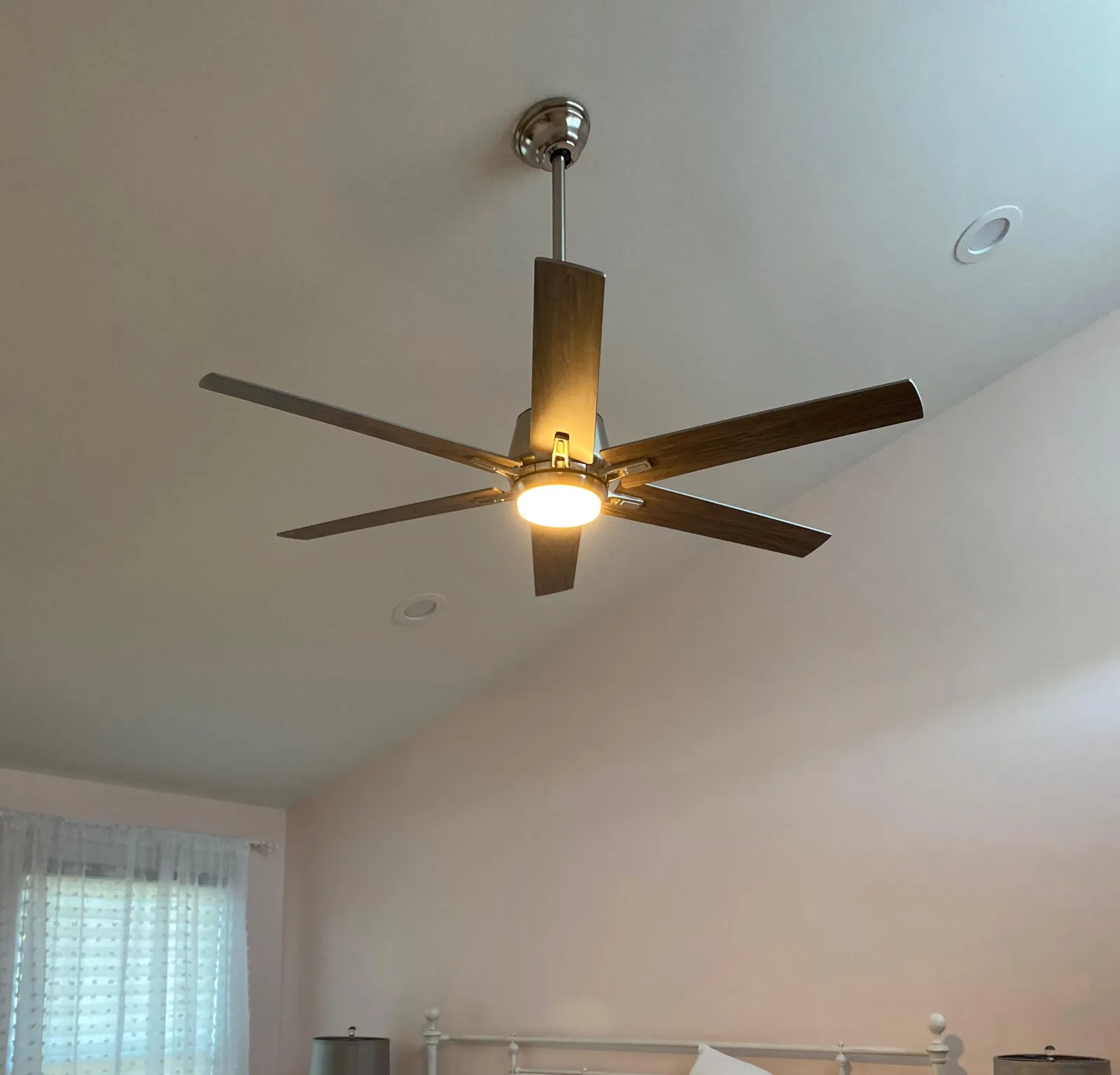
A new fan goes up where the old one hung, once the electrician has checked the box and the wiring above it. Our post on worthwhile home upgrades suggests looking for fans with remote control, a reversible motor for year-round use and built-in LED lighting. Like your fan but not its light? A light kit can brighten it, as one of the reviews below describes.
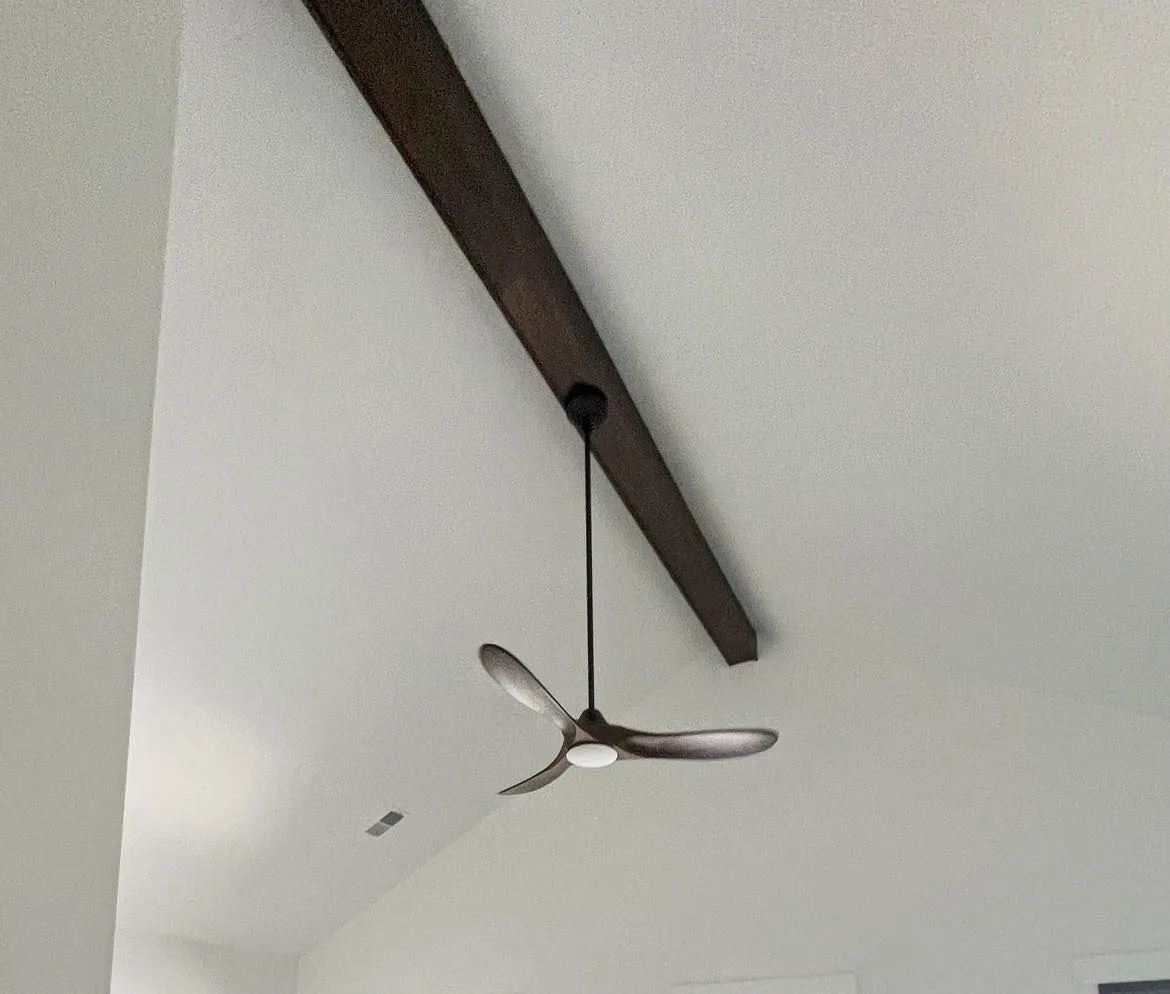
Under a tall or beamed ceiling, the downrod (the rod between the ceiling mount and the motor) sets how far down the fan hangs. Hunter's guide says to choose its length so the blades stay 7 feet or more above the floor and the fan stays 30 inches from the wall and other objects.
A sloped ceiling takes an extension downrod, plus an adapter once the angle passes 34 degrees. Steeper than 56 degrees, the fan needs a custom mounting fixture from an electrician. A photo that shows the slope helps us quote the right mount.
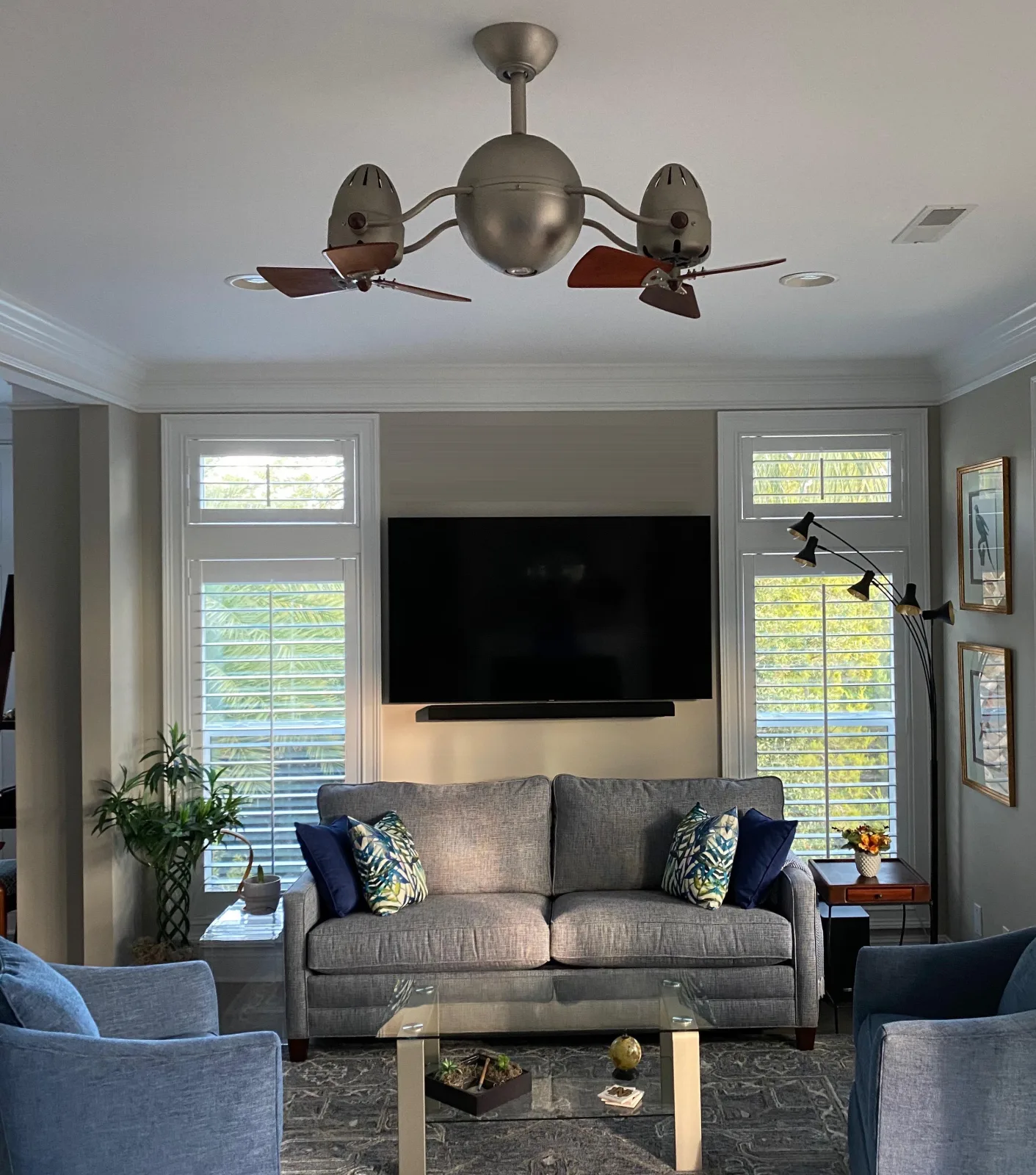
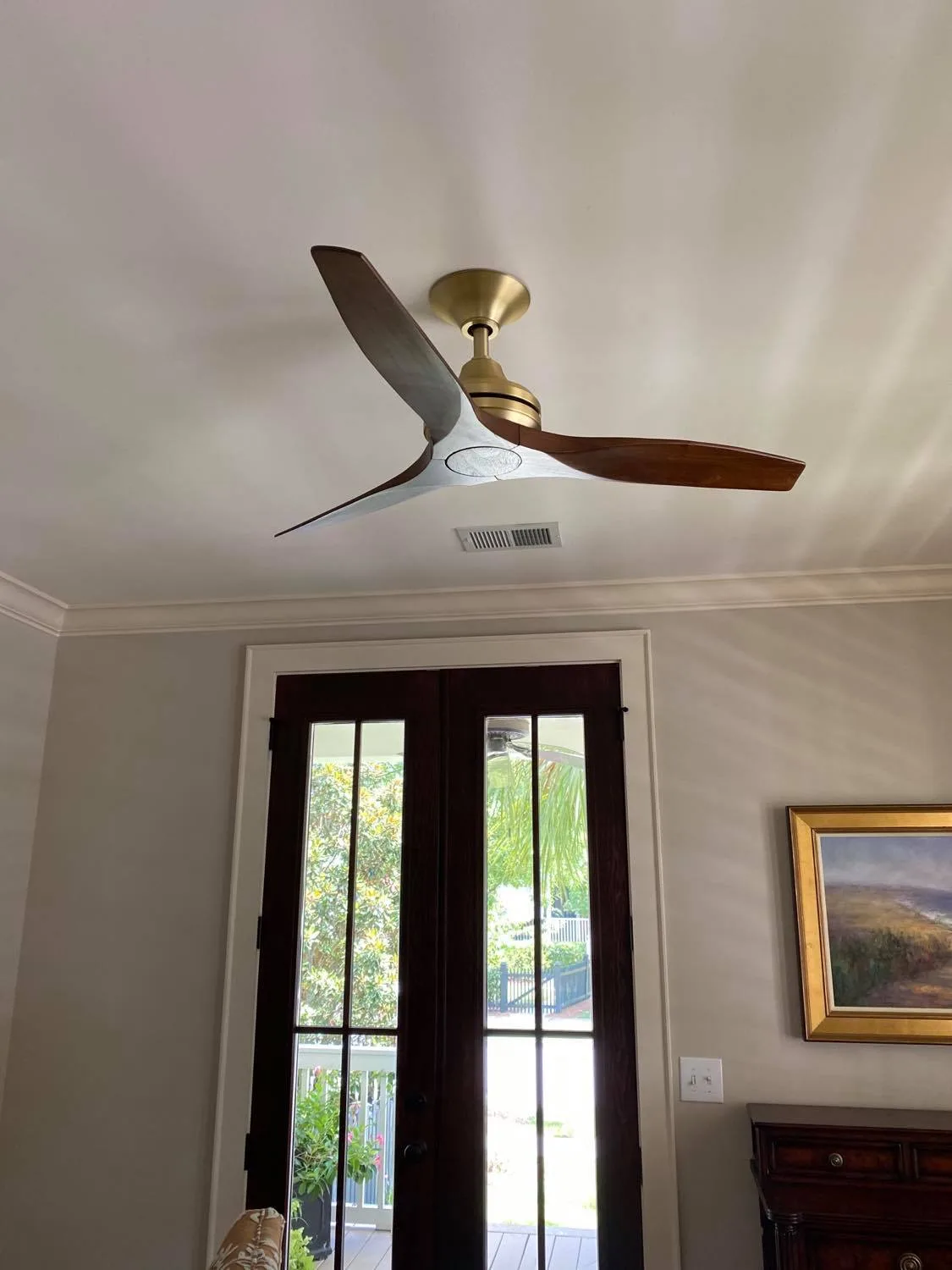
A twin-head fan like this one hangs two motors from a single mount. Whatever the fan, Hunter's guide says its box should support 70 pounds (look for "Approved for Ceiling Fans" or "Rated for 70lbs") and be mounted to a ceiling joist, a wood block or an adjustable brace. We check the box against your fan's weight before the fan goes up.
Your options
A fan replacement, a light-to-fan swap and a fan in a new spot differ in two places: the box and the wiring above the ceiling. Here they are side by side, so the options in your quote make sense.
| Replace an old fan | Swap a light for a fan | Fan in a new spot | |
|---|---|---|---|
| What's there now | A ceiling fan | A light fixture | No fixture, and sometimes no wiring |
| The box | Checked, and replaced if it isn't fan-rated | A fan-rated box or brace goes in, unless the existing box is rated for a fan | A new fan-rated box or brace, secured to the framing |
| The wiring | Checked and reused | Checked and reused | New wiring run to the spot |
| Biggest cost factor | The box and the ceiling height | The box | Running new wiring and reaching the spot, through attic space above or a finished ceiling |
| Worth knowing | Newer fans can come with a remote, a reversible motor and built-in LED lighting | You can't always tell from below what box is in the ceiling | Hunter Fan recommends a licensed electrician when no wiring exists |
Whichever job you have, ask your installer the question from our post on why the electrical box matters: is the box rated for the weight and type of fixture going on it? A qualified electrician should be able to answer clearly.
Not sure what's in your ceiling?
Send a photo of the ceiling spot and the fixture or fan that's there now, plus the new fan's model number. We usually reply with a free quote the same day.
What we do
Every fan we hang in Mount Pleasant and across the Charleston area goes on a fan-rated box. The electrician on your job is experienced, never a trainee learning on your home.
A running ceiling fan keeps moving, shifting its weight and vibrating. Our post on electrical boxes says fans should never go on standard pancake boxes or basic fixture boxes, so ours go on fan-rated boxes secured to the framing.
Picked out a fan already? We'll install it. Send its model number with your photos so we can check the box against the fan's weight. A fan you supply carries only its manufacturer's warranty, and our one-year workmanship warranty covers the installation.
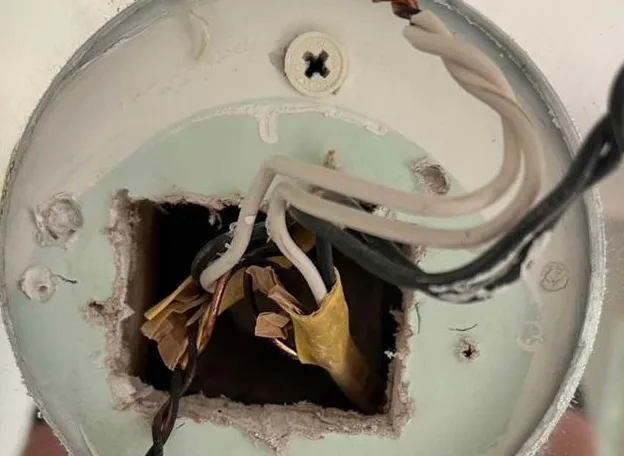
A problem found behind a ceiling fixture: wires pushed through a ragged hole, with no electrical box.
Light to fan
Yes, a ceiling fan can replace a light fixture when the electrical box in the ceiling is rated for a fan. If it isn't, a fan-rated box or brace goes in first. Hunter Fan's guide puts the same condition on the swap: "provided the electrical box is rated to support a ceiling fan."
You can't always tell which box is up there by looking at the light fixture. It might be an old-work box held in place by small plastic or metal ears that grip the drywall, and our post on electrical boxes notes that many of those are rated for only about six pounds. That's why an electrician sometimes needs to open the ceiling and check the box first. It's about safety, not upselling.
The ceiling in this photo had no box at all. Our post on older homes in Mount Pleasant and the Charleston area describes the same problem: light fixtures and ceiling fans attached directly to drywall or plaster, with no electrical box. When a new box goes in, we prefer metal over plastic where possible, because plastic boxes can crack and lose strength as they age.
More in our posts on why the electrical box matters and electrical issues in older homes.
A five-blade fan under the painted blue beadboard ceiling of a covered porch.
Porch fans
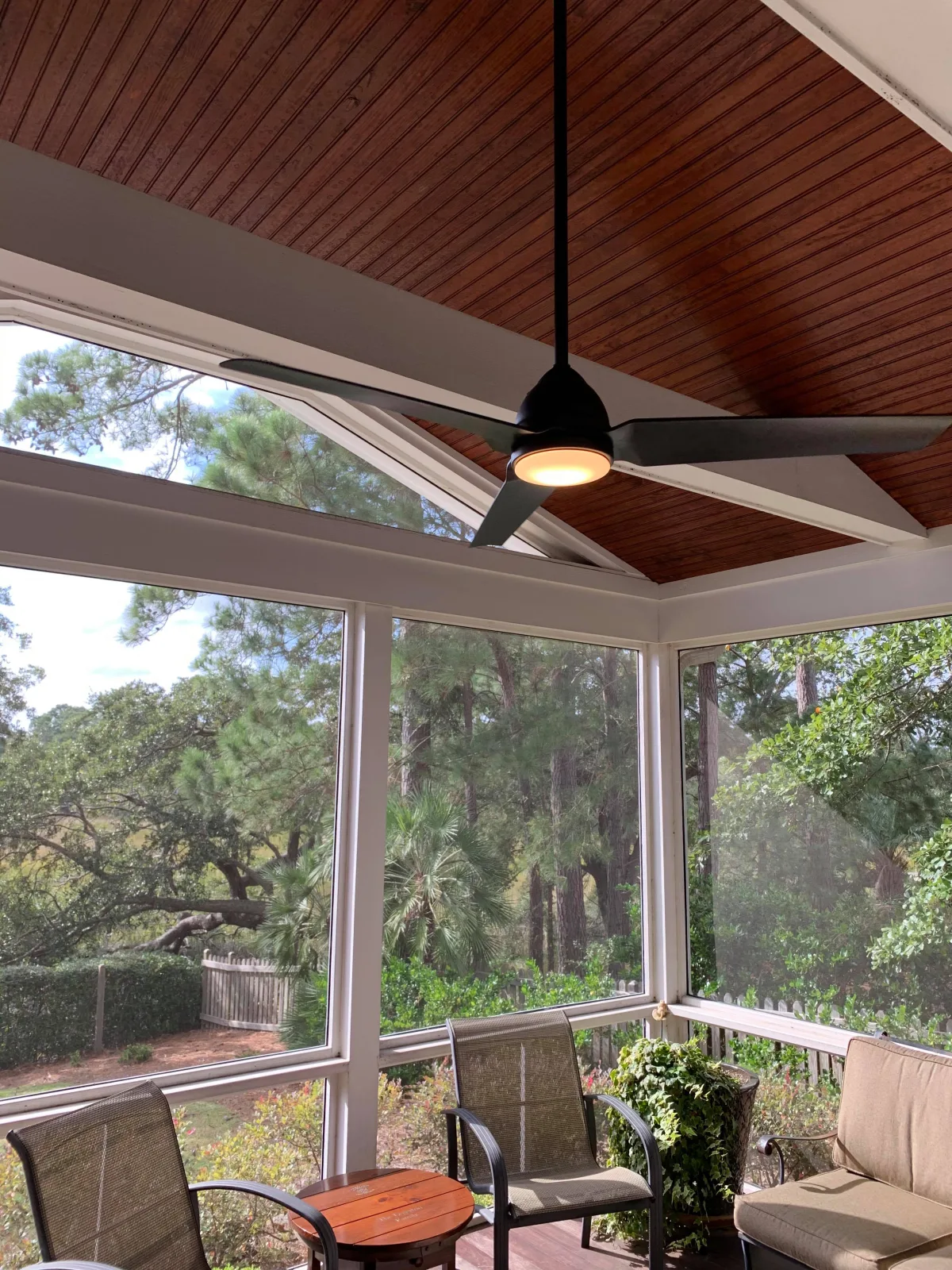
A porch fan needs an outdoor rating that matches how exposed its spot is: a damp-rated fan under a covered porch roof, and a wet-rated fan where rain can reach it.
Height and clearance rules apply outside too: blades 7 feet or more above the floor, and blade tips 30 inches from the nearest wall or obstruction. On a porch, that includes columns and posts.
Pricing
The cost of installing a ceiling fan depends mostly on three things: whether a fan-rated box is already in place, how high the ceiling is, and whether new wiring has to be run to a new spot. The six factors below set the price, so we don't publish a flat one. You see your price and approve it before any work starts.
A fan-rated box that's already in place keeps this part of the job small. Without one, a fan-rated box or brace goes in before the fan.
Tall and beamed ceilings take a longer downrod. Sloped ceilings take an extension downrod, plus an adapter once the angle passes 34 degrees.
Replacing a fan or a light reuses the wiring that's there. A fan in a new spot needs new wiring run to it, through attic space above or a finished ceiling.
The box has to be rated for the weight of your fan, so a heavier fan can call for a stronger box or brace. Send the model number with your photos.
A light kit or a remote control added to the same job.
Whether each fan on the job needs box work or new wiring.
Photo quotes are free. An in-person consultation has a fee that varies by location and is credited toward the work if you hire us.
How it works
Photograph the ceiling spot and the fixture or fan that's there now, and add the new fan's model number. We usually reply with a price the same day.
Nothing gets scheduled or started until you say yes. Our electricians aren't paid on commission, so no one is selling you work you don't need.
Once you approve the quote, the office reaches out to schedule the work. Or book it yourself online: we give you a Job Level to use with Request your appointment.
An experienced electrician, never a trainee, hangs the new fan. For a small fee, we can even haul away the old fan or fixture if you don't want to handle that yourself. Installation work carries a one-year workmanship warranty, written on your contract.
Need us to see the ceiling first? Call, text or email the office to set up an in-person consultation. The fee varies by location and is credited toward the work if you hire us.
Reviews
Each of these Google reviews mentions fan work.
Google rating
“I had a great experience with Gloudeman Electric! The team was responsive from inquiry through installation of two ceiling fans. …”
“Andrew replaced 4 ceiling fans for us, 3 of which had light fixtures attached. He was very professional, pleasant, and worked efficiently. He was running a little behind the day he was scheduled and his assistant texted me several times to give me updates as to when he would arrive. (which I greatly appreciated!). I would highly recommend using Gloudeman Electric!”
“Great experience having Andrew out to do electrical work. He installed light kits that brightened the lights in multiple overhead fans. Such a major lighting improvement having this work done. Andrew recommended this fix. We thought we had to buy entirely new fans. Great customer listening and problem solving on his part!”
“Great service! We had a very difficult issue with our fans cutting in and out. It was driving me crazy. Andrew never gave up and systematically approached the problem until finally it was fixed. He never got frustrated or gave up on us and we really appreciate the hard work it took to solve our issues. The estimate was very accurate no surprise when the final bill came due. I would highly recommend.”
“We had a great experience. They are very responsive to requests for an estimate and scheduling an appointment. Communication was timely, clear and concise. The technician was on time and very pleasant. He installed a ceiling fan, inspected all the ceiling fans in our home, repairing one. Plus he installed 2 new outlets. He cleaned up as he went along. And the charges were quite reasonable. We would enthusiastically recommend Gouldeman Electric to anyone.”
“Andrew responded almost immediately to my online request and gave me a quote to install a fan in my kitchen. I hired him and he was right on time on the appointed day. Unfortunately there was a glitch which made installing the fan more difficult for him, but he took it all in stride. He figured out what had to be done and the fan was successful installed. I can’t say enough about this young man. He has a terrific work ethic (which is hard to find today) and is very personable as well as professional. That’s why I’m hiring him for a second job! From now on Andrew will be our electrician.”
Reviews are shown word for word from our Google profile. We're also a Nextdoor Neighborhood Favorite.
FAQ
Still have a question?
Call or text the office Mon to Fri, 9 to 5, or email us anytime.
The cost to install a ceiling fan depends on whether a fan-rated box is already in place, how high the ceiling is and how long a downrod it needs, whether the fan replaces a fixture or goes in a new spot that needs wiring, the fan's weight, any light kit or remote control you add, and how many fans are on the job. Every room and porch is different, so each fan job gets its own price. Send a few photos for a free remote quote, and nothing starts until you approve it.
Yes, a ceiling fan can replace a light fixture when the electrical box in the ceiling is rated for a ceiling fan. If it isn't, our electrician installs a fan-rated box or brace first, then hangs the fan on it. Hunter Fan's installation guide sets the same condition: the swap works provided the box is rated to support a ceiling fan.
The most important part of a ceiling fan installation is the box the fan hangs from: it has to be rated for a ceiling fan and secured to the framing. A running fan keeps moving and vibrating, and our post on electrical boxes explains that fans should never go on standard pancake boxes or basic fixture boxes. Hunter Fan's guide adds that the box should support 70 pounds and be mounted to a ceiling joist, a wood block or an adjustable brace.
A ceiling fan should hang with its blades 7 feet or more above the floor, and the blade tips need 30 inches of clearance from the nearest wall or obstruction, according to Hunter Fan's installation guide. Under a tall or beamed ceiling, a downrod brings the fan down to a useful height.
Yes, a ceiling fan can hang from a vaulted or sloped ceiling on an extension downrod. A ceiling angle greater than 34 degrees also calls for an adapter, and for a ceiling steeper than 56 degrees, Hunter Fan's guide says to contact an electrician for a customized mounting fixture. Send a photo that shows the slope, and we'll quote the mount your ceiling needs.
A porch needs a fan with an outdoor rating that matches its exposure: a damp-rated fan for a covered porch and a wet-rated fan where rain can reach it. The height and clearance rules still apply outside: blades 7 feet or more above the floor, and blade tips 30 inches from the nearest wall or obstruction, porch posts included.
Yes, we install fans you buy yourself. Your fan carries its manufacturer's warranty, and our one-year workmanship warranty, written on your contract, covers the installation. Send the fan's model number with photos of the ceiling spot, and we'll price the installation up front.
Yes, we can put a ceiling fan where there's no wiring by running new wiring to a new fan-rated box secured to the framing. Hunter Fan recommends a licensed electrician when no wiring exists. The work depends on how the wire gets there: through attic space above the room, or through a finished ceiling.
Keep exploring
Recessed lights, heavy chandeliers, fixtures and under-cabinet LEDs.
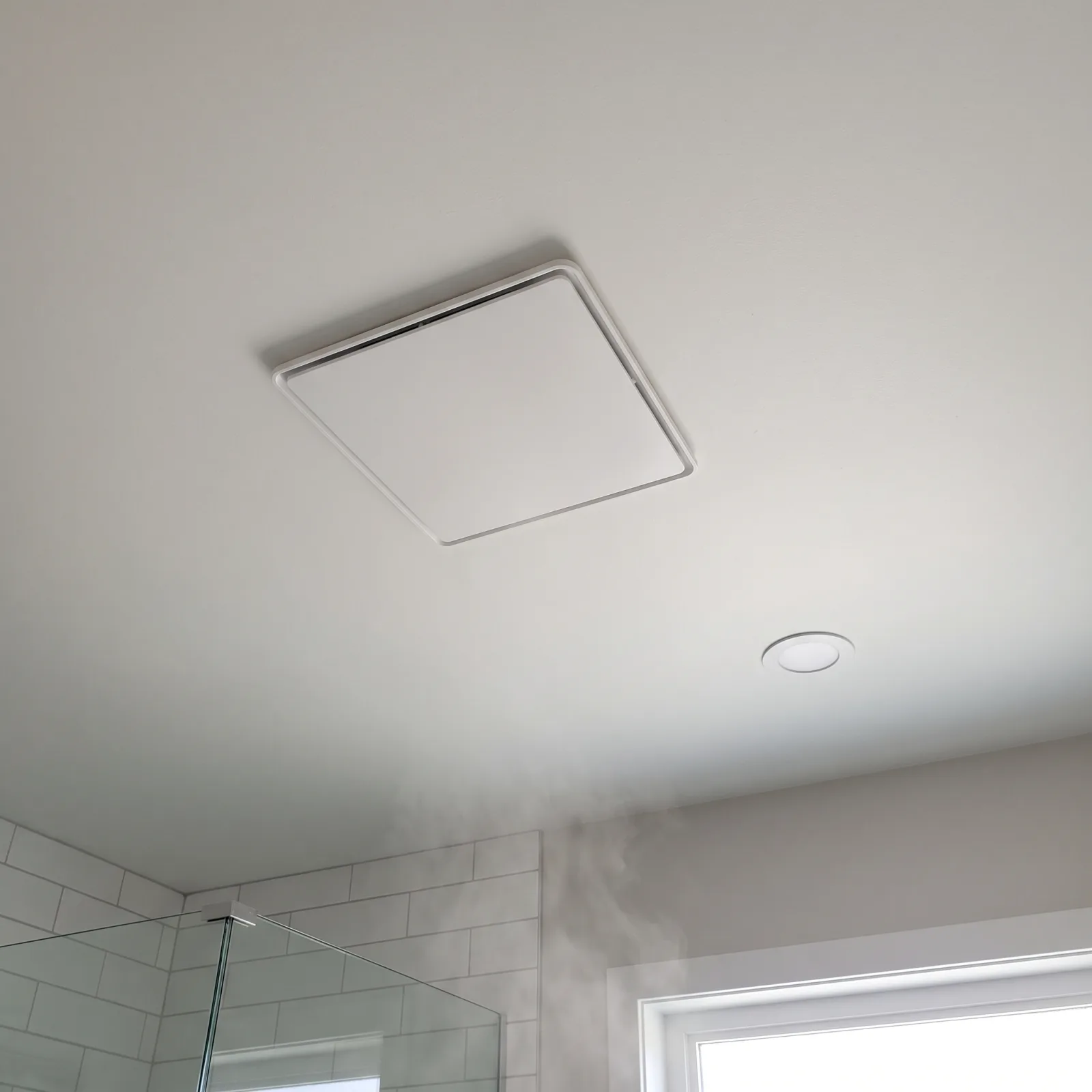
Quiet, humidity-sensing and fan, light and heater combos for steamy bathrooms.
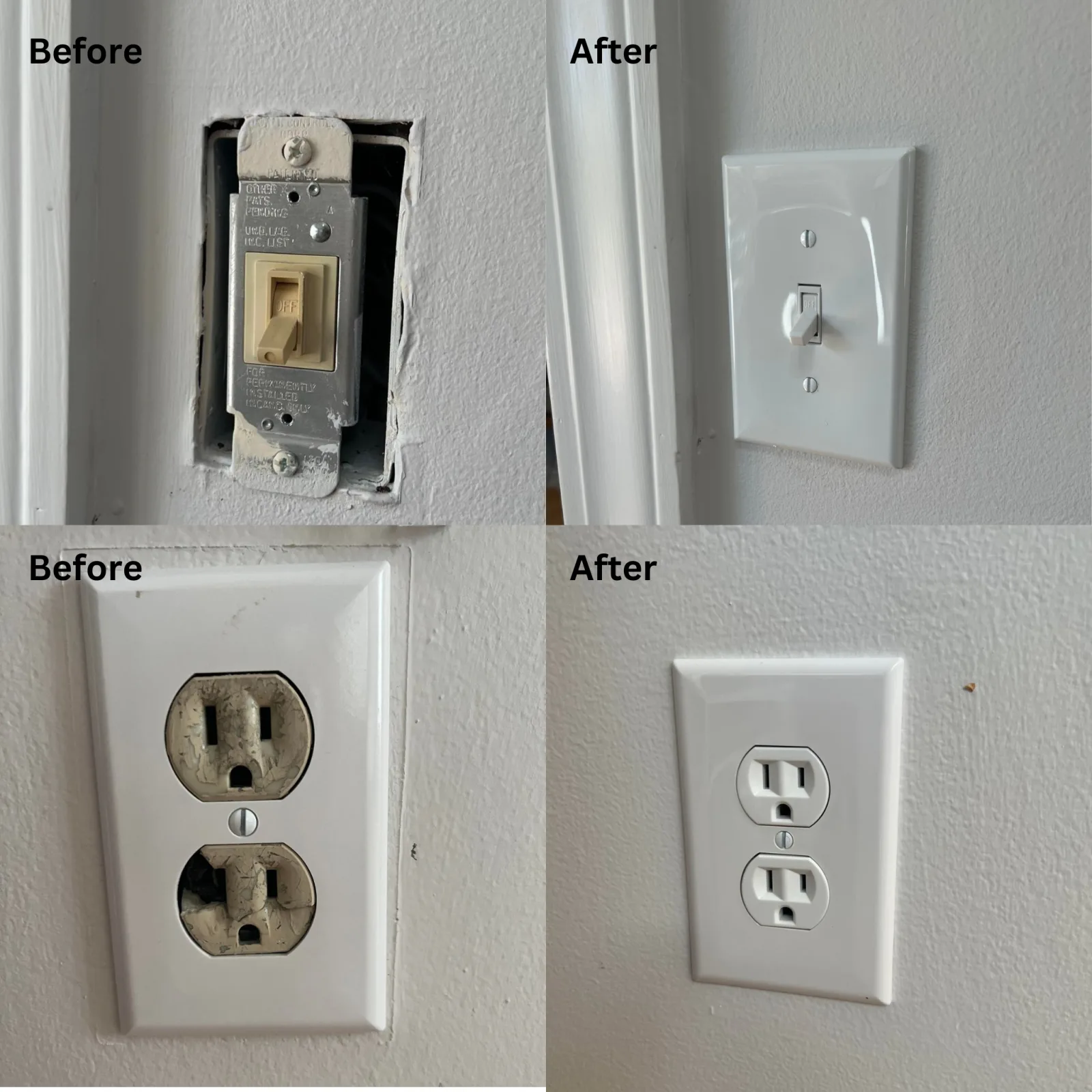
New outlets and switches, 20A to 60A circuits, remodel wiring and CAT6.
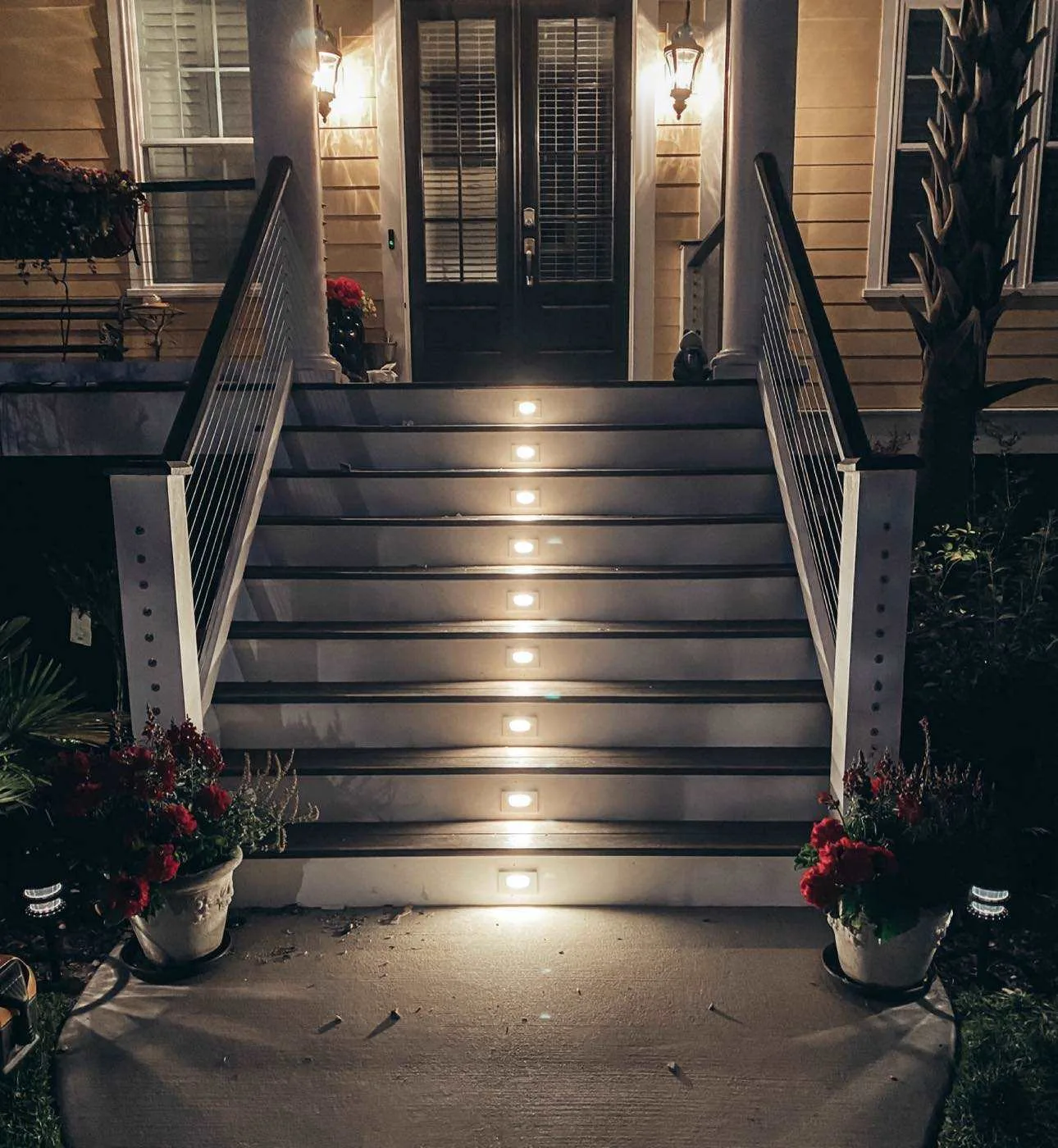
Path, step, tree and dock lighting with brass fixtures and smart controls.
Send a photo of the ceiling spot and the fan's model for a free quote, or call the office.
Already approved your quote?