
Surge Protection
Whole-Home Surge Protector Installation
Our electricians install whole-home surge protectors at the electrical panel, plus protectors for HVAC disconnects, in Mount Pleasant and Charleston homes.
Already have a quote?
- Installed close to the main breaker
- Ground rod testing
- One in every panel
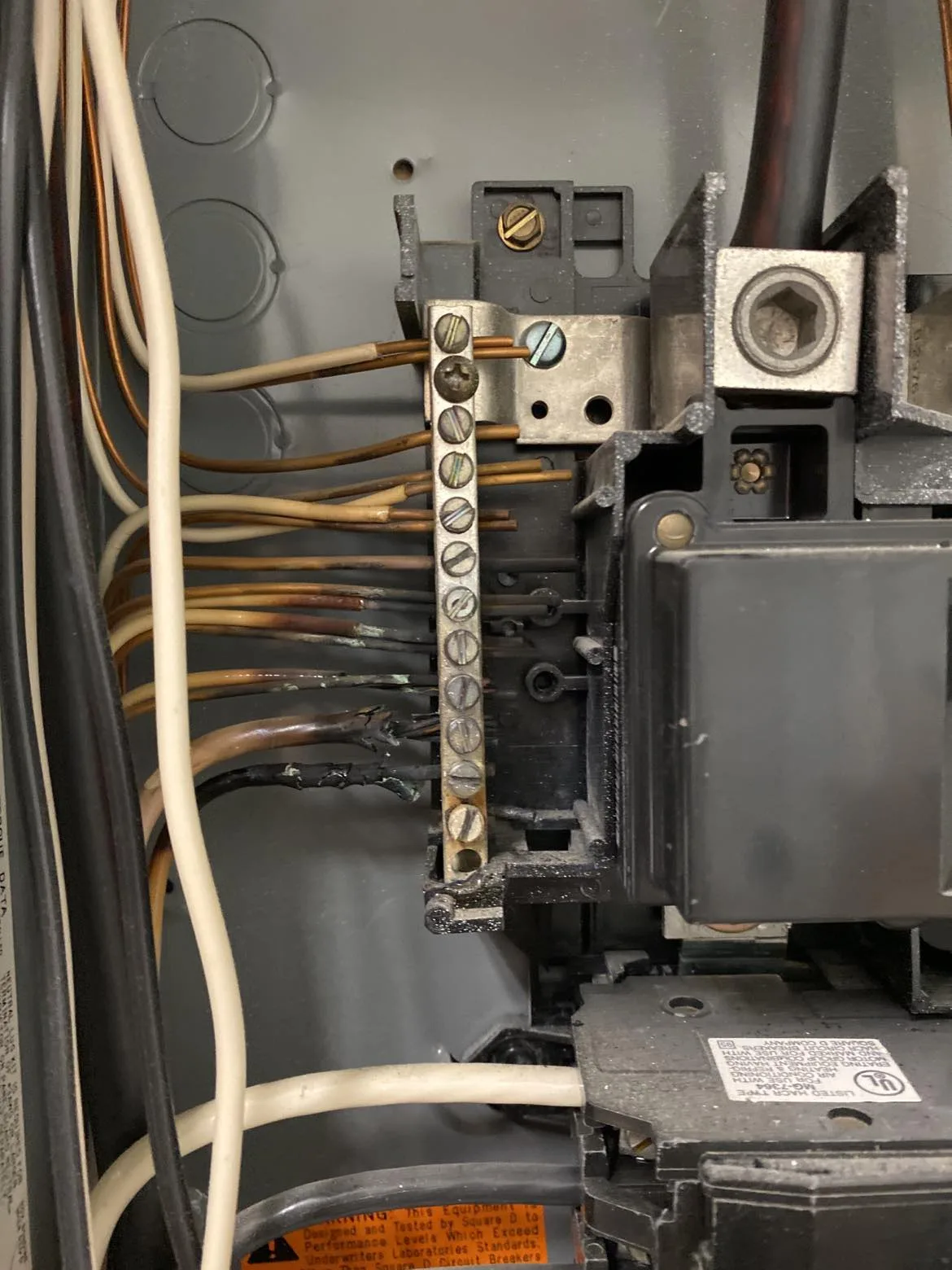
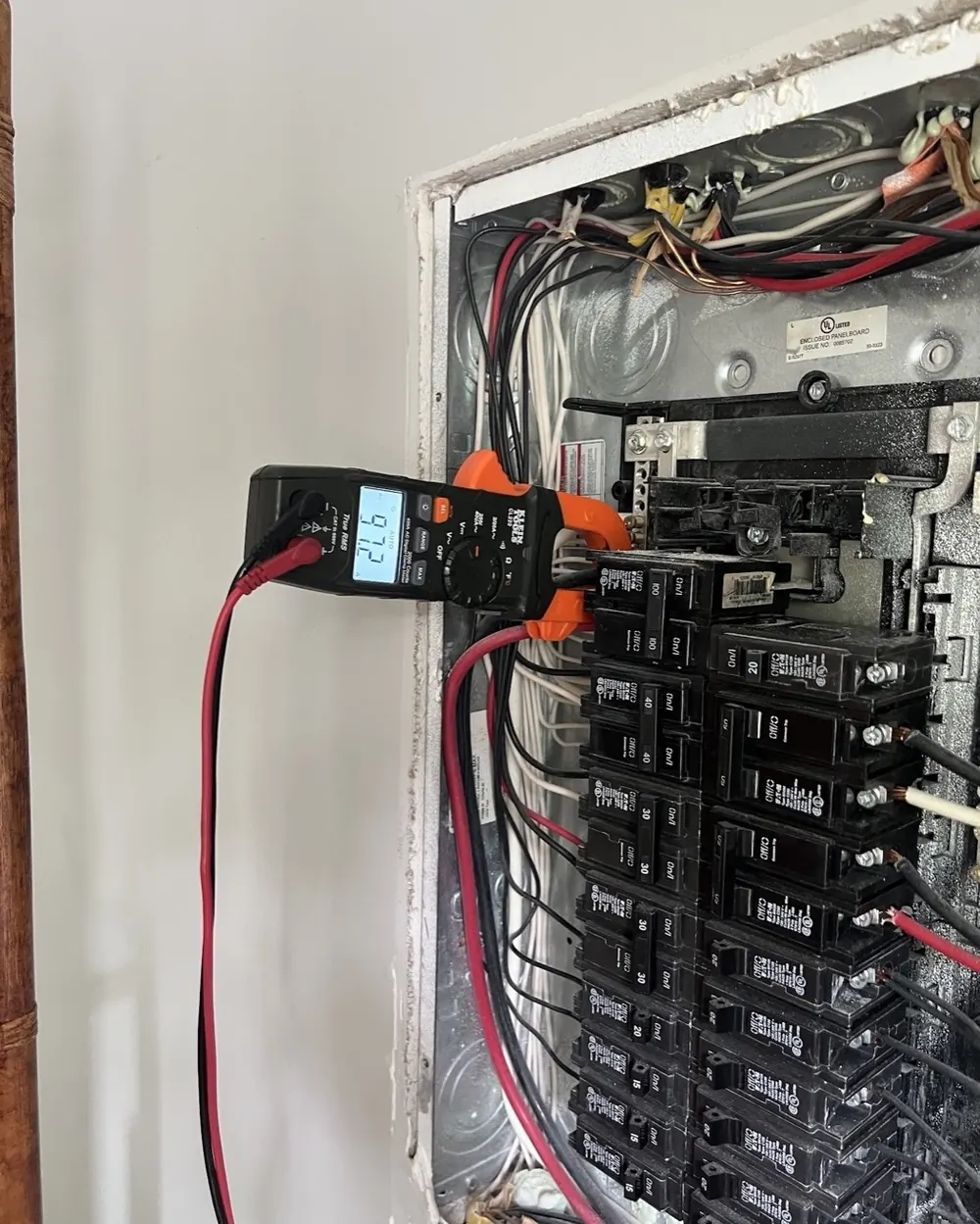
Storm damage found in a panel: scorched, melted neutral wires at the neutral bar.
SC License M118633
Master Electrical
Licensed & insured
Liability and workers' comp
No trainees, ever
Experienced electricians only
Not on commission
You approve the price first
One-year warranty
Workmanship, in writing
The short answer
What does a whole-home surge protector do?
A whole-home surge protector is installed at your electrical panel and diverts, or shunts, excess voltage to the ground rod outside before a surge can run through your home's circuits.
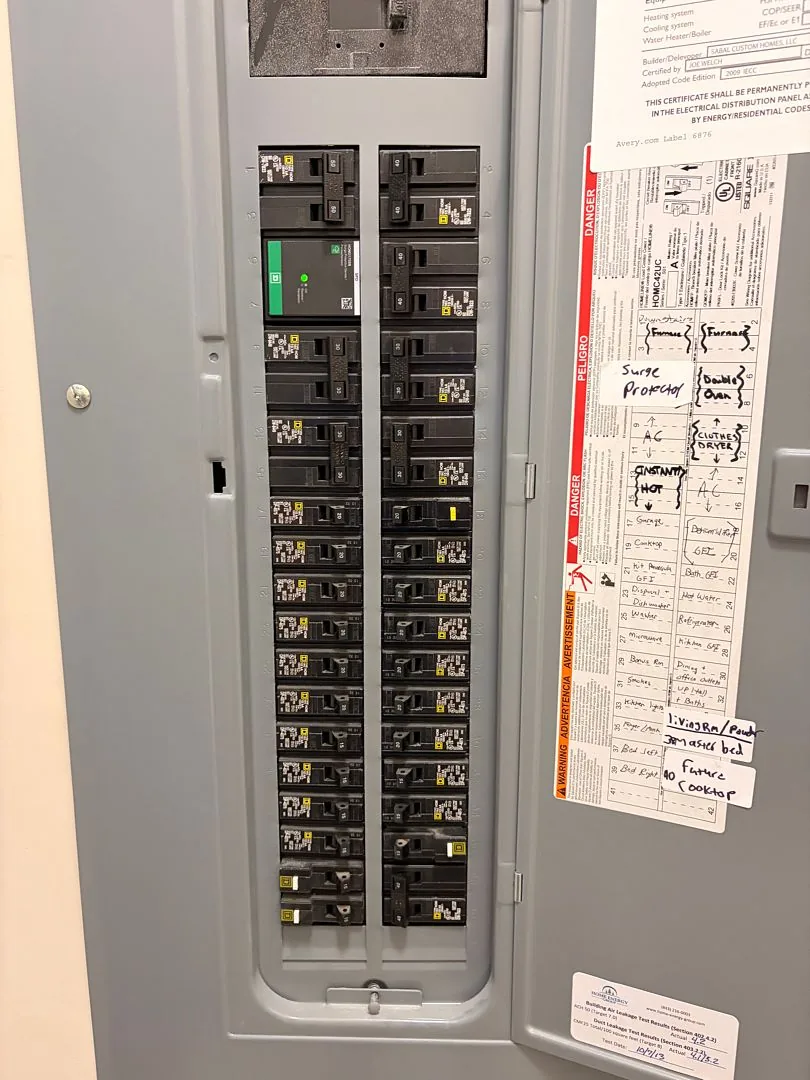
Andrew recommends a surge protector in every electrical panel, installed as close to the main breaker as possible, so a surge is diverted to ground as soon as it enters the panel and before it runs through any circuit. If your home already has a surge protector, have it checked to make sure it sits in that position.
A surge protector is only as good as the ground it sends the surge to, which is why we test ground rods as well. For your outdoor AC unit, we install a surge protector at its HVAC disconnect. And a whole-home surge protector can be added to almost any visit.
Coverage
Where surge protection goes in your home
Surge protection starts with a whole-home surge protector in your main panel and a protector for each additional panel, and the HVAC disconnect at your outdoor AC unit can get one too. Behind it all is your ground rod.
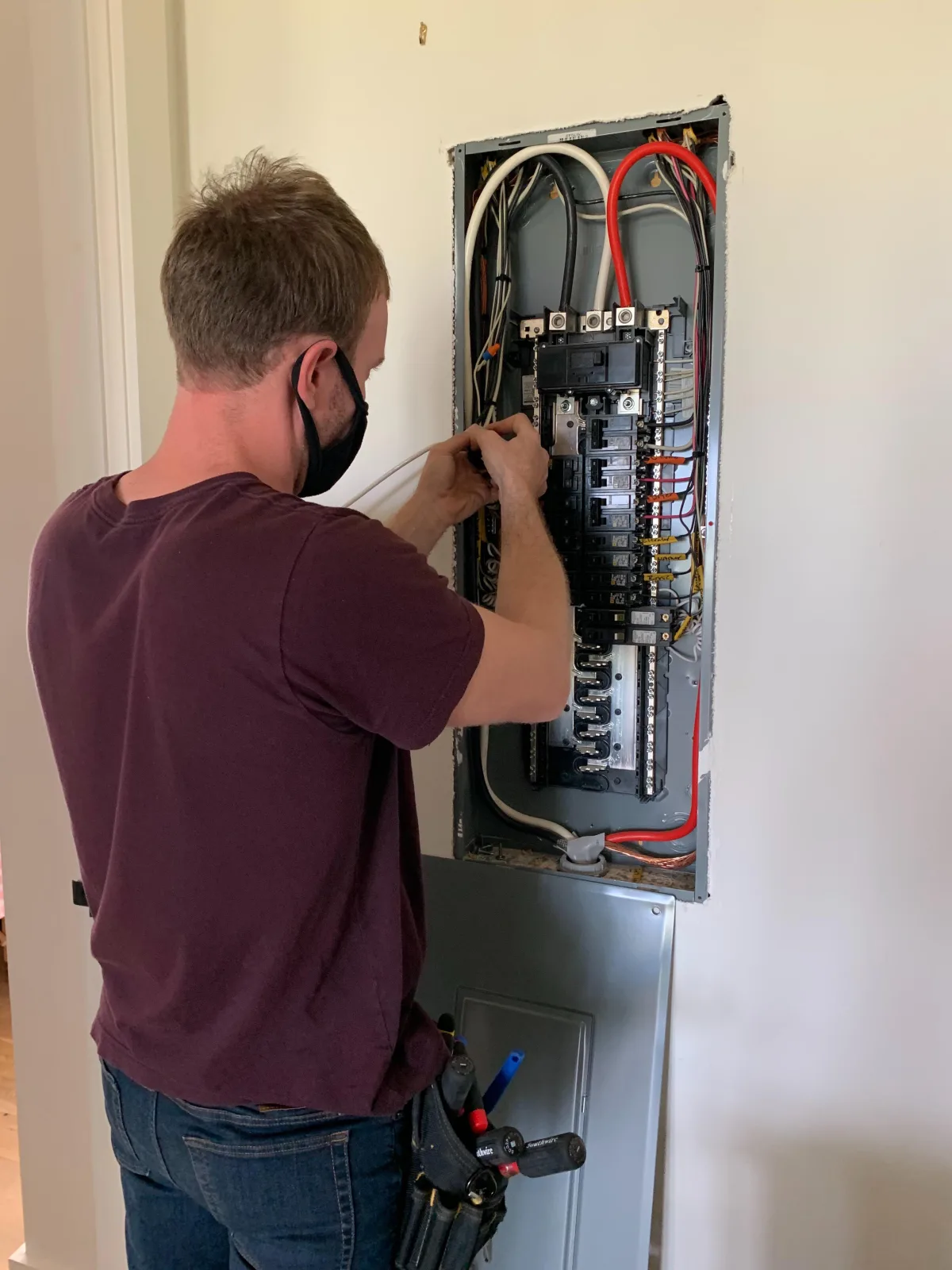
One in each panel
A home with more than one electrical panel gets a surge protector in each, so a sub panel for a garage, a workshop or an addition gets its own. Sub panels, indoors and outdoors, are part of our panel work.
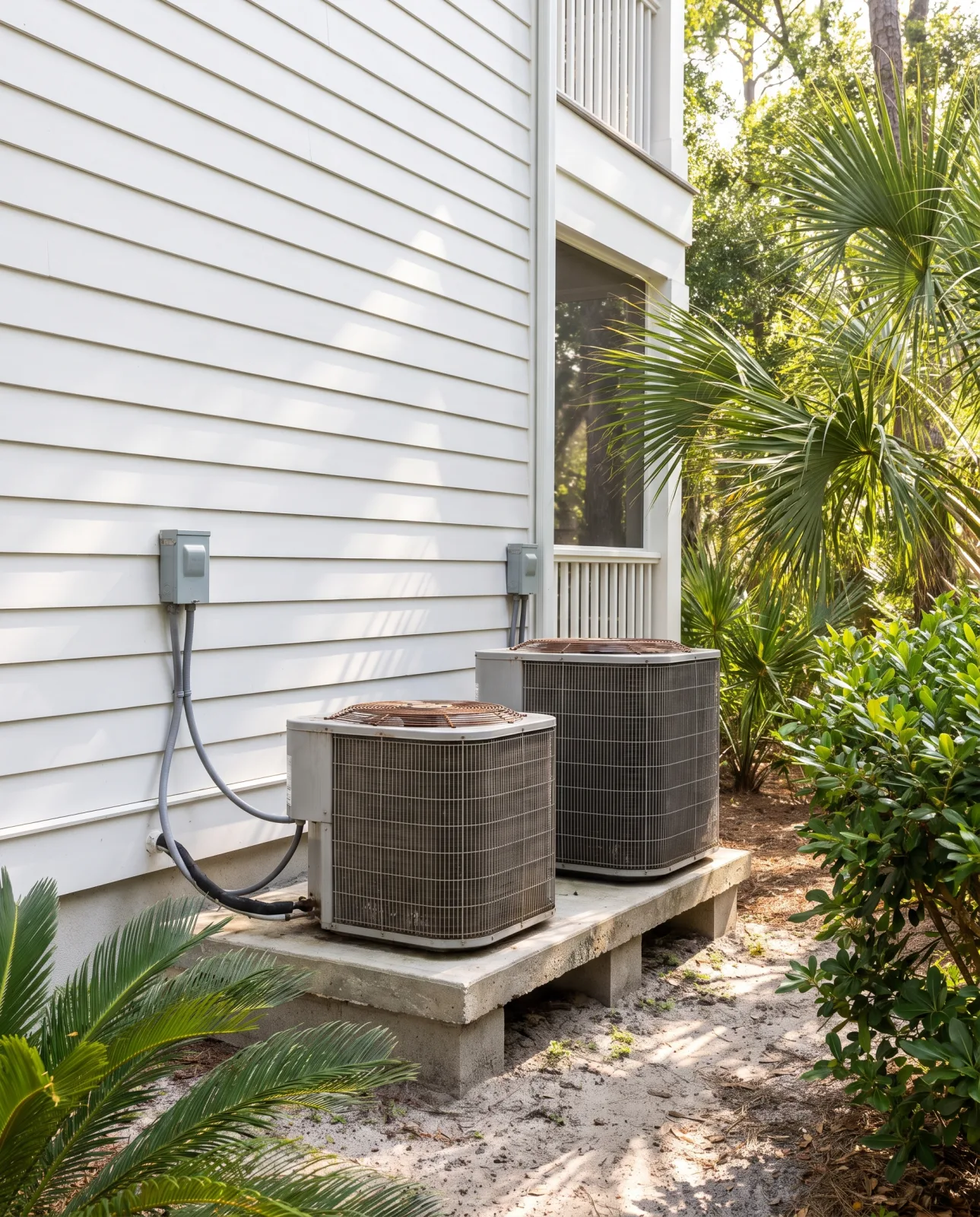
At the HVAC disconnect
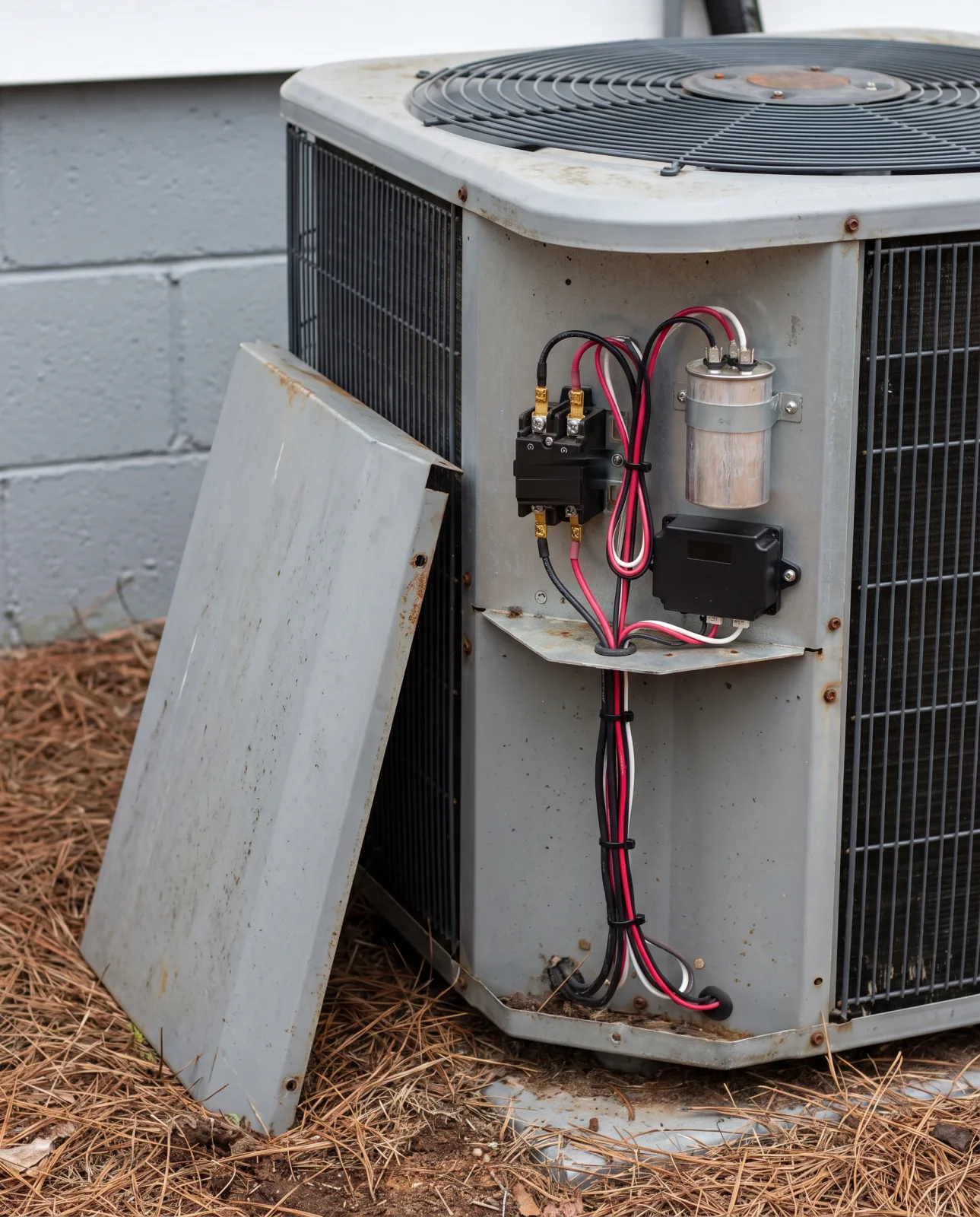
We install surge protectors for HVAC disconnects, the disconnect box near your outdoor AC unit. HVAC components are among the costly replacements surge protection can reduce, and an air conditioner starting up is itself one source of the small surges inside a home.
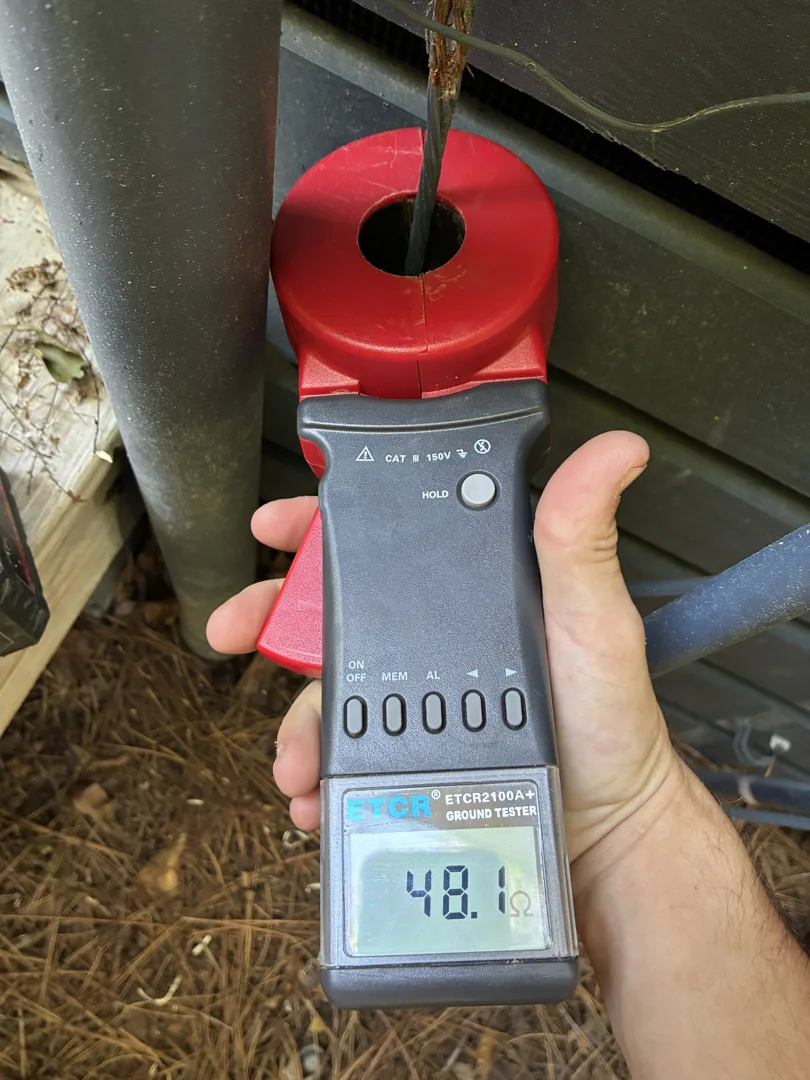
A tested ground rod
The ground rod is where a whole-home surge protector sends a surge. It's typically a copper or copper-coated steel rod about 1/2 inch across and 8 to 10 feet long, usually very close to the main panel. Our ground rod test induces a current on the grounding system and reads the impedance to show how well it works.
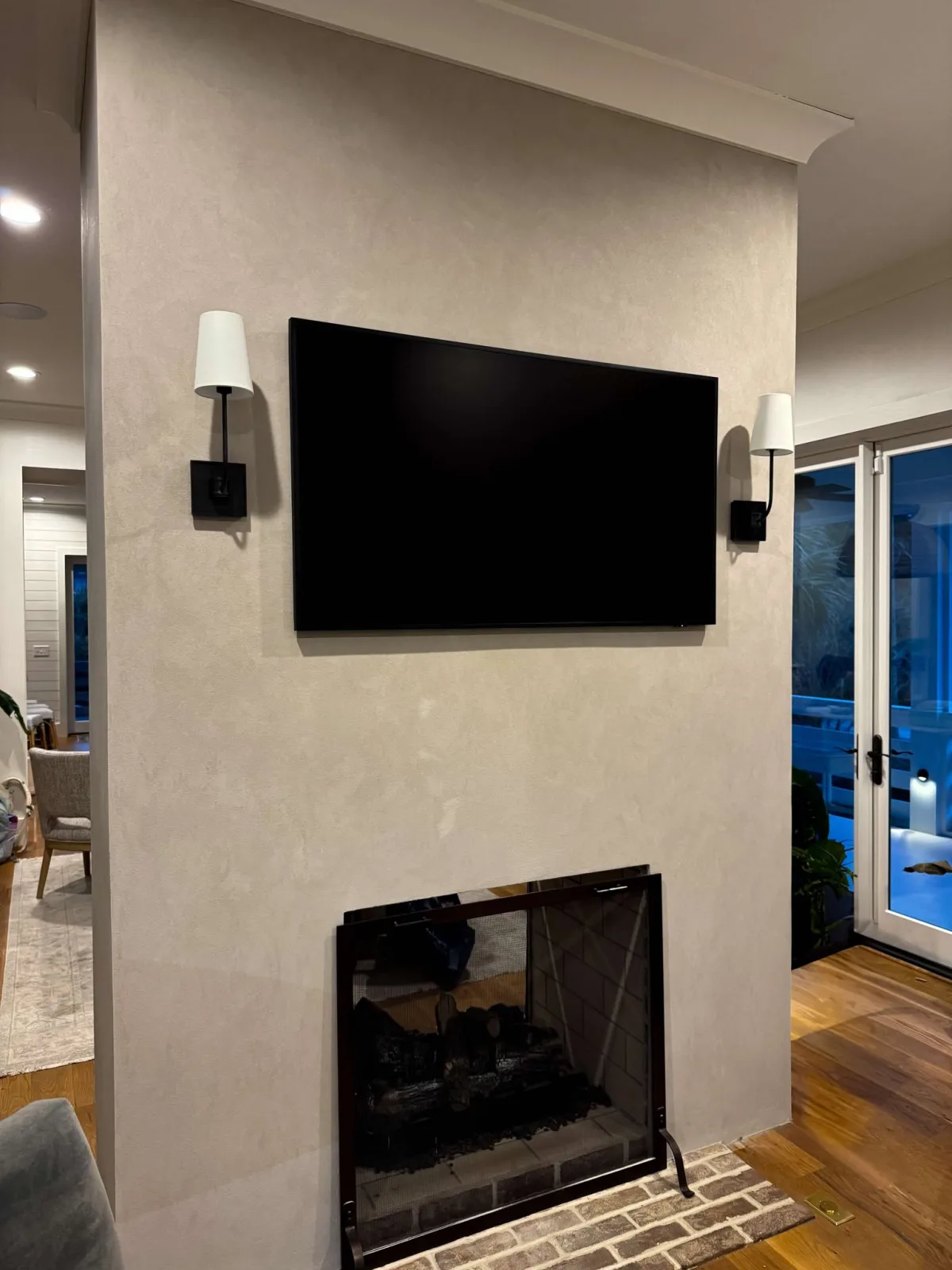
Plug-in strips at the TV and computer
A plug-in surge strip works at the device itself and covers only what's plugged into it. Strips don't offer the same level of protection as a whole-home surge protector, but a strip still has a role at a TV or computer.
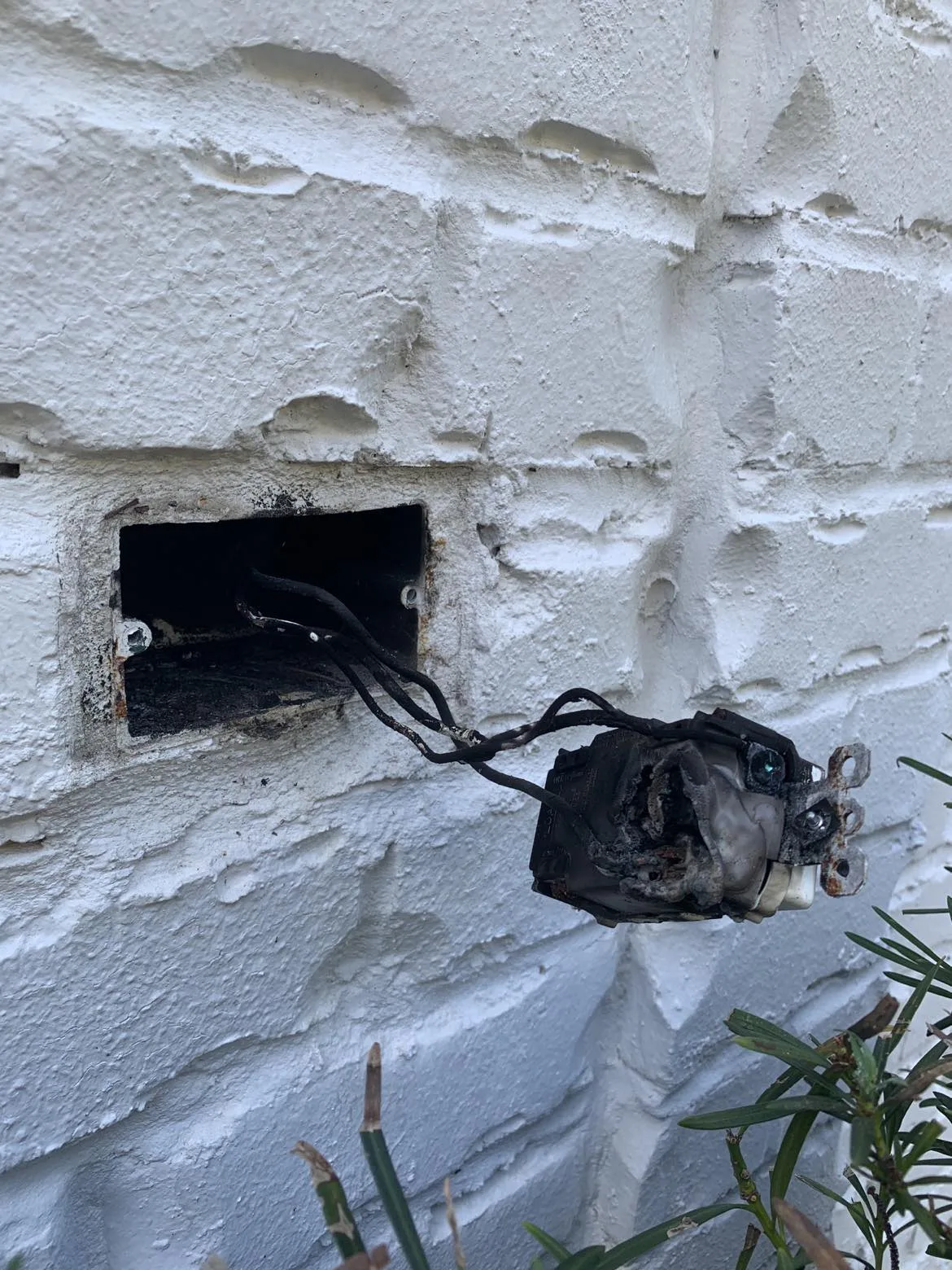
When a surge gets through
An electrical surge destroyed this outdoor outlet. We often repair surge damage that a surge protector could have prevented. When a surge courses through wiring and devices that can't handle it, the result can be burning, melting and potential combustion.
Your options
Whole-home surge protector, plug-in strip or HVAC disconnect protector?
Start with a whole-home surge protector at the panel, which covers the whole house. An HVAC disconnect protector can be added for the outdoor AC unit, and a plug-in surge strip covers only the devices plugged into it.
| Whole-home surge protector | Plug-in surge strip | HVAC disconnect protector | |
|---|---|---|---|
| Where it goes | In the electrical panel, close to the main breaker | At an outlet, between the wall and the device | At the disconnect for the outdoor AC unit |
| What it covers | Surges entering through the panel, before they run through any circuit | Only what's plugged into it | The air conditioning equipment on that disconnect |
| Level of protection | A level of protection plug-in strips don't offer | Doesn't offer the same level of protection as a whole-home surge protector | Covers the AC equipment |
| Who installs it | A licensed electrician | You plug it in yourself | Our electricians |
For pricing, see what affects the cost of a whole-home surge protector.
Want a price on surge protection?
Send a photo of your panel with the door open, and tell us if you want your HVAC disconnect covered too. Or call the office with your questions.
SC License M118633
Master Electrical
What we do
What our surge protection work includes
Our surge protection work starts with a whole-home surge protector at your main panel and can extend to each additional panel, your HVAC disconnect and your ground rod.
- A whole-home surge protector at your main panel
- A surge protector in each additional panel
- Surge protectors for HVAC disconnects
- A check that an existing surge protector sits in the proper position
- Ground rod testing, also offered on its own
- Surge protection added during panel replacements and upgrades
One protector per panel
A surge protector diverts a surge as it enters the panel the protector is installed in, and we recommend one in each of your electrical panels, not only the main one.
What a surge protector can't do
A surge protector isn't 100% effective. Sometimes, when a massive amount of electricity hits your system, no protection can prevent the damage. As our post on home surge protection puts it, installing a surge protector "won’t perform miracles," but it can extend the lifespan of your appliances and electronics.
Surge sources
Where do power surges come from?
Power surges come from lightning, work and switching on the utility's lines, storms that bring lines down, and motors starting up inside your own home. Some arrive through the power lines, and some start inside your house.
Lightning on the power lines
Lightning that strikes a power line can send a surge through the line and into your home.
Utility work and switching
Power companies performing maintenance on their lines, and the utility switching power, can both send voltage spikes into your system.
Fallen limbs and downed lines
Tree limbs that fall and bring down power lines are another source of surges.
Power coming back on
Power returning after an outage can arrive as a surge, and so can a sudden change in electricity use.
Motors inside your home
Your HVAC system kicking on, a refrigerator cycling and other motor-driven equipment starting up each send a small spike through your wiring. These internal surges aren't typically the most damaging, but they happen every day.
Heavy equipment nearby
Large appliances or heavy machinery switching on or off at nearby locations can also cause voltage spikes.
Over time, those small internal spikes wear down the components inside your devices. Signs you may notice include light bulbs burning out too quickly, dimmers failing early, and GFCIs tripping or wearing out sooner than expected. More in our post on whether a home needs a surge protector.
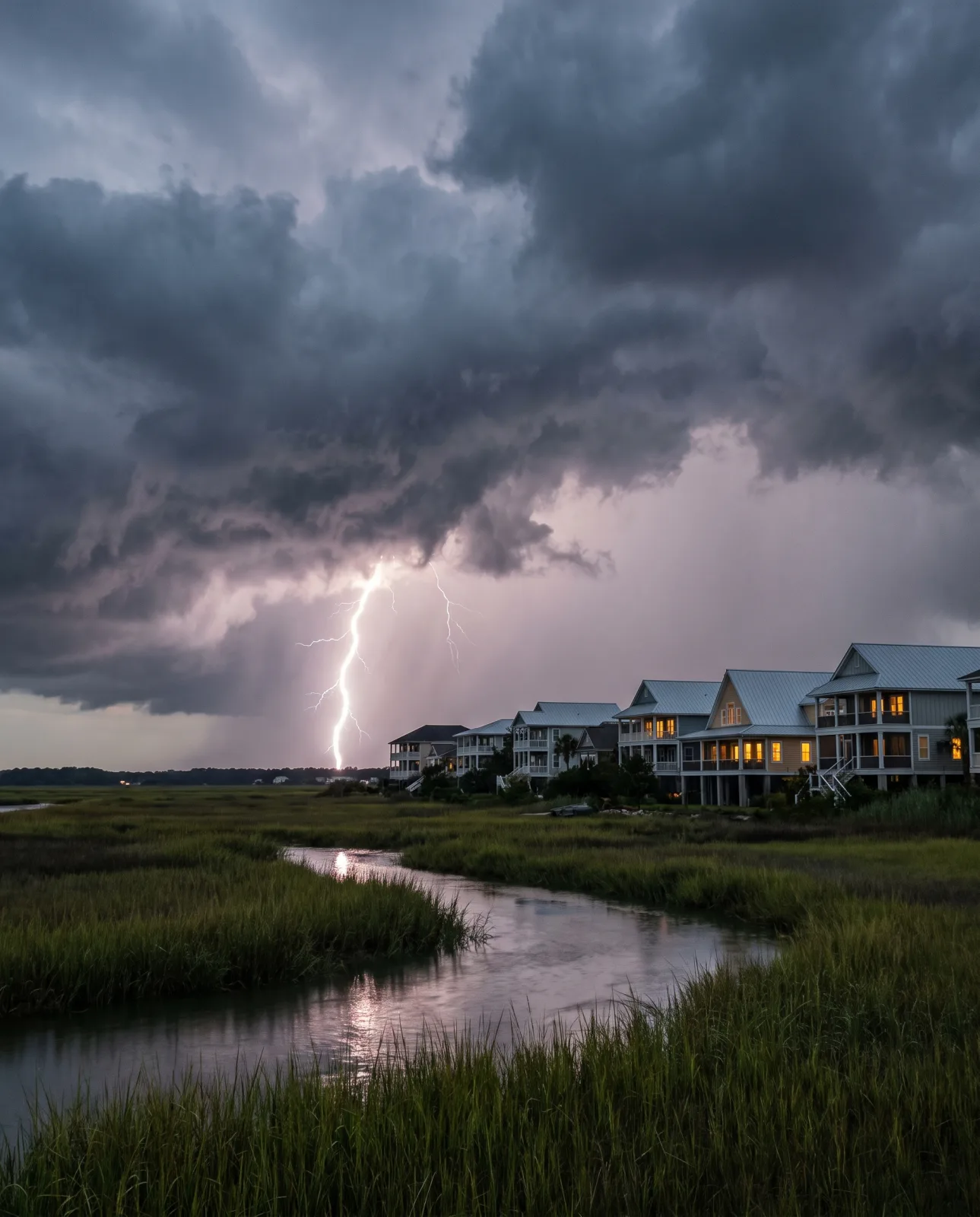
Lightning over a salt marsh and a row of raised homes at dusk.
Storm season
Lightning and storm season in the Lowcountry
Lightning storms are prevalent in the Charleston area. South Carolina averaged 11.2 cloud-to-ground lightning flashes per square mile per year from 2009 to 2018, 13th among the states, according to Vaisala data hosted by the National Weather Service.
In his post on surge protection, Andrew explains why that matters inside your house: most of the items in a home run off electronics that range from 5 to 32 volts, while a surge can deliver anywhere from 170 volts into the thousands. Those electronics aren't built to take that much power.
Hurricane season runs from June 1 to November 30. For storm season, pair surge protection with a generator hookup, and with an AC soft starter if you want to run your air conditioner on a portable generator.
More in Andrew's post Summer Reminder: Surge Protection.
Pricing
What affects the cost of a whole-home surge protector?
The cost of a whole-home surge protector depends on six things: how many panels you protect, any HVAC disconnect protectors, the visit it's added to, your ground rod, any existing protector and the neighborhood discount. We don't publish a flat price; you see yours and approve it before any work starts.
How many panels you protect
A surge protector goes in each panel, so a home with a sub panel gets more than one.
HVAC disconnect protectors
Each HVAC disconnect you want covered gets its own surge protector.
A visit already on the calendar
Adding the protector to a visit you already have scheduled, such as panel work, saves a separate trip.
Your ground rod
Ground rod testing is an option, and any grounding work the test turns up is priced before that work starts.
An existing protector
A surge protector that isn't close enough to the main breaker may need moving into the proper position.
The neighborhood discount
When neighbors install surge protection together, the more homes that join, the bigger the discount for each, plus an extra discount for the neighbor who spreads the word.
Send a photo of your panel for a free quote. For group discount pricing, call (843) 737-6487 or email [email protected].
How it works
From photos to surge protection
1
Send photos
Send photos of your panel with the door open and the label inside the door, plus your HVAC disconnect if you want it covered. We usually reply with a price the same day.
2
Approve your quote
Nothing gets scheduled or started until you say yes. Our electricians aren't paid on commission, so no one is selling you work you don't need.
3
Request your appointment
Once you approve the quote, the office reaches out to schedule the work. Or book it yourself online: we give you a Job Level to use with Request your appointment.
4
Installation, under warranty
An experienced electrician, never a trainee, installs your surge protection. Installation work carries a one-year workmanship warranty, written on your contract.
Need us to see the panel first? Call, text or email the office to set up an in-person consultation. The fee varies by location and is credited toward the work if you hire us.
Reviews
What surge protection customers say.
Each of these Google reviews mentions a surge protector or lightning damage.
5.0
★★★★★
Google rating
★★★★★
“Had an issue with our exterior outlet after a storm, and remembered some Nextdoor educational posts that Andrew did, and went ahead and requested a visit using the easy online scheduling. Andrew was on time, professional and fixed the issue so it won’t happen again. Prices are clear and fair. Have already scheduled Andrew to do a whole home panel surge protector as we have had so many lightning strikes and power outages happening.”
J
Joan S.
Google review · Whole-home surge protector after a storm
★★★★★
“Andrew runs a tight professional operation! Thinking my job was an easy outlet repair, I was surprised to learn my problem was a result of the house being hit by lightning! …”
D
De D.
Google review · Lightning damage found
★★★★
“We had 2 events of lightening damage and decided to have a whole house surge protector put in place to prevent further damage.”
L
Lucy M.
Google review · After two lightning strikes
★★★★★
“Andrew Gloudeman has provided us highly competent electrical contractor service. He installed for us two ceiling fans, a whole house surge protector, and a high staircase pendulum light. …”
R
Ray J.
Google review · Surge protector, fans and a stair light
★★★★★
“Nowadays it seems so hard to find quality tradesman who follow through on their commitments. We recently had a whole house surge protector, and recessed lighting installed throughout the house. Look no further, Andrew does fantastic work and has very reasonable rates. …”
M
Matt A.
Google review · Surge protector and recessed lighting
Reviews are shown word for word from our Google profile. We're also a Nextdoor Neighborhood Favorite.
FAQ
Surge protection questions, answered.
Still have a question?
Call or text the office Mon to Fri, 9 to 5, or email us anytime.
Is a whole-home surge protector worth it?
Yes, for almost every homeowner, even though your house will keep running without one. With the amount of lightning and utility switching South Carolina sees, a whole-home surge protector is one of the simplest ways to protect your home's electrical system. The protector also absorbs the small spikes your own appliances and HVAC system send through the house every day, which slowly wear down the electronics inside your devices.
How much does a whole-home surge protector cost to install?
The cost of a whole-home surge protector depends on how many panels get one, any surge protectors you add for HVAC disconnects, ground rod testing, and moving an existing protector closer to the main breaker if yours needs it. Those vary from house to house, so we price each job on its own. Send photos of your panel for a free quote, and you approve the price before any work begins.
Do I need an electrician to install a whole-home surge protector?
Yes. A whole-home surge protector connects directly to your electrical panel and should be installed by a licensed electrician. A plug-in surge strip is different: you plug it into an outlet yourself.
Can you add surge protection to my air conditioner?
Yes. We install surge protectors for HVAC disconnects, which cover the outdoor AC unit on that disconnect. Air conditioning equipment is costly to replace, so include a photo of the AC disconnect with your panel photos when you ask for a quote.
Will a surge protector stop damage from a lightning strike?
Not every time. A whole-home surge protector diverts a surge entering your panel to the ground rod outside before it can run through your circuits, but sometimes, when a massive amount of electricity hits your system, no protection can prevent the damage. A ground rod that works well gives the protector its best chance against a strike.
What does my ground rod have to do with surge protection?
A whole-home surge protector sends a surge to your ground rod, so the protector is only as good as the ground it sends the surge to. If the ground rod or grounding system is damaged or inefficient, the surge has nowhere to go but back into your house. Our ground rod test shows how well your grounding system works, and it's also part of our $499 Preventative Maintenance Package.
How does the neighborhood group discount work?
When several homes in the same neighborhood install surge protection with us, each one gets discounted pricing, and the more neighbors who join, the bigger the discount for each home. The neighbor who takes the lead and gets others to join earns an extra discount on their own installation. For pricing, call (843) 737-6487 or email [email protected].
What's the best whole-home surge protector?
The best whole-home surge protector is the one installed as close to the main breaker as possible, so a surge is diverted to ground as soon as it enters the panel. A home with more than one panel should have one in each. And because every protector sends the surge to your ground rod, a sound ground rod matters as much as the device.
Keep exploring
Related services
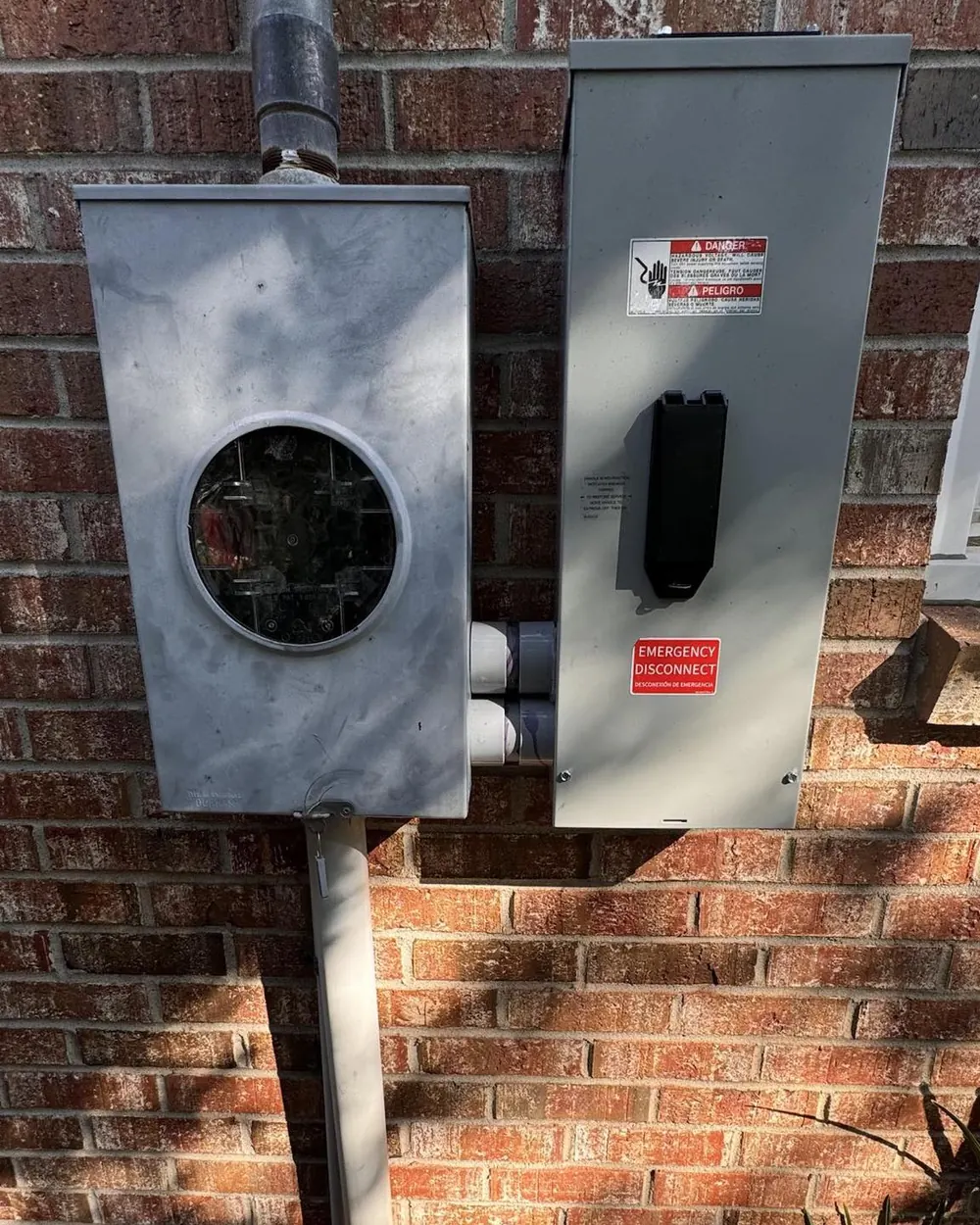
Panels & Power
Panel Replacement & Upgrades
Full panel replacements, sub panels and breakers for Square D, Siemens, Eaton and GE.
Learn more
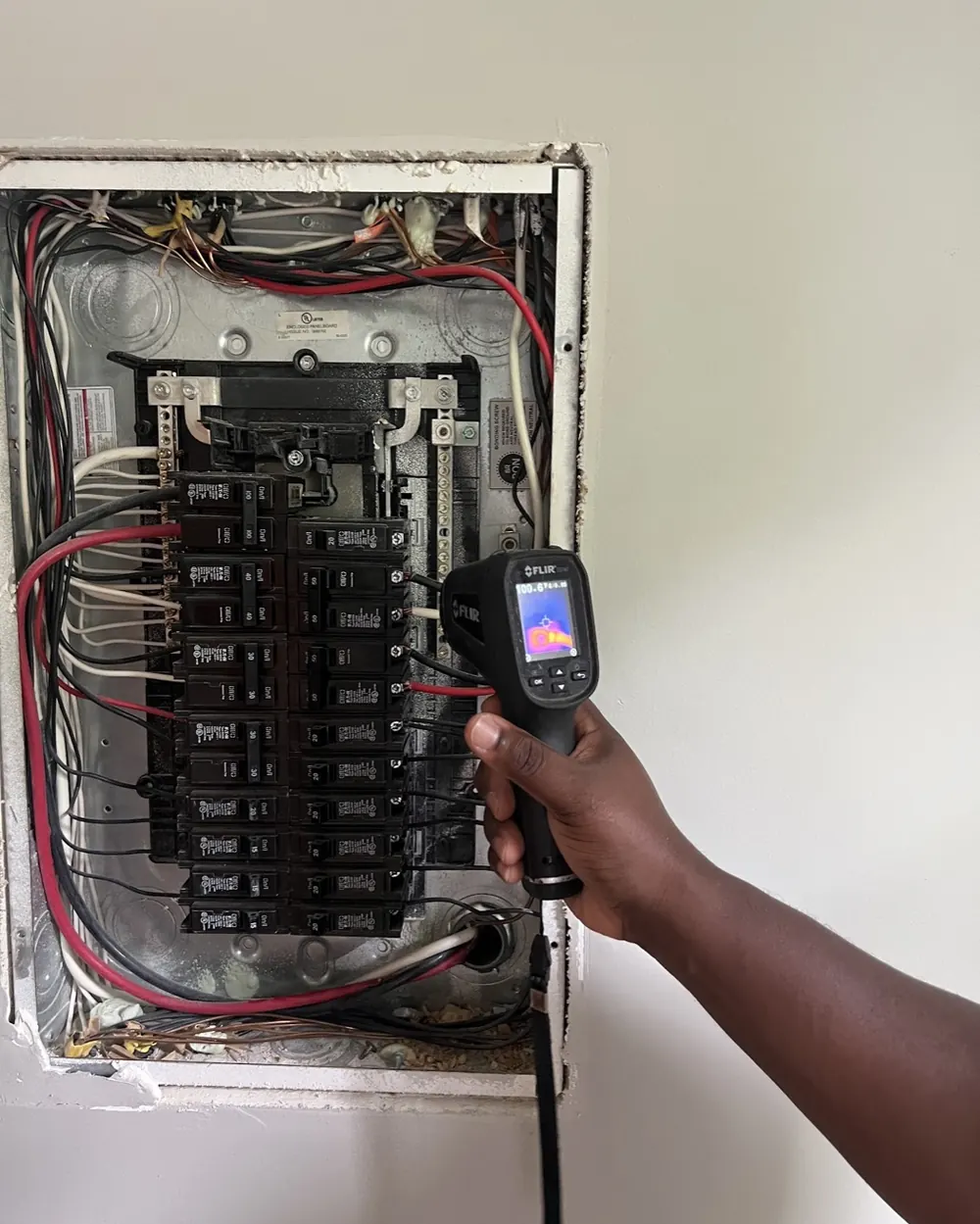
Panels & Power
Preventative Maintenance
A $499 whole-home checkup with thermal imaging and a panel tune-up.
Learn more
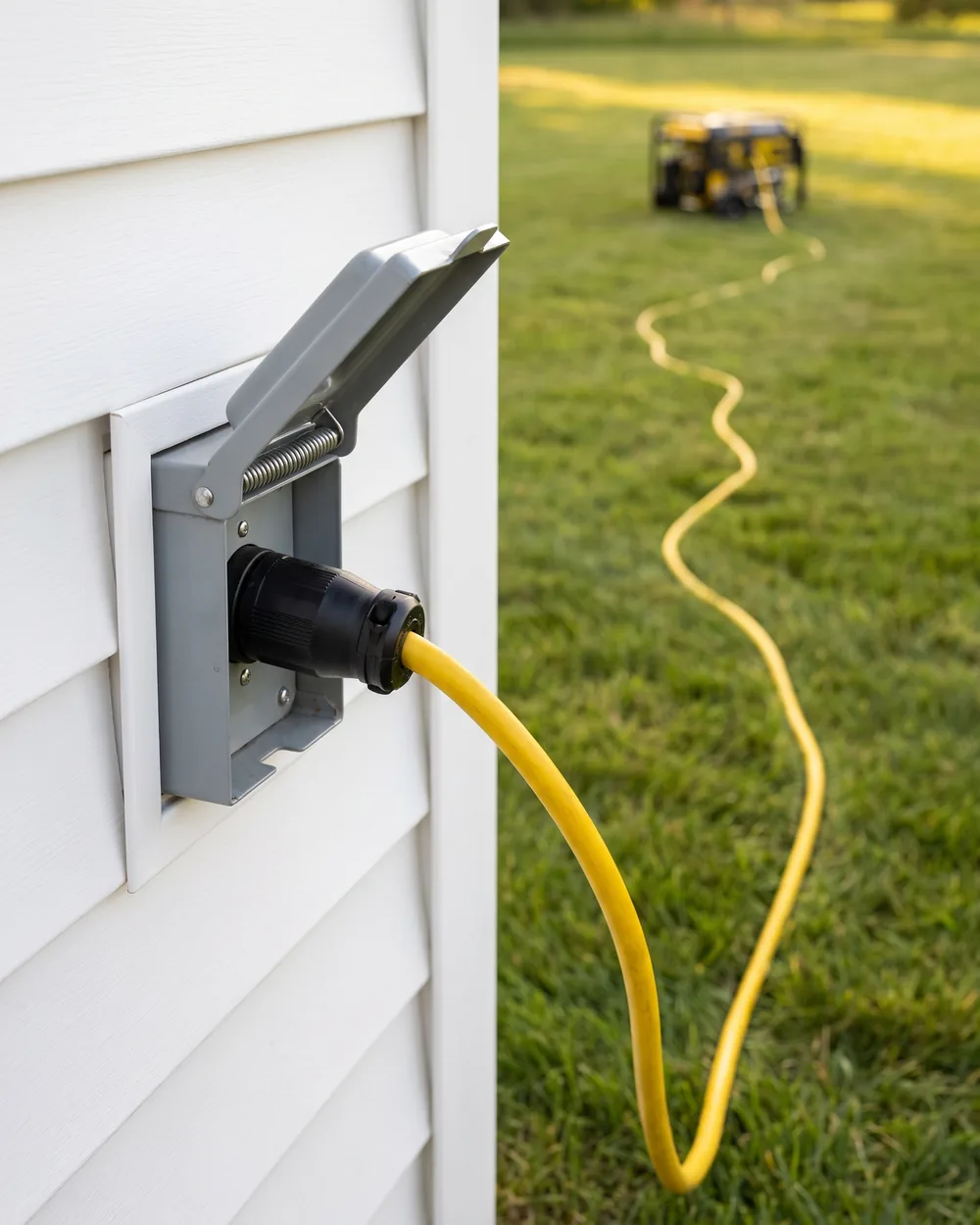
EV & Storm Ready
Generator Inlets & Interlocks
Inlets, interlock kits and transfer switches for the generator you own.
Learn more
EV & Storm Ready
AC Soft Starters
Help your air conditioner start on a portable generator or limited power.
Learn more
From our blog
Surge protection near you

Protect the whole house at the panel.
Send a photo of your panel for a free quote, or call the office.
Already approved your quote?