Blog · 3 min read
Electrical Items on an Inspection Report - What's Important?
Home Inspection Repairs
Send the inspection report, and we can usually quote the electrical repairs from the report alone for Mount Pleasant and Charleston homes.
Already have a quote?
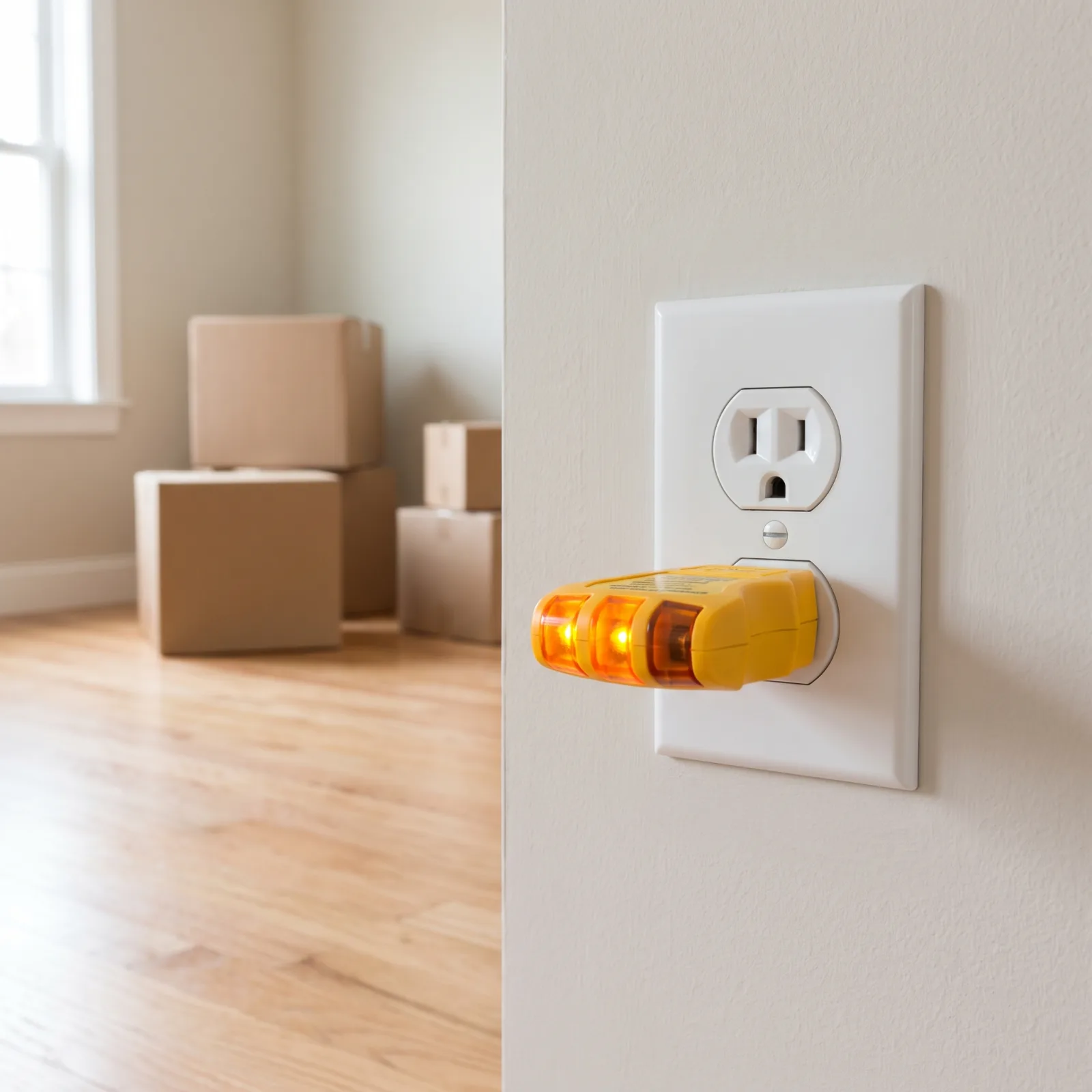
A plug-in outlet tester in a wall outlet, with moving boxes in the room behind it.
The short answer
Yes, Gloudeman Electric repairs the electrical items on home inspection reports for buyers, sellers and realtors working against a closing date, and the work is documented properly.
Inspection reports can be hard to read, but as our post on inspection report terms says, "most issues they list are common and fixable." The common report items on this page show what each one means and why it matters.
Every inspection repair job starts with the report. Reports typically include photos, so its electrical section is usually all we need for a free remote quote, often answered the same day. If an item isn't pictured, send a photo of it. You approve the price before any work begins.
Common report items
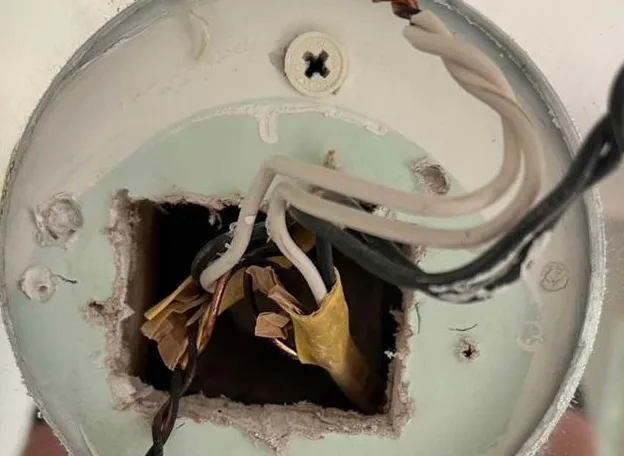
Among the electrical items that show up most on inspection reports are open or missing junction boxes, exposed splices, open grounds, no GFCI protection, over-fused circuits and loose outlets. A home inspector's job is to note anything of concern, so small items make the report alongside bigger ones.
Wire connections belong inside an electrical box, and as our post on inspection report terms puts it, "Every junction box needs a cover." Without a cover, dust, debris or anything flammable can get inside, and that's a fire hazard, especially if the wiring arcs. The post calls it one of those "small issue, big consequence" findings.
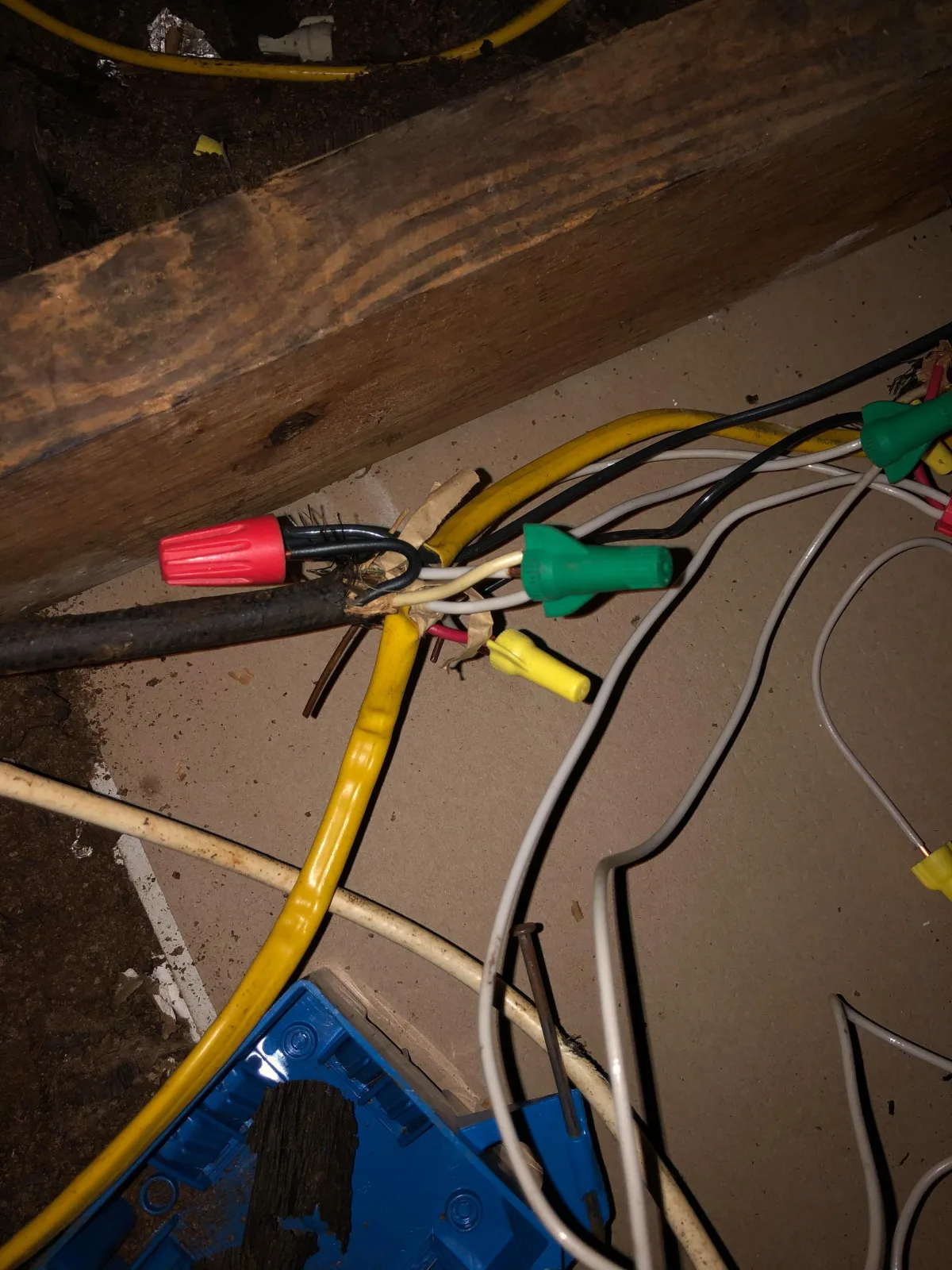
A splice is a connection between wires, such as one made with a wire nut, and it needs to be contained inside a box. In his post on inspection reports, Andrew explains why: exposed connections can get wet, be chewed by rodents or come loose, and any of those could create the potential for a fire. The repair moves the splices into a junction box with a cover.
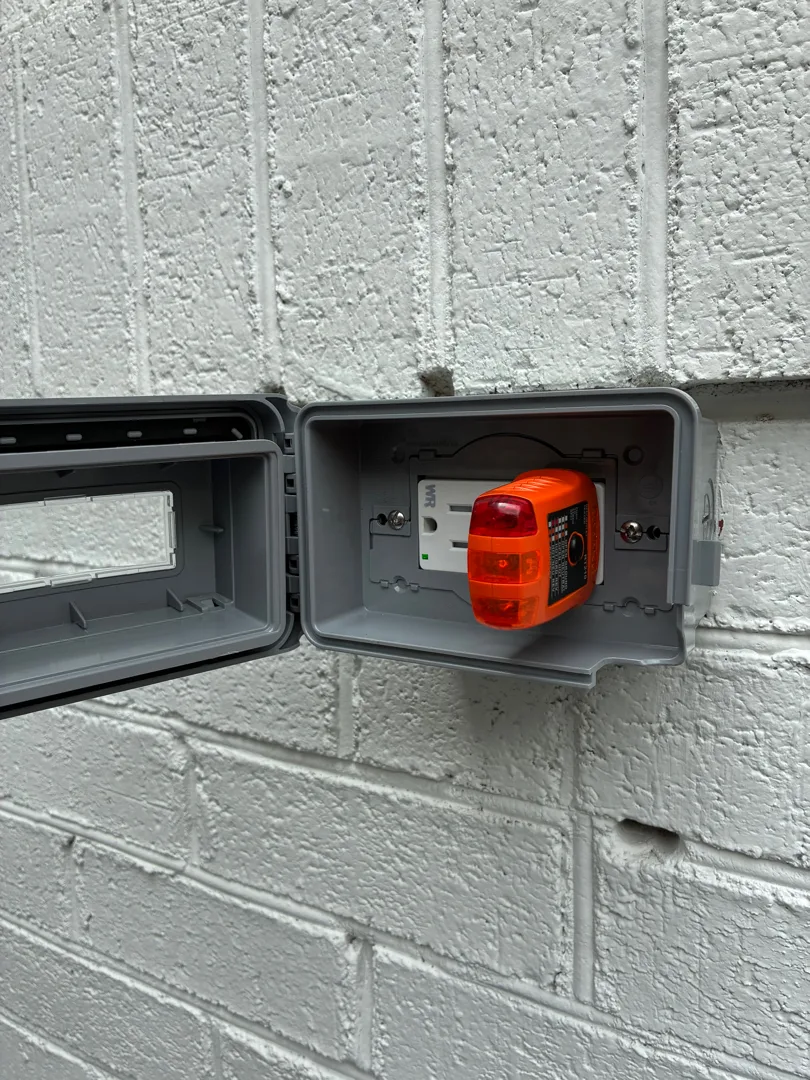
When a report lists an open ground, the outlet's ground wire is missing or not connected, and the outlet has lost a layer of protection against shock. A bootleg ground ties the neutral wire to the ground terminal, and as our post on bootleg grounds warns, it "may fool a plug tester into showing the outlet as grounded" when it isn't. The post lists three fixes: new ground wires, GFCI breakers, or GFCI outlets as a temporary measure.
When a report says "no GFCI protection," it means outlets in damp or wet areas aren't protected against shock. South Carolina's adopted code calls for GFCI protection on 125-volt receptacles in bathrooms, garages, crawl spaces, basements, laundry areas, kitchen countertops, boathouses and outdoors, within 6 feet of sinks, tubs and showers, and in indoor damp and wet locations. A GFCI shuts off the power when it detects electricity leaking through water, metal or a person.
An over-fused circuit has a wire rated for less current than the breaker protecting it. In the words of our post on inspection report terms, "using a 30-amp breaker on a 20-amp wire will let the wire overheat before the breaker trips." That's why the breaker has to match the wire it protects.
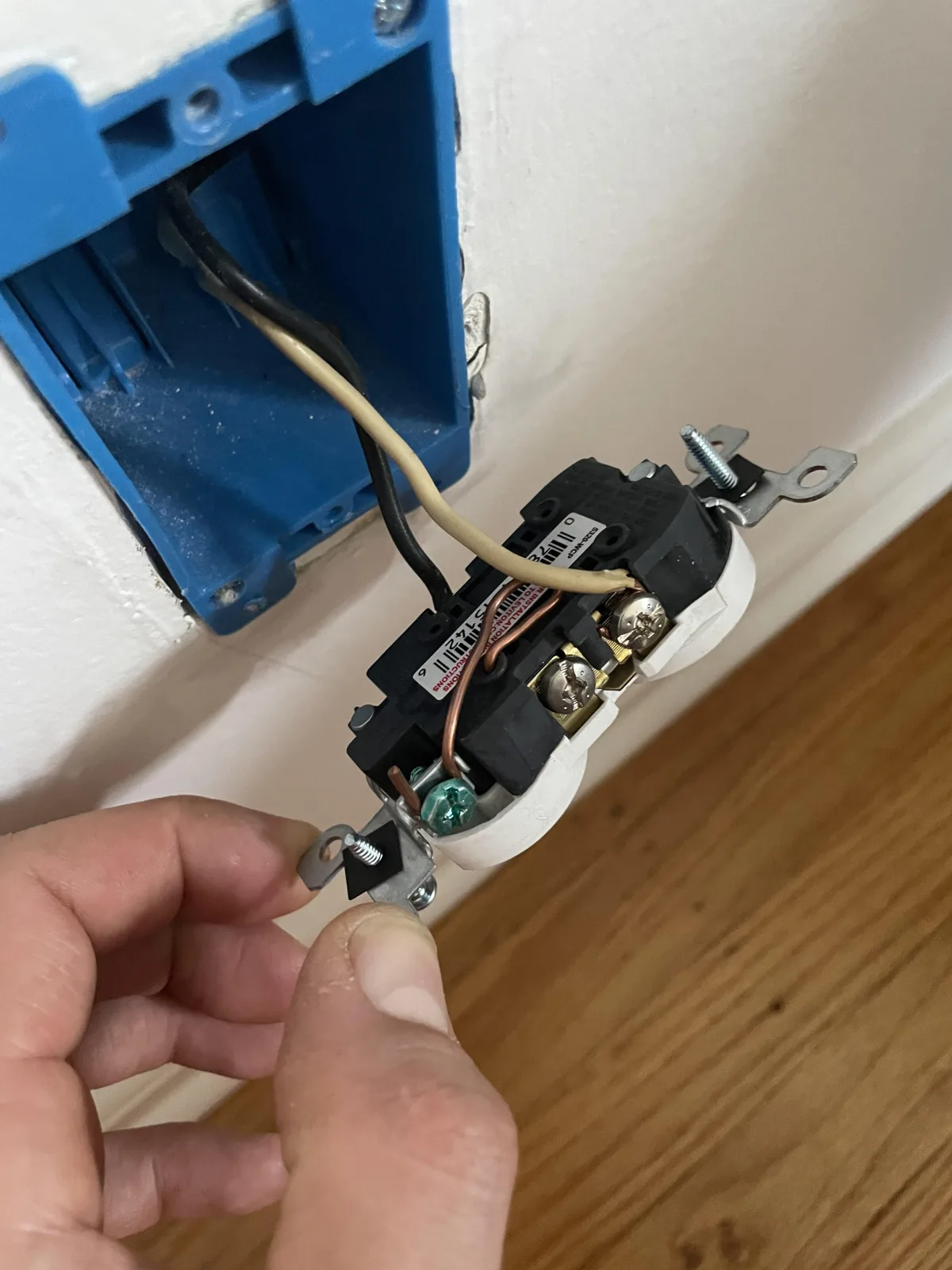
Our post on inspection report terms explains why a loose outlet makes the report: "When an outlet wiggles or feels unstable, it can loosen the wiring behind it and cause arcing or intermittent power." The same post adds, "The fix is usually simple: tightening the box or adding spacers to make it secure."
Report terms
Reverse polarity is a wiring problem at an outlet, double tapping is a connection problem inside the panel, and improper bonding is a grounding problem with metal piping.
| Reverse polarity | Double tapping | Improper bonding | |
|---|---|---|---|
| What it means | The hot and neutral wires are flipped on an outlet, so each one sits on the other's terminal | Two wires under one terminal screw in the panel | Metal parts such as water and gas lines aren't connected to the same electrical ground |
| Why it matters | A lamp socket stays powered even with the lamp switched off, and a knife in a toaster could shock you if it touches metal | Most circuits are designed for one wire per terminal, and doubling up "can lead to loose connections and overheating." | Metal water and gas lines could become energized |
| The usual fix | Moving each wire to its correct terminal: "a quick fix, but an important one." | Giving each wire its own terminal. For neutrals, that can mean moving the extra wires to another terminal on the neutral bus bar when there's space, or installing a new neutral bus bar | Bonding the metal piping to the electrical ground. "Only metal piping needs bonding, plastic or PEX lines do not." |
The lamp and toaster examples come from Andrew's post on inspection reports, and the quoted lines come from our post on inspection report terms, which covers these and other common terms. For double tapping on the neutral bus bar, see double-tapped neutrals.
Not sure what an item on your report means?
Send the report, or call the office, and we'll explain what the item means and quote the repair.
Who we help
With a closing date on the calendar, the first thing you need is a price for the electrical items on the report. We quote them remotely, and when we make the repairs, the work is documented properly.
Which repairs get made is up to you and the other side of the sale. Tell us which items you want fixed when you send the report, and we'll quote those.
Send your client's inspection report, and we can usually quote the electrical items remotely from the report alone.
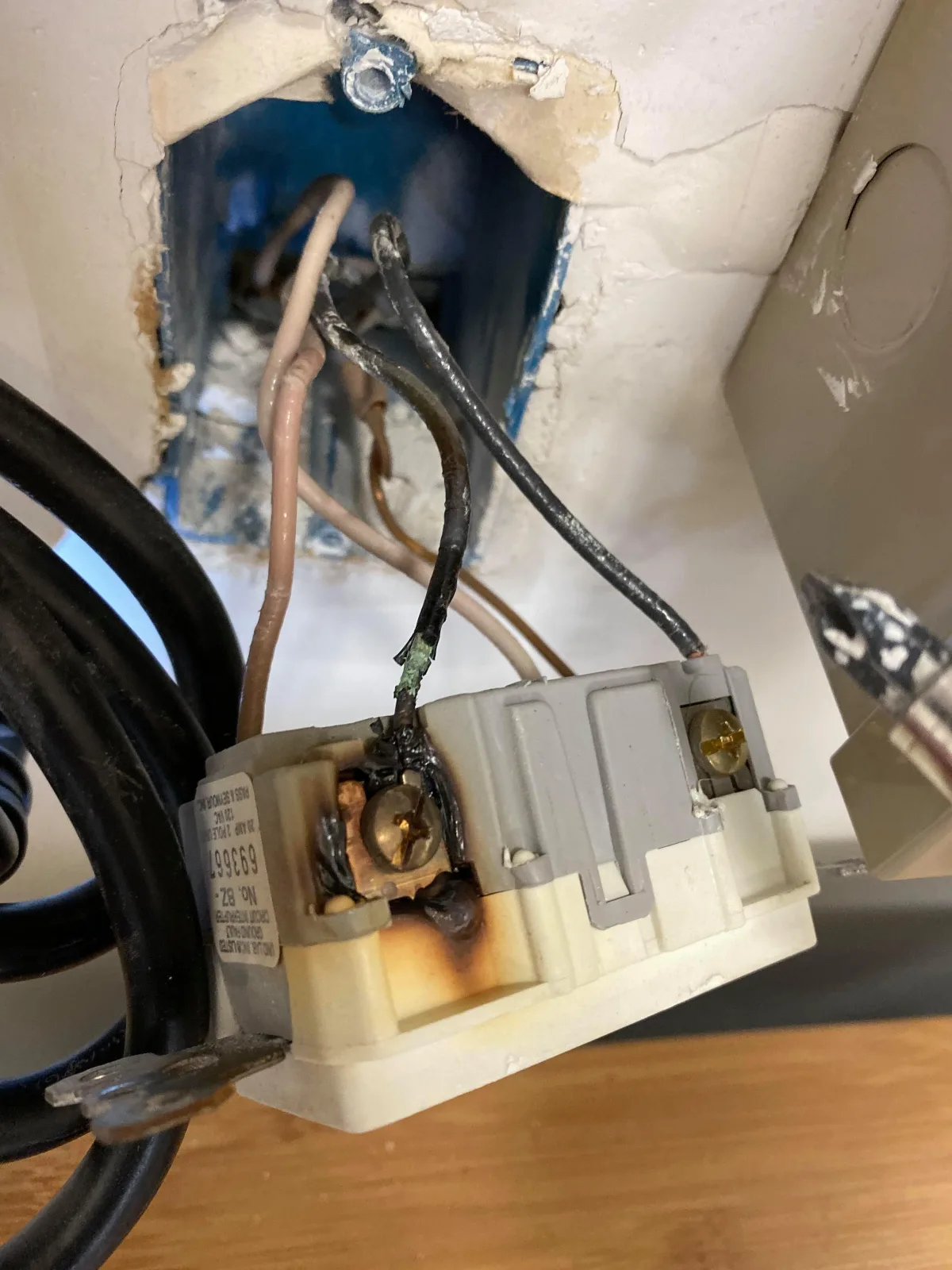
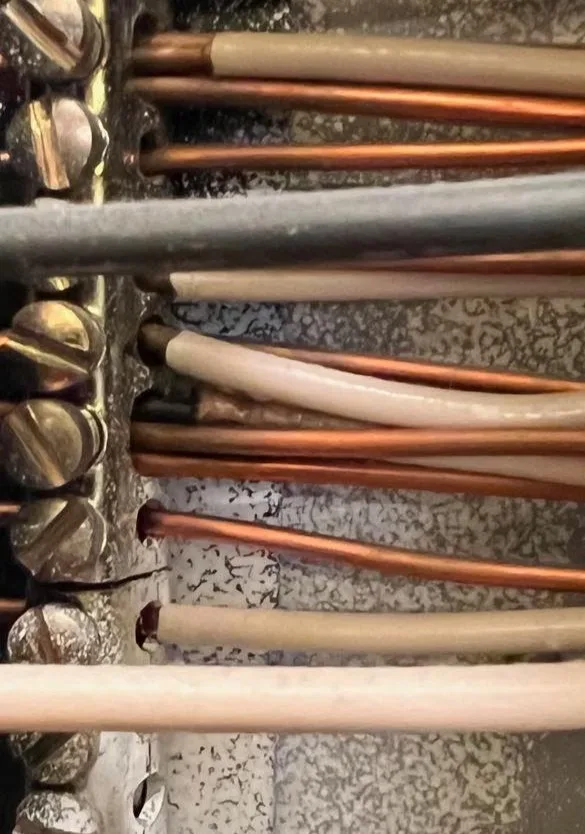
Notice the discoloring on the double tapped white (neutral) wires from overheating.
In the panel
Double-tapped neutrals are two or more neutral wires sharing the same screw or terminal on the neutral bus bar in the electrical panel. Our post on double-tapped neutrals calls them a "common inspection list item" and explains that the neutral bus bar is the metal strip that distributes neutral current to the circuits in the panel.
When neutrals share a terminal, the connections can work loose, and a loose connection can lead to overheating, arcing and fire. The post names two possible fixes:
The yearly inspection in our preventative maintenance package can turn up double-tapped neutrals too.
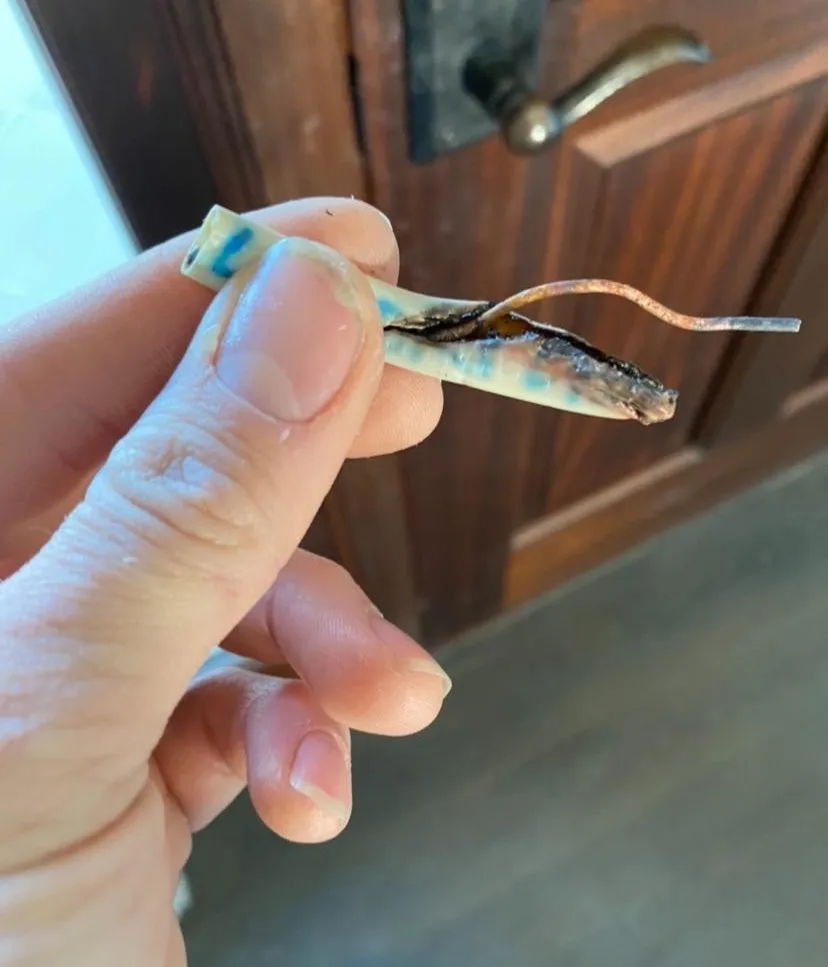
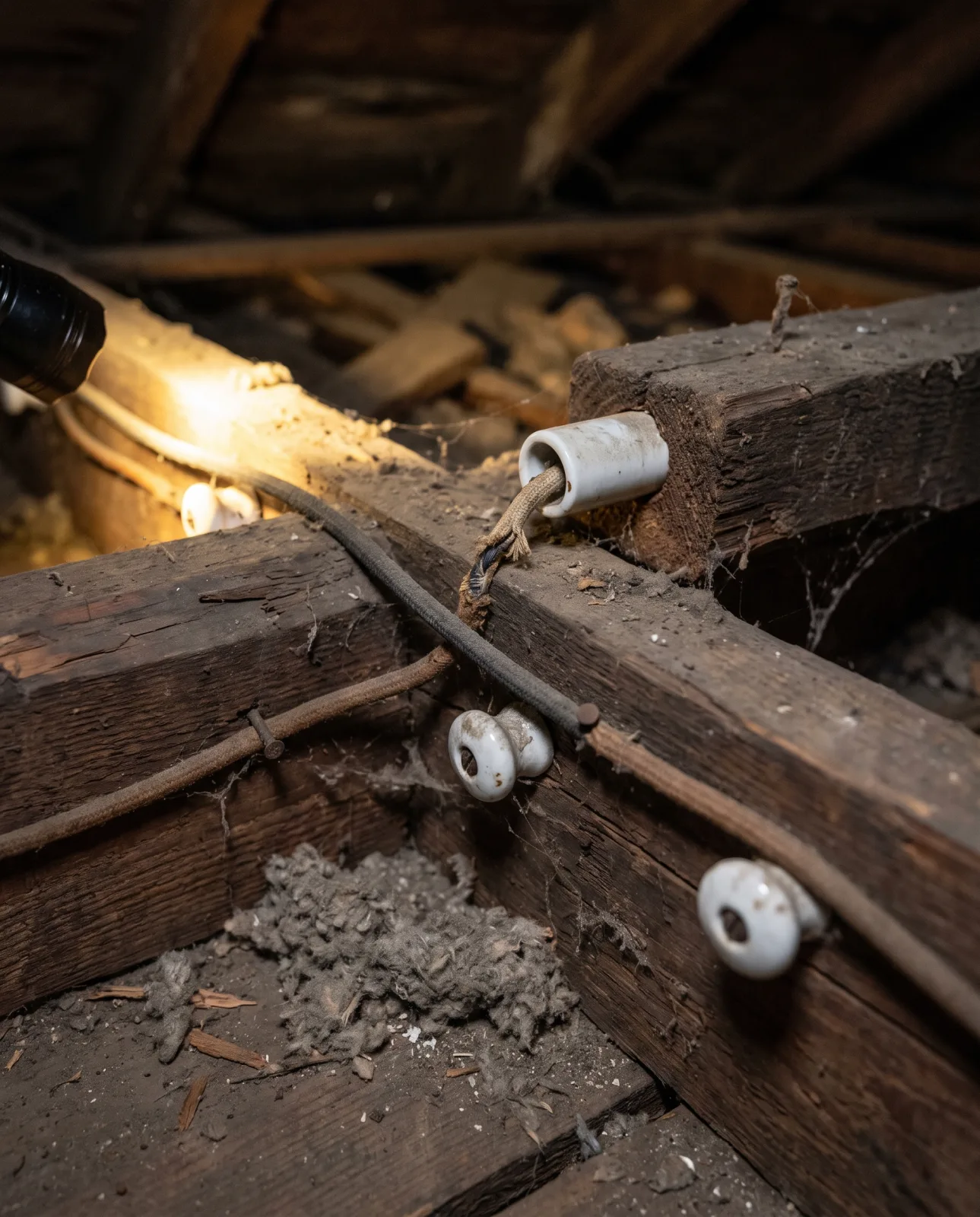
Knob-and-tube wiring on porcelain knobs, with frayed insulation where one wire leaves its porcelain tube.
Older homes
Older homes on the peninsula, in West Ashley and in North Charleston can bring older wiring onto the inspection report, such as cloth-insulated wiring, aluminum branch circuits and three-wire feeders to sub panels. Knob-and-tube wiring turns up too. Our post on inspection report terms says it is "often found in historic homes" and adds, "While some inspectors consider it “safe if undisturbed,” we don’t recommend relying on it."
Many older homes were also wired with ungrounded two-wire circuits, which have a hot and a neutral but no ground wire. In their post on GFCI outlets in older homes, Andrew and the team explain two fixes: running a new grounded circuit, or installing a GFCI outlet or breaker, which "doesn’t rely on a ground wire to protect you." When you send the report, we'll tell you which of these older-wiring items we can correct and price them before any work begins:
For how old the homes are around Charleston, see the older-homes section of our troubleshooting page. For older panels, see our panel page.
Pricing
Inspection report repairs are usually priced from the report alone, and the cost depends on how many electrical items the report lists, what kind of items they are and how easy they are to reach.
A report that lists one missing cover is a smaller job than one that lists several outlet, grounding and panel items.
Securing an outlet or adding a cover is different work from a correction inside the panel, and some fixes need parts such as GFCI outlets, GFCI breakers or a new neutral bus bar.
An item in an attic, a crawl space or behind a finished wall takes more time to reach than an outlet in an open room.
For the free remote quote, the report's electrical section is usually all we need, since reports typically include photos. If an item isn't pictured, send a photo of it.
How it works
Send the inspection report. Reports typically include photos, so we can usually quote from the report alone; if an item isn't pictured, send a photo of it. We usually reply with a price the same day.
Nothing is scheduled or started until you say yes. Our electricians aren't paid on commission, so no one is selling you work you don't need.
Once you approve the quote, the office reaches out to schedule the work. Or book it yourself online: we give you a Job Level to use with Request your appointment.
An experienced electrician, never a trainee, makes the repairs you approved, and the work is documented properly. Installation work carries a one-year workmanship warranty, written on your contract.
Need us to look at an item first? Call or email the office to set up an in-person consultation. The fee varies by location and is credited toward the work if you hire us.
Reviews
These Google reviews come from a realtor whose clients needed inspection report repairs, a new homeowner and two more of our customers.
Google rating
“Great to work with! They were very friendly and professional, and were able to provide a quick quote for my clients based on an inspection report. We were able to get them scheduled to come out in the time frame we needed. When they came out to do the work, they found that one of the items had a much simpler fix, which saved my clients about $400. Appreciate their honesty, great communication, and great workmanship!”
“I recently purchased my MP home and Andrew came out to install a ceiling fan and add an electrical outlet in my bathroom so I could install a bidet. He was very professional, courteous, and did a great job. Cleaned up when the job was complete and made me feel like my work was a priority. I will definitely use his services again.”
“Andrew Gloudeman is very professional talented & was able to fix our on going problem in one visit. Cannot recommend enough. Professional work done on time & reasonable cost.”
“Andrew is very focused on giving excellent customer service! He always contacts me with his arrival time! He is very dependable and very professional. I have used his services for many years. I would highly recommend him for all your electrical needs.”
Reviews are shown word for word from our Google profile. We're also a Nextdoor Neighborhood Favorite.
FAQ
Still have a question?
Call or text the office Mon to Fri, 9 to 5, or email us anytime.
Which repairs get made is up to the buyer, the seller and their agents, so send the report, tell us which electrical items you want fixed, and we'll quote those. Most of the electrical items on a report are common and fixable. If you're not sure what an item means, ask when you send the report.
The most common electrical items on an inspection report include open or missing junction boxes, exposed splices, open grounds, reverse polarity, no GFCI protection and double tapping in the panel. Over-fused circuits, loose outlets, improper bonding and knob-and-tube wiring come up too.
Usually, yes. Inspection reports typically include photos, so we can usually quote the repairs remotely from the report alone. If the report doesn't picture an item clearly, send us a photo of it. If an item needs a closer look, call or email the office to set up an in-person consultation. The fee varies by location and is credited toward the work if you hire us.
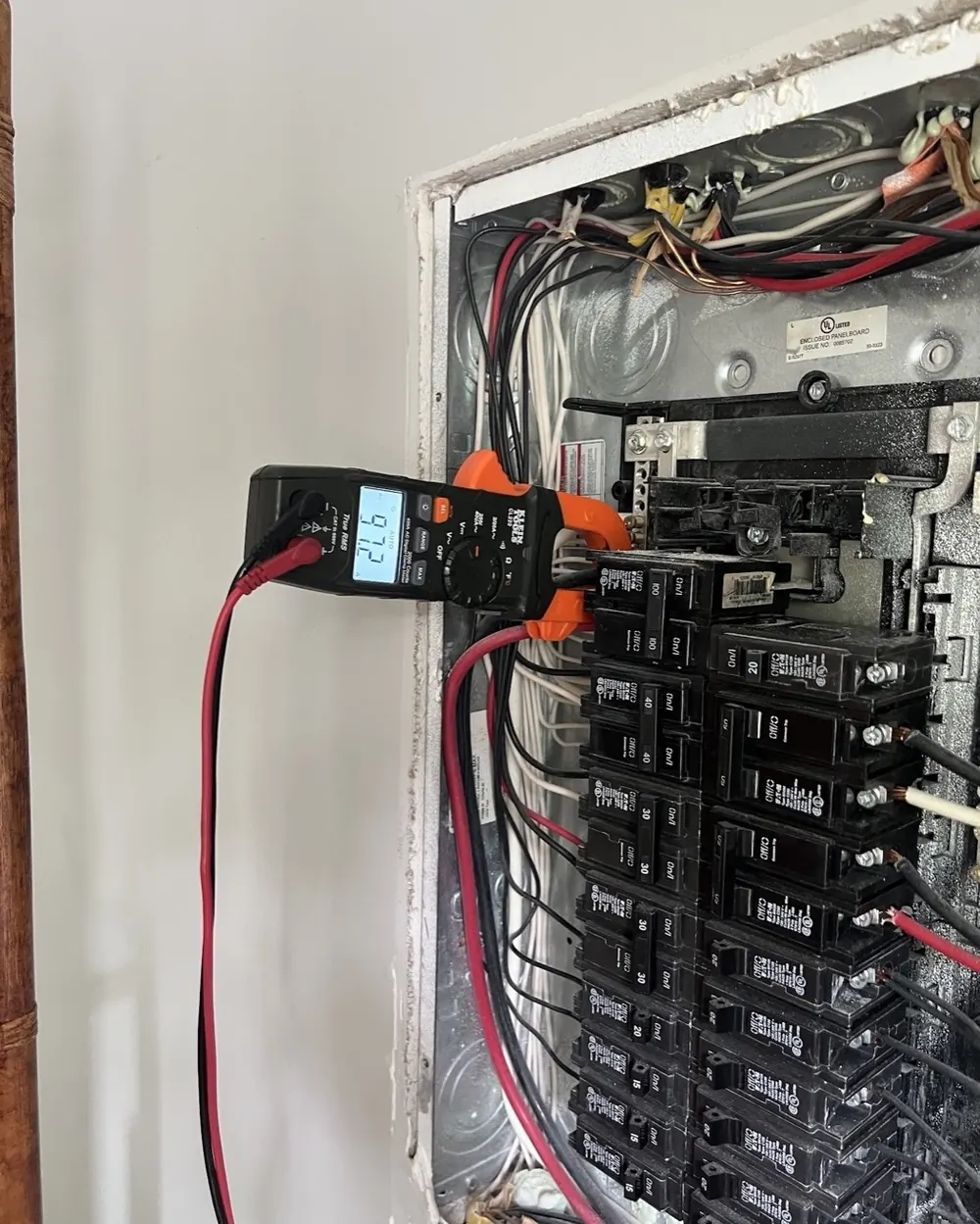
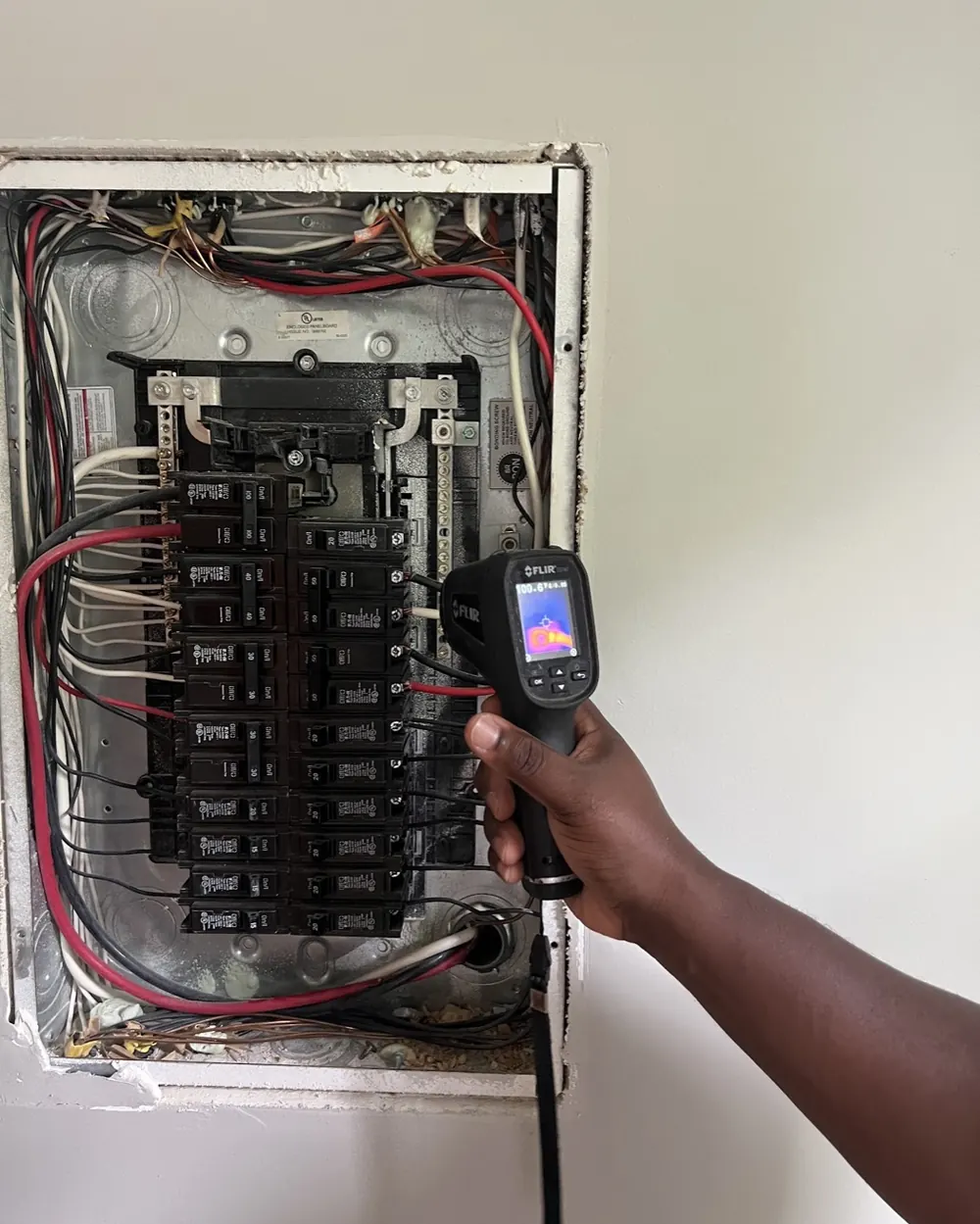
We can't tell you what your contract requires, because that's between the buyer, the seller and their agents, but we do offer a complimentary panel inspection when you ask for it. It is a visual check: the electrician looks over the panel box and its connections, listens for sizzling or buzzing and checks for breaker trouble or signs of age. Tightening isn't part of it; loose screws and connections are tightened on a preventative maintenance visit or as part of a quoted repair. The point of the panel inspection is to spot trouble early, before it leads to melting or power problems.
Our $499 Preventative Maintenance Package is a yearly electrical safety inspection: a thermal imaging test, a panel tune-up, a full home load test, a ground rod test, GFCI testing, a smoke alarm aging check and a surge protection review. The package runs for one year with no auto-renewal. Any repairs it turns up are quoted separately, up front.
The cost of inspection report repairs depends on how many electrical items the report lists, what kind of items they are and the parts they need, and how easy they are to reach. Send the report for a free quote.
Keep exploring
Tripping breakers, dead outlets and flickering lights, diagnosed and then repaired at a price you approve.
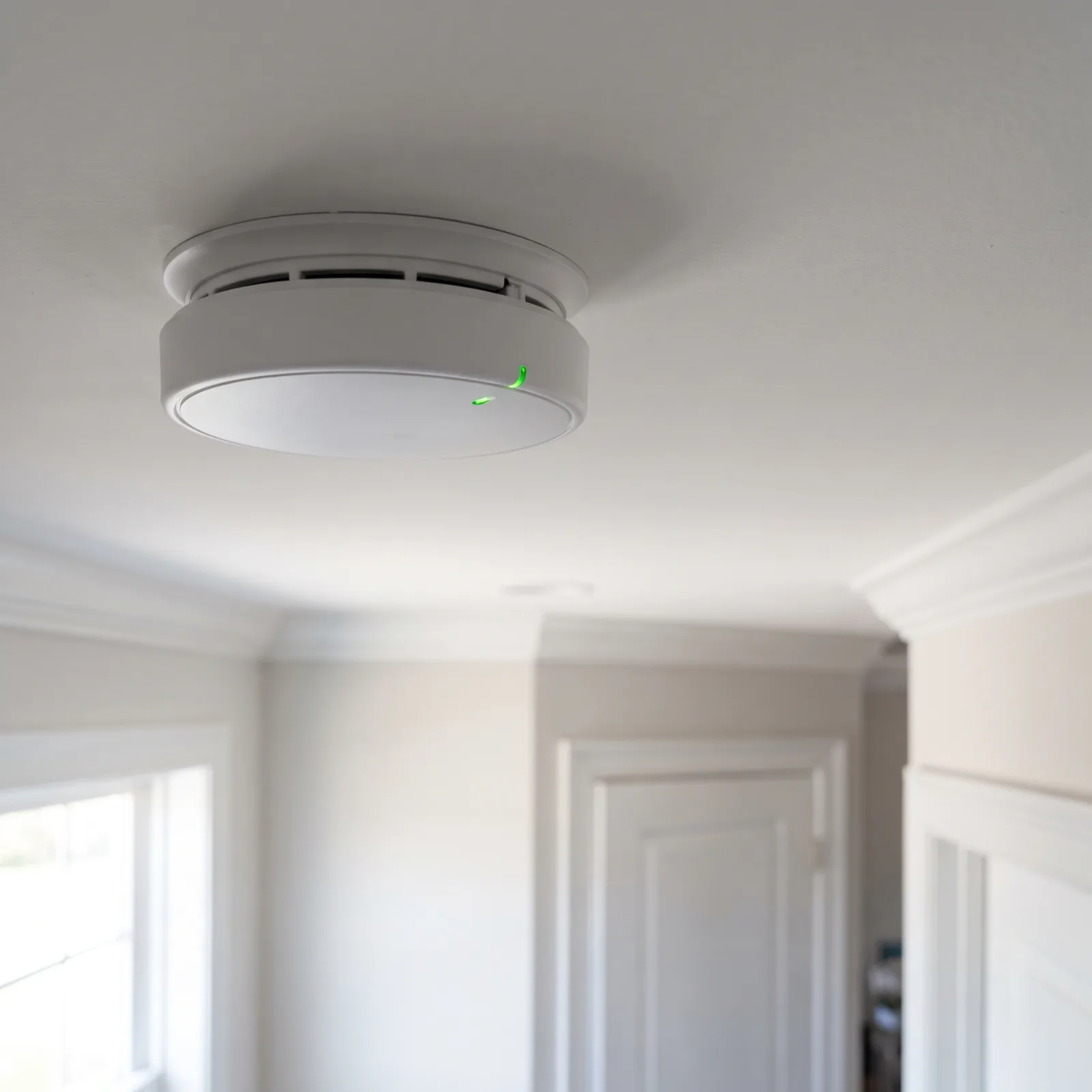
Hardwired smoke and carbon monoxide alarms; one we supply that fails in year one is replaced free.
A $499 whole-home checkup with thermal imaging and a panel tune-up.
Send the electrical section of the report for a free quote, or call the office.
Already approved your quote?