Generator Hookups

Generator Inlet, Interlock Kit & Transfer Switch Installation

Generator inlets and interlock kits for Mount Pleasant and Charleston homes, so your portable generator powers the circuits you choose without extension cords.

Already have a quote?

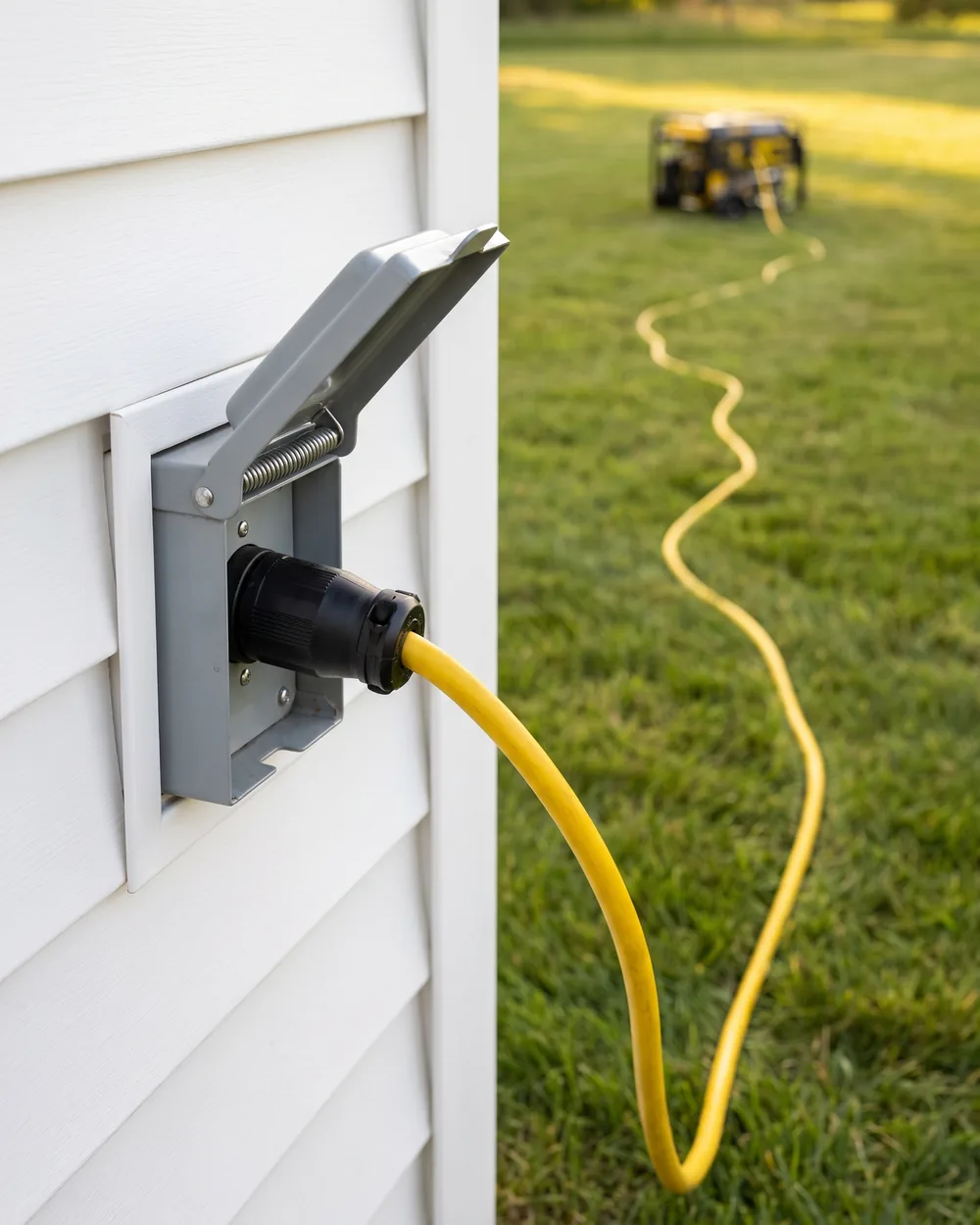
A portable generator plugged into a generator inlet on the outside wall.

SC License M118633
Master Electrical
Licensed & insured
Liability and workers' comp
No trainees, ever
Experienced electricians only
Not on commission
You approve the price first
One-year warranty
Workmanship, in writing

The short answer

How do you connect a generator to your house safely?

A licensed electrician installs a generator inlet on the outside of your house and an interlock kit in your electrical panel (your breaker box), so your portable generator powers the circuits you choose without extension cords and without backfeeding the utility lines. A whole-home generator connects through a transfer switch instead.

Without a generator inlet, using a portable generator means running extension cords from the generator to each appliance you want to power. Our post on generator inlets says that setup "can be cumbersome, unsafe, and inefficient," with risks that include tripping hazards and potential overloading. A generator inlet gives your generator one direct connection to your home's electrical system instead.

While a portable generator runs, your main breaker has to stay off. An interlock kit keeps the main breaker and the generator breaker from being on at the same time, and the transfer switch on a whole-home generator isolates its circuits from the utility, so in either case generator power can't flow backward onto the utility lines. We handle the hookup only; you supply the generator.

The hookup

Generator inlets, interlock kits and transfer switches

A portable generator hookup is a generator inlet on the outside of your house plus an interlock kit installed in your electrical panel: the inlet is where the generator plugs in, and the interlock kit keeps generator power off the utility lines. A whole-home generator connects through a transfer switch instead.

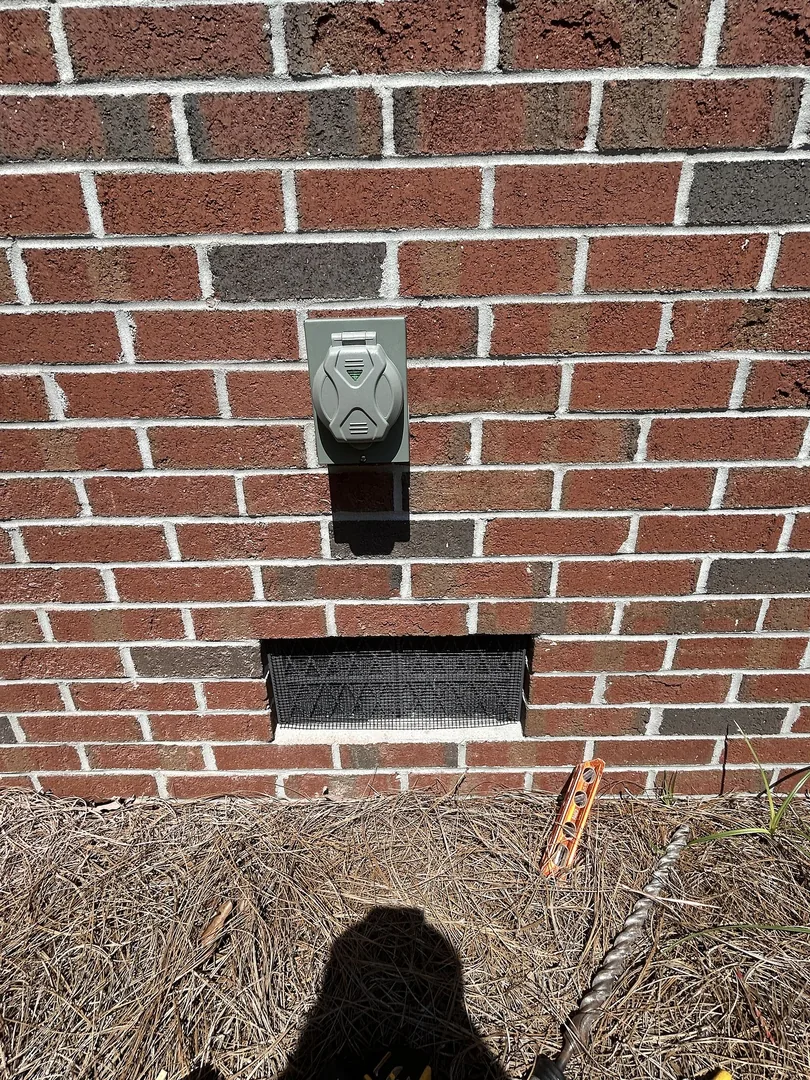
Gray generator inlet box with its weatherproof cover closed, mounted on a brick wall above a foundation vent

Generator inlet

A generator inlet is the box on the outside of your house where your generator's cord plugs in, in place of extension cords running to each appliance. Inlets are usually 30A or 50A, and we install them in a safe, convenient location. Generator inlets are compatible with most portable generators.
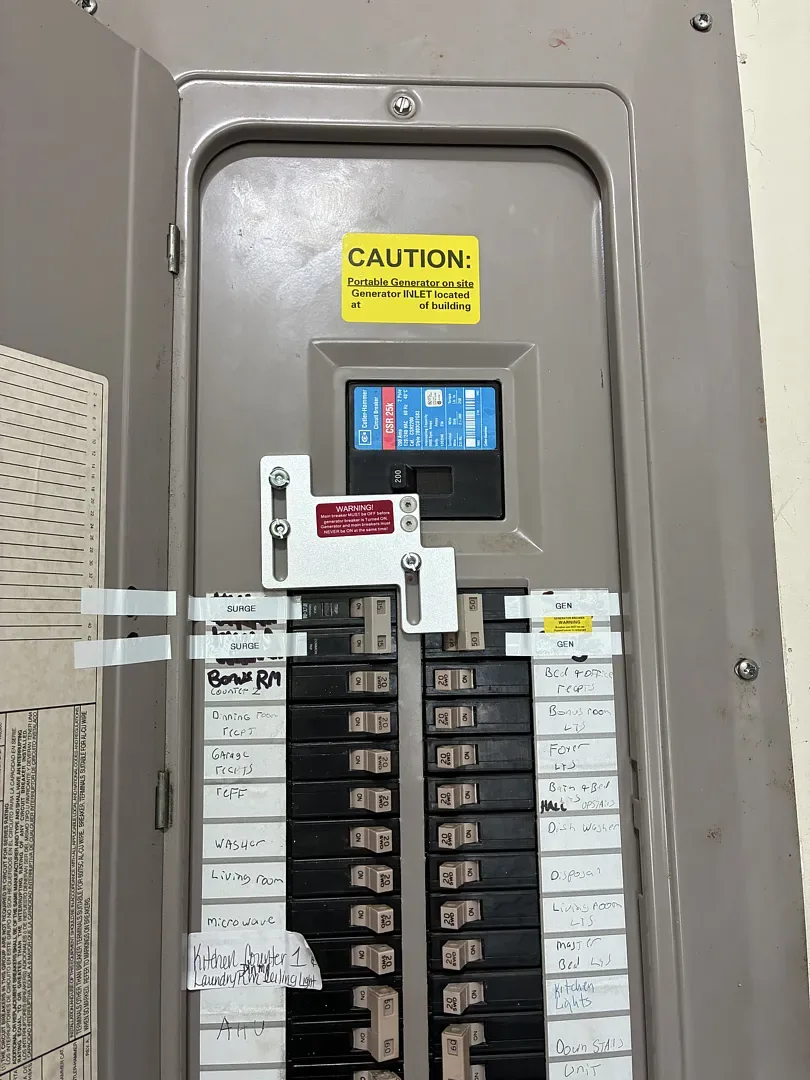
Interlock plate screwed to a panel cover beside the main breaker and the generator breaker, under a yellow caution label that points to the generator inlet

Interlock kit

An interlock kit is a mechanical sliding plate that mounts directly on your electrical panel and physically blocks one breaker when the other is on. Our post on generator safety calls interlock kits "a simple and much more affordable solution for safely using a portable generator."

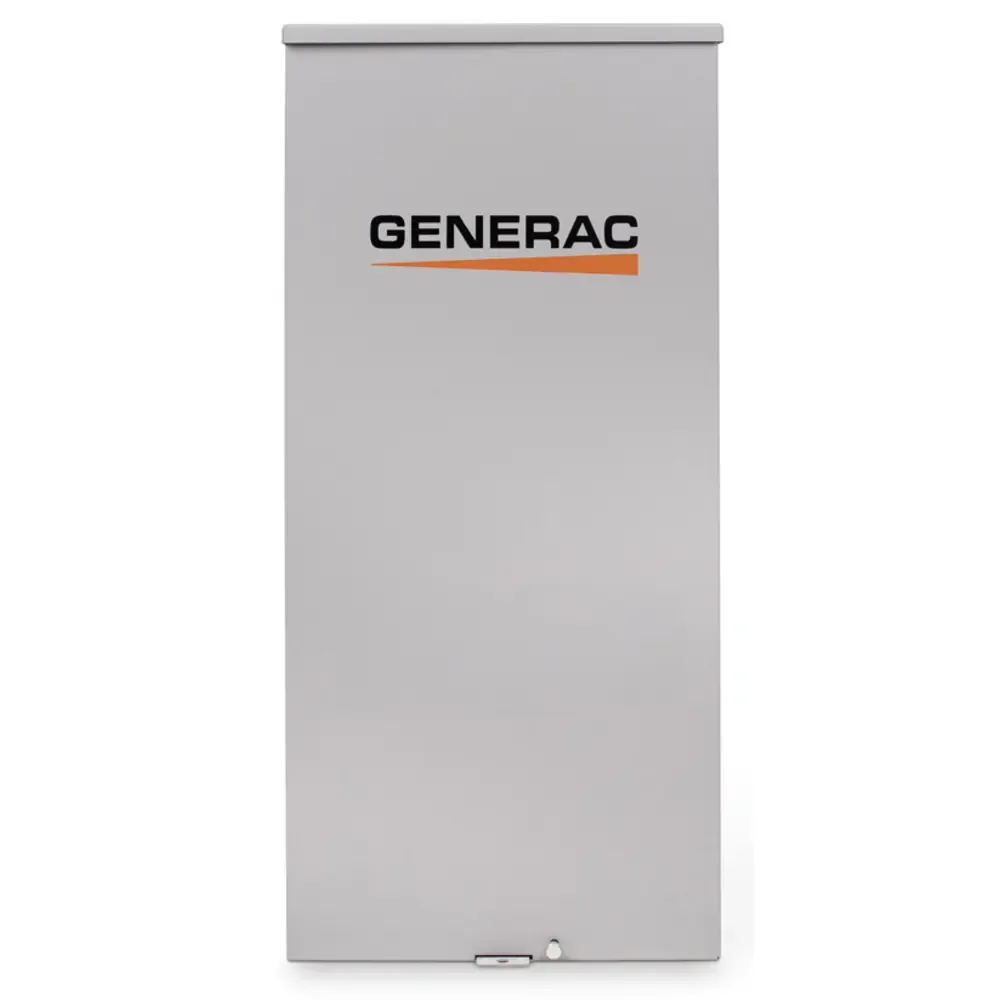
Gray Generac transfer switch enclosure with the Generac logo near the top

Transfer switch

A transfer switch is a separate panel that isolates and transfers power between the utility and the generator circuits, and it lets you choose which specific circuits get generator power. It is often used for larger whole-home generators. A transfer switch is more complex than an interlock kit and significantly more expensive to install.

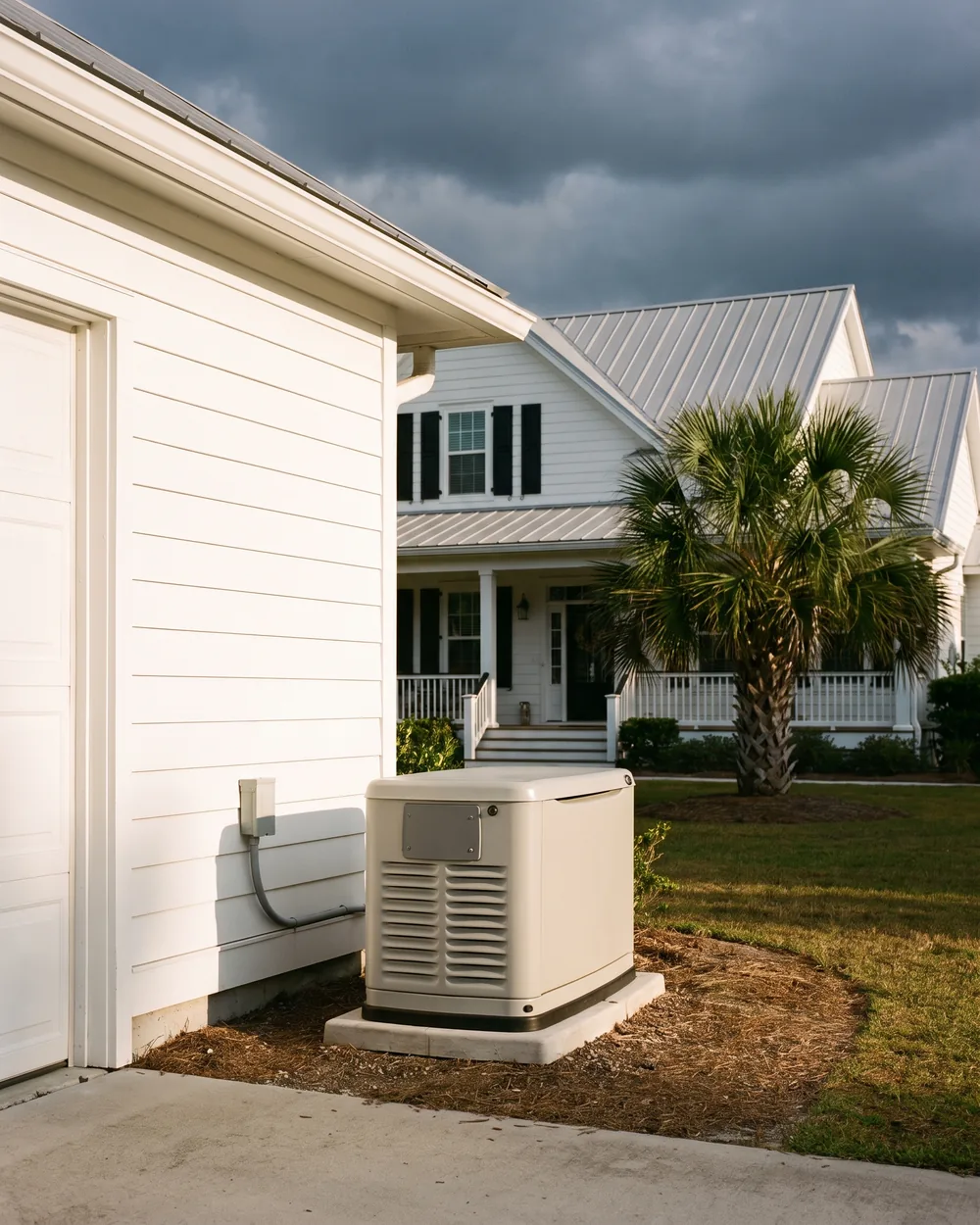
Conduit running from a small gray box on white garage siding to a standby generator on a concrete pad in pine straw, with a palmetto, a white metal-roofed house and dark clouds behind

Whole-home generator hookups

We install transfer switches for whole-home generators too. You supply the generator, and if it needs a gas line, the office can refer a plumber. In a flood zone, local rules can set how high a whole-home generator has to sit.

Side by side

Interlock kit or transfer switch: which do you need?

If you have a portable generator, an interlock kit is the simpler way to use it safely; a transfer switch is a separate panel, often used with larger whole-home generators.

Interlock kitTransfer switch
What it isA mechanical sliding plate mounted on your electrical panelA separate panel between the utility and your generator circuits
How it stops backfeedingPhysically blocks one breaker when the other is on, so the main breaker and the generator breaker are never on togetherIsolates and transfers power between the utility and the generator circuits
Picking circuitsYou choose the circuits to power through the generator inletLets you choose which specific circuits get power from the generator
Used withA portable generatorOften a larger whole-home generator
Cost to installThe simpler, lower-cost optionMore complex, and costs significantly more to install

For what moves the price of either one, see what affects the cost.

Not sure which hookup your home needs?

Send photos of your panel with its door open and the spot where you want the generator inlet, or call the office. We usually reply to photo quotes the same day.

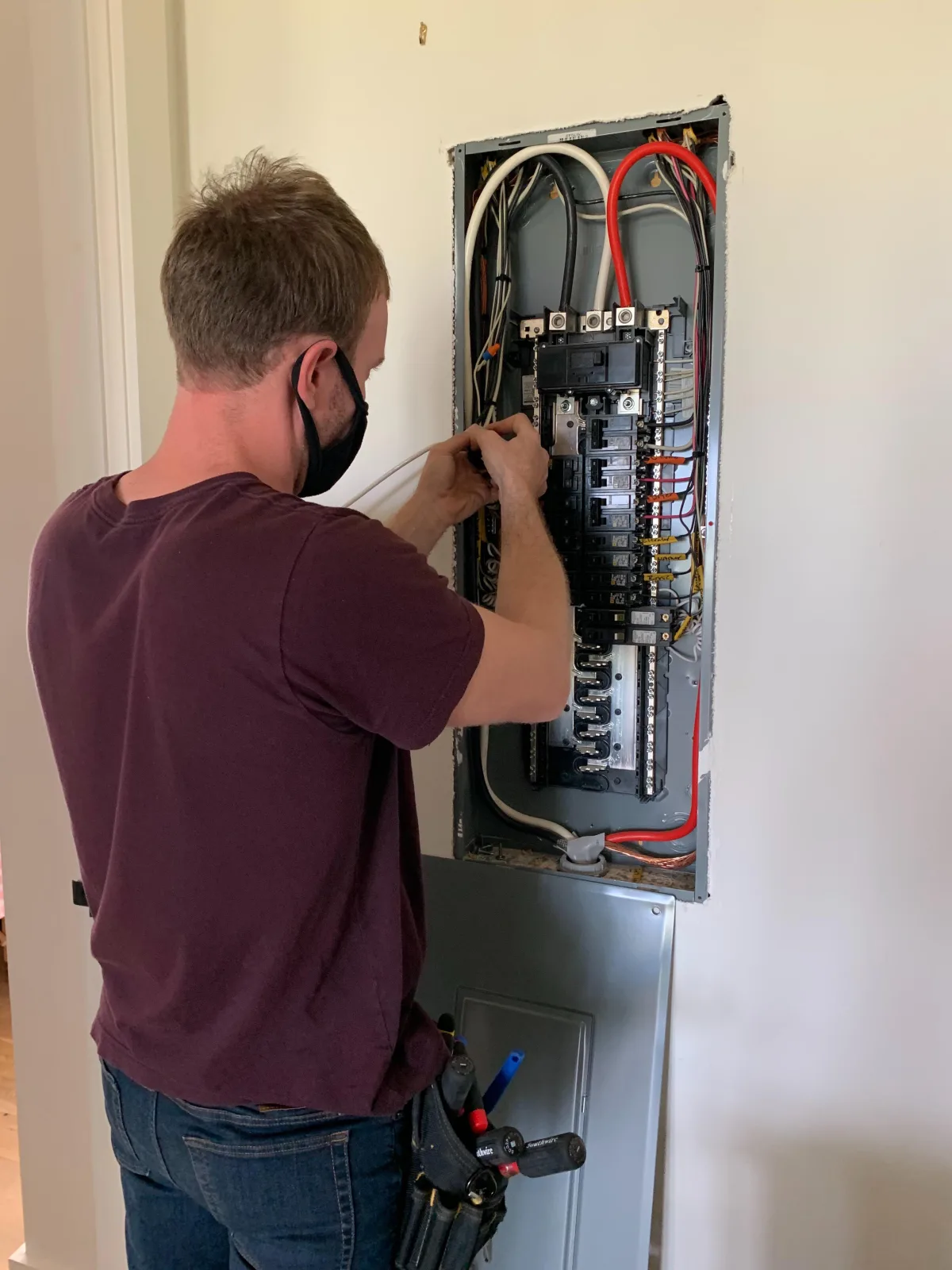
Electrician working with a white cable at the breakers of an open electrical panel set into a wall, its cover resting below
SC License M118633
Master Electrical

What we install

What's included in a generator hookup

A portable generator hookup includes a generator inlet, an interlock kit in your panel, a dedicated generator breaker, outdoor-rated wiring and a walk-through of how to use your system. For a whole-home generator, a transfer switch takes the place of the inlet and interlock kit.

You supply the generator

We don't sell or install generators. We handle the electrical hookup for portable and whole-home generators, and if yours will run on propane or natural gas, the office can refer a plumber for the gas line.

Already have an inlet?

We can install an interlock kit for your existing generator inlet. Include a photo of the inlet when you send photos of your panel.

Choosing circuits

What can you run on a portable generator?

With a generator inlet, you run the circuits you choose during an outage, and our post on generator inlets puts refrigeration, lighting and medical equipment first.

Refrigerator

Keep food cold while the power is out.

Freezer

Keep frozen food from thawing.

Lights

Light the rooms you use after dark.

Outlets

Charge phones and run small plug-in devices.

Router

Keep your home WiFi running.

TV

Follow storm coverage and local news.

Microwave

Heat food and drinks.

Medical equipment

Power equipment someone in your home depends on.

Before the install, you and your electrician decide which circuits are essential during an outage. Air conditioning is its own question: an AC soft starter lets an air conditioner start and run on a portable generator or limited power.

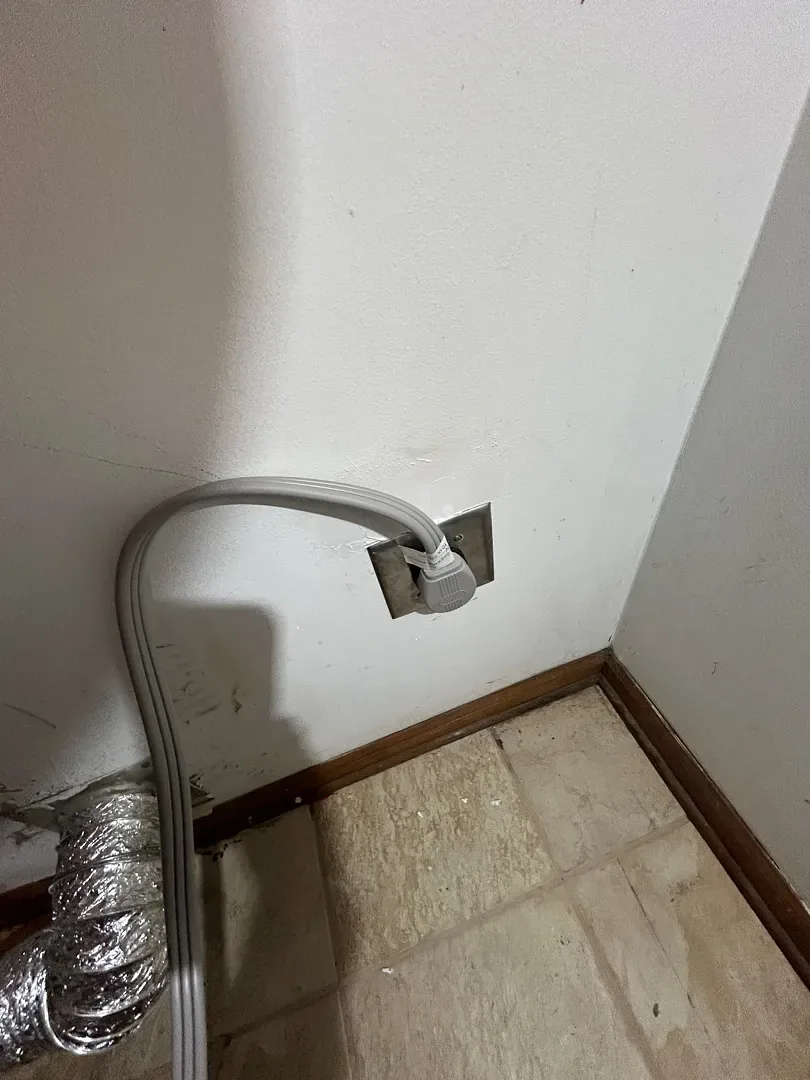
Dryer cord plugged into a 240-volt outlet low on a laundry room wall, beside the dryer vent hose

A four-prong, 240-volt dryer outlet in a laundry room.

Backfeeding

Why you should never plug a generator into a dryer outlet

A generator plugged into a dryer outlet can push power backward through your home's wiring and out onto the utility lines, because nothing stops the main breaker from being on while the generator runs. That backward flow is called backfeeding. Our post on generator safety says it "sends thousands of volts back through the power lines," which endangers utility workers who assume those lines are dead.

Dominion Energy's generator safety tips make the same point about household outlets: "Plugging a generator into a regular household outlet can energize 'dead' power lines and injure neighbors or utility workers."

The safe alternative to a generator plugged into a dryer outlet is a generator inlet with an interlock kit installed in your main panel. Berkeley Electric Cooperative members have a rule of their own: the co-op's service rules say "parallel operation of the member's generating equipment with the Cooperative's system shall not be allowed." That means a member's generator may not run while it is connected to the co-op's lines.

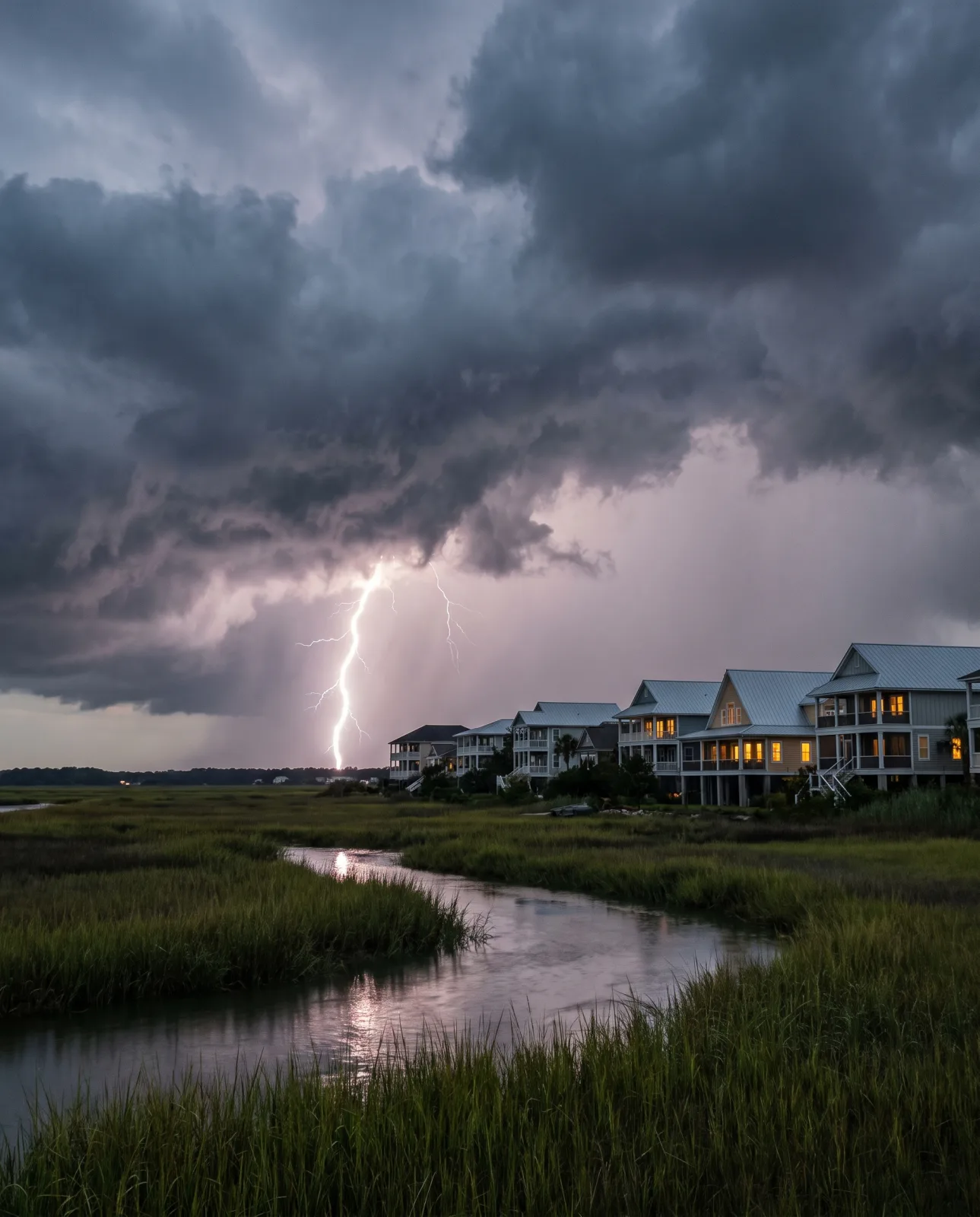
Lightning bolt striking from dark storm clouds over a salt marsh and tidal creek, beside a row of raised homes with lit windows

Lightning over a salt marsh beside a row of raised homes at dusk.

Hurricane season

Getting ready for hurricane season

Atlantic hurricane season runs June 1 to November 30, according to NOAA. As our post on generator inlets puts it, power outages are "a common consequence of severe weather," and in the Charleston and Mount Pleasant area, being prepared for hurricane season "is a necessity."

Before the season, check that your generator runs and that you have fuel on hand. If it will run on propane or natural gas, make sure the generator is compatible and the connections are secure. A generator hookup pairs well with an AC soft starter and whole-home surge protection.

If your home is in a flood zone, local rules can require a new whole-home generator to sit at least 2 feet above the base flood elevation. In the City of Charleston, a new generator in a special flood hazard area has to meet that height, while the City's equipment rule sets no height requirement in the X zone. Mount Pleasant's rules set the same height for "permanent/fixed generator equipment" in what the Town Code calls "new construction and substantial improvement construction." FEMA's Flood Map Service Center shows which flood zone your home is in.

When the power goes out and your portable generator is running, follow Dominion Energy's tips:

Pricing

What affects the cost of a generator hookup?

The cost of a generator hookup depends on the choice between an interlock kit and a transfer switch, the size of the generator inlet, where the inlet goes and anything else added to the same visit. Those vary from house to house, so we price each job on its own.

Interlock kit or transfer switch

A transfer switch is more complex and costs significantly more to install than an interlock kit.

Inlet size

Generator inlets are usually 30A or 50A, matched to your generator, with a dedicated generator breaker sized for your equipment.

Where the inlet goes

The spot you pick on the outside of the house, and the outdoor-rated wiring that runs from the inlet to your panel.

A whole-home generator

Transfer switch wiring for a whole-home generator. Our price covers the hookup, not the generator.

Add-ons

An AC soft starter or whole-home surge protection installed at the same visit saves a separate trip.

An inlet you already have

If you already have a generator inlet, the job can be an interlock kit added to it.

Photo quotes are free. The photos that help most show your panel with its door open, the label inside the door, the outlets on your generator and the spot where you want the inlet.

How it works

From photos to a generator hookup

1

Send photos

Send photos of the panel, the label inside its door, your generator's outlets and the spot for the inlet. We usually reply with a price the same day.

2

Approve your quote

Nothing gets scheduled or started until you say yes. Our electricians aren't paid on commission, so no one is selling you work you don't need.

3

Request your appointment

Once you approve the quote, the office reaches out to schedule the work. Or book it yourself online: we give you a Job Level to use with Request your appointment.

4

The installation and walk-through

An experienced electrician, never a trainee, installs the hookup and walks you through using it step by step. The installation carries a one-year workmanship warranty, written on your contract; your generator carries only its manufacturer's warranty.

Need us to see the panel first? Call or email the office to set up an in-person consultation. The fee varies by location and is credited toward the work if you hire us.

Reviews

What our customers say.

These Google reviews describe a visit after a hurricane, our online quote process and how the team works in your home.

5.0
★★★★★

Google rating

★★★★★

“Andrew came out right after a Hurrricane to make sure one part of my electrical equipment was safe for me and my family to be at the home. He was very thorough and helpful getting it fixed and I will definitely use his services again!”

S
Sarah M.
Google review · After a hurricane
★★★★★

“Gloudeman Electric: courteous, professional, communicative and prompt. The online quote process is straightforward and convenient. They communicate clearly, and they arrive when scheduled. It is a pleasure doing business with Gloudeman.”

S
Sam M.
Google review · Online quote process
★★★★★

“Fantastic communication and quality work. The work area was left clean and undamaged as well. Would recommend without hesitation!”

C
Cher S.
Google review · Left the work area clean
★★★★★

“Overall experience was great. The response time from the initial quote to install was phenomenal. Technicians were polite and efficient. Couldnt ask for more.”

R
Reece S.
Google review · Quote to install

Reviews are shown word for word from our Google profile. We're also a Nextdoor Neighborhood Favorite.

FAQ

Generator hookup questions, answered.

Still have a question?

Call or text the office Mon to Fri, 9 to 5, or email us anytime.

What is a generator interlock kit?

A generator interlock kit is a mechanical sliding plate that mounts on your electrical panel and physically blocks one breaker when the other is on, so the main breaker and the generator breaker can never be on at the same time. It works with a generator inlet: your portable generator plugs into the inlet, and the interlock kit at the panel keeps the generator from backfeeding onto the utility lines.

For a portable generator, an interlock kit is the simpler and much more affordable way to connect safely, while a transfer switch is a separate panel, often used with larger whole-home generators, that costs significantly more to install. Send photos of your panel and your generator, and we'll tell you which one your home needs.

No: a generator plugged into a dryer outlet can send power backward through your home's wiring and onto the utility lines. Dominion Energy warns that "Plugging a generator into a regular household outlet can energize 'dead' power lines and injure neighbors or utility workers." The safe alternative for a portable generator is a generator inlet with an interlock kit installed in your main panel.

Get the generator inlet that matches your generator. Inlets are usually 30A or 50A, and the generator breaker is sized for your equipment. Send a photo of the outlets on your generator with your photo quote request, and we'll tell you which inlet fits.

The cost of a generator inlet and interlock kit depends on the inlet size, where the inlet goes on your house and the outdoor-rated wiring that runs from it to your panel. Those details vary from house to house, so send photos for a free photo quote.

No, we install the generator hookup and you supply the generator. The hookup work covers generator inlets, interlock kits, transfer switches and dedicated generator breakers, for portable and whole-home generators. If your generator needs a gas line, the office can refer a plumber.

Yes, with an AC soft starter: it lets an air conditioner start and run on a portable generator or limited power. We install AC soft starters, and one can go in at the same visit as your generator hookup.

A portable generator should sit outdoors in a well-ventilated, dry area, preferably under a canopy, open shed or carport, and never indoors or in an attached garage, according to Dominion Energy. Place it where exhaust fumes will not enter the house: Dominion notes that generators emit deadly carbon monoxide.

Get your generator hookup in before the next storm.

Send a photo of your panel for a free quote, or call the office.

Already approved your quote?