Generators: What Not To Do
We hope you made it through Hurricane Ian safely—and that your home did, too. The recent storm, the first major one to hit the Charleston area in several years, reminded us of an important topic: generator backfeeding.
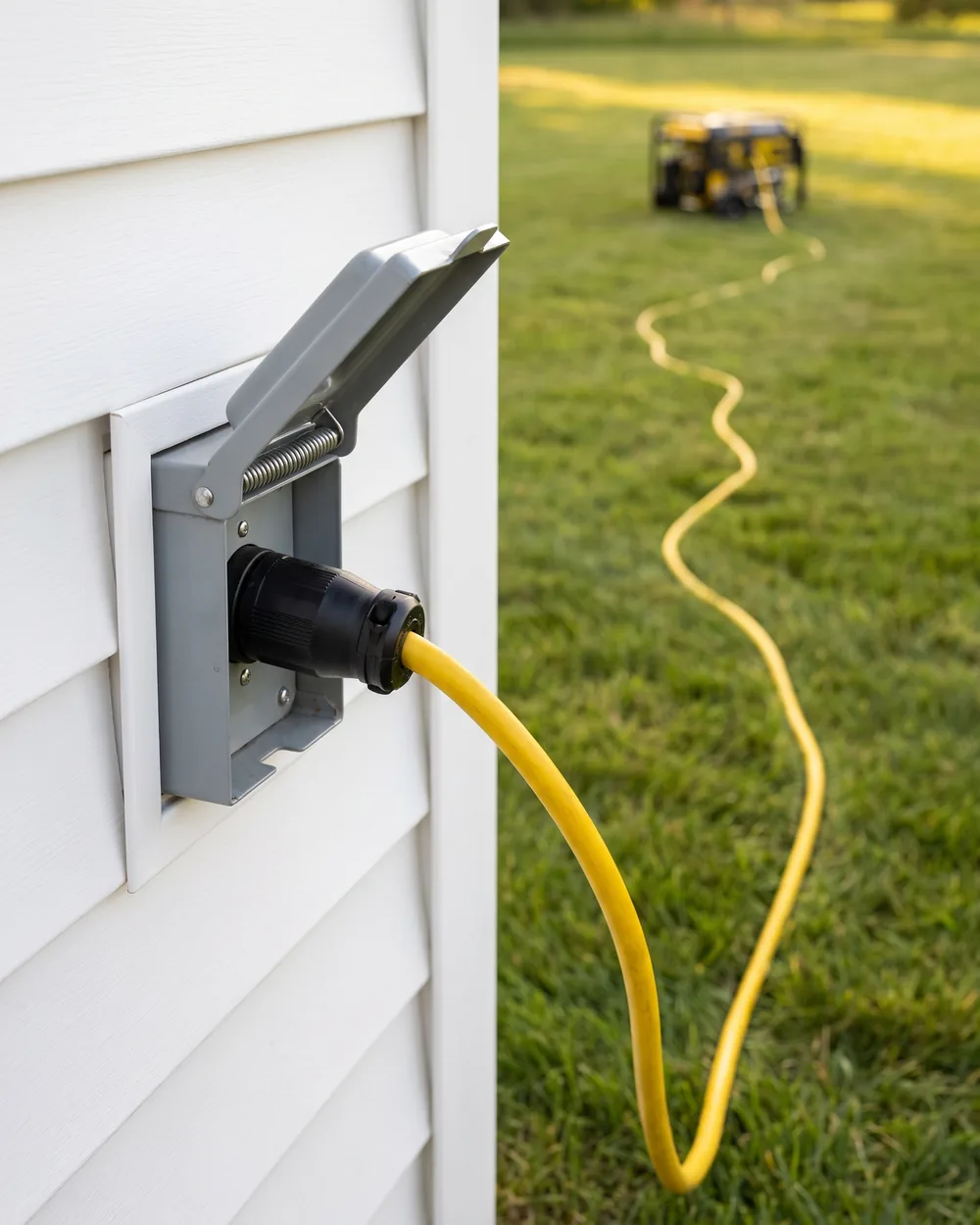
If you use a portable generator, your electrician may have installed a generator inlet so you can power parts of your home during an outage. To do this safely, your setup should include an interlock kit, which prevents your main breaker and generator breaker from being on at the same time. This is critical because having both on creates a serious and potentially fatal hazard known as backfeeding.
Why You Can’t Have Both Breakers On at Once
When the power goes out and you connect your portable generator, your main breaker must always stay OFF. If it’s left on while the generator is running, electricity from your generator can flow backward through your home’s electrical system and out into the utility grid. This is called backfeeding, and it sends thousands of volts back through the power lines—endangering utility workers who assume the lines are de-energized.
Linemen working to restore power don’t expect electricity to be coming from private homes. If a line is unexpectedly live from a backfed generator, it can cause fatal electrocution or arc flashes.
Interlock Kits vs. Transfer Switches
Both devices accomplish the same goal—they prevent the main breaker and generator breaker from being on at the same time—but they do it differently.
- Interlock Kit: A mechanical sliding plate that mounts directly on your electrical panel. It physically blocks one breaker when the other is on, ensuring you can never power both at once. Interlock kits are a simple and much more affordable solution for safely using a portable generator.
- Transfer Switch: A separate panel that isolates and transfers power between the utility and the generator circuits. It allows you to choose which specific circuits get power from the generator and is often used for larger standby or whole-home generators. Transfer switches are more complex and cost significantly more to install than an interlock kit.
The Bottom Line
If your home doesn’t already have one, an interlock kit is an excellent and cost-effective way to make your portable generator setup safe and code-compliant. It ensures your generator can never energize the utility line —protecting both your home and the linemen working to restore power.
If you’d like to add this safety feature before the next storm season, Gloudeman Electric can install an interlock kit for your existing generator inlet and walk you through how to use it properly.